The modern corporate rollout of artificial intelligence has frequently devolved into a systemic farce, driven by executive enthusiasm and marred by operational disconnects that risk wasting billions of dollars in enterprise technology investments. When organizations attempt to integrate generative AI tools into legacy workflows, they routinely repeat the exact strategic errors made a decade ago during the height of the corporate digital transformation movement.
A retrospective examination of the past decade reveals that enterprise technology adoption remains plagued by a fundamental misunderstanding of change management. By analyzing the parallels between the CMS and mobile app integrations of the 2010s and the artificial intelligence deployments of the 2020s, business leaders can identify why current methodologies fail and how to pivot toward a sustainable framework for technological integration.
The Historical Context: A Decade of Repeating Past Mistakes
To understand the current friction surrounding artificial intelligence in the workplace, one must look back to 2014, when digital transformation was the primary corporate buzzword. During that period, organizations rushed to deploy Content Management Systems (CMS), Customer Relationship Management (CRM) platforms, internal intranets, and customer-facing mobile applications.
Chronologically, the enterprise technology timeline over the past twenty years highlights a persistent cycle:
- The Early 2010s (Digital Adaptation Era): Companies invested heavily in cloud infrastructure, responsive websites, and enterprise software. However, IT departments treated these implementations as technical box-checking exercises rather than cultural overhauls. Systems were deployed without adequate user testing, leading to low adoption rates and internal friction.
- The Late 2010s to 2022 (Consolidation and Remote Shift): Organizations slowly adapted their workflows to digital-first environments, accelerated by remote work requirements during the global health crisis. Yet, procedural knowledge remained rigid, tied to traditional 9-to-5 metrics and hierarchical management structures.
- 2023 to Present (The Generative AI Boom): Following the widespread commercial availability of advanced large language models, executive leadership boards mandated rapid artificial intelligence adoption. Much like the digital transformation era, IT departments responded by purchasing enterprise-wide licenses for tools like Microsoft Copilot or specialized wrapper applications, enforcing rigid top-down governance while ignoring the human element of workplace adaptation.
This historical continuity demonstrates that the primary bottleneck in technological adoption has never been the software itself. It has always been the organization’s inability to manage human capital, cultural resistance, and systemic change.
The Core Miscalculation: Prioritizing Technology Over People
The most pervasive error in modern artificial intelligence deployment is treating the transition as an IT procurement challenge rather than a socio-cultural evolution. When senior management authorizes enterprise-wide software rollouts without consulting frontline employees, they encounter immediate resistance.
In the digital transformation era, this manifested as internal software systems that employees found cumbersome, unintuitive, or irrelevant to their day-to-day responsibilities. Customers similarly rejected poorly designed digital touchpoints that failed to address their actual needs. Today, the dynamic has shifted inward: corporate leadership purchases productivity suites and mandates their use, leaving staff members feeling overwhelmed, undervalued, and anxious about job security.
Industry analysts and labor economists note that artificial intelligence carries an acute psychological burden that previous technologies did not. While a new CRM system changed how data was entered, generative AI introduces existential questions regarding professional obsolescence. When employees read daily headlines predicting automation-driven layoffs, corporate reassurances ring hollow. Consequently, forcing workers to adopt tools without addressing underlying job security concerns creates a defensive, risk-averse corporate culture.
The Economics of Adoption: Why Employees Resist Productivity Mandates
A critical flaw in current enterprise deployment strategies is the misaligned incentive structure surrounding productivity gains. Executive leadership typically champions artificial intelligence for a singular reason: efficiency. The ability to generate reports, draft communications, and analyze datasets in a fraction of the traditional time represents a massive bottom-line advantage.
However, from the perspective of the average salaried employee, this efficiency does not translate into personal benefit. Workers are still expected to occupy their contracted hours, absorb higher output expectations, and maintain identical Key Performance Indicators (KPIs), often without compensation adjustments or reduced working hours. Under this model, artificial intelligence does not lighten the workload; it merely raises the baseline productivity expectations, effectively punishing efficiency with more work.
To overcome this resistance, organizational psychologists and change management consultants suggest a structural shift in how artificial intelligence is introduced. Rather than framing the technology as a corporate monitoring and output-maximization engine, companies must position it as a mechanism for eliminating tedious, repetitive administrative tasks that employees actively dislike. By targeting specific pain points—such as data formatting, meeting summarization, or initial research compilation—organizations can demonstrate tangible value to the individual worker. Furthermore, progressive firms are evaluating whether genuine adoption incentives, such as career progression pathways, performance bonuses, or optimized working hours, are necessary to secure workforce buy-in.
The Need for Psychological Safety and Permissive Governance
Even when employees recognize the utility of artificial intelligence, the operational environment often penalizes experimentation. Learning a new technological paradigm requires rebuilding decades of procedural knowledge. This process is inherently inefficient during its initial phases, characterized by trial, error, and occasional failure.
Unfortunately, many contemporary organizations operate under rigid governance frameworks where mistakes carry severe professional consequences. Industry reports highlight instances where employees have faced formal reprimands or performance reviews citing excessive token usage, misdirected prompts, or minor output errors incurred during exploratory learning phases. Such punitive measures instantly trigger a chilling effect. Rather than risking disciplinary action, risk-averse staff members retreat to familiar, manual workflows, effectively neutralizing the enterprise’s software investment.
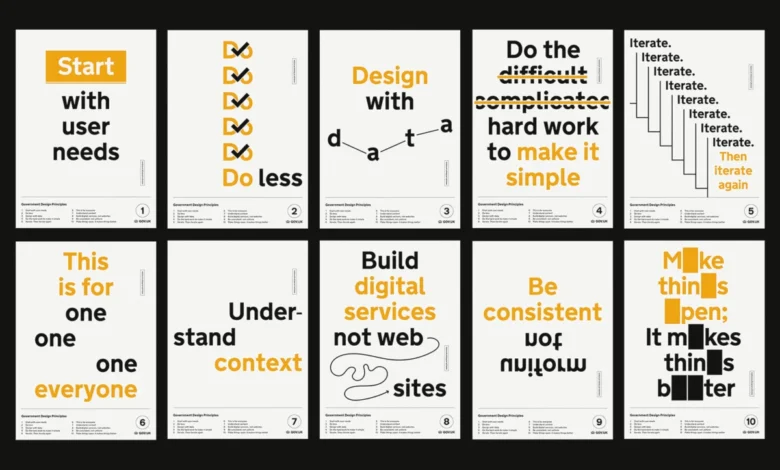
Effective change management requires establishing an environment of psychological safety. Organizations seeking successful integration must temporarily adjust performance metrics, recalibrate annual reviews, and create sheltered spaces for trial and error. Governance cannot consist of exhaustive compliance manuals that prohibit standard usage; instead, institutions must adopt concise, principle-based guidelines. Similar to the successful design principles utilized by government digital services, organizations should rely on a handful of clear core tenets regarding data privacy and ethical output, trusting employees to apply professional common sense.
The Rise of Shadow AI: A Symptom of Institutional Inflexibility
When formal corporate IT infrastructure fails to meet the practical demands of the workforce, employees invariably find alternative solutions. During the digital transformation era, this phenomenon gave rise to "Shadow IT," with departments secretly adopting unauthorized cloud storage providers, project management tools, and communication apps because enterprise systems were bogged down by bureaucratic approval processes.
Today, this behavior has evolved into "Shadow AI." When enterprise-approved tools are overly restrictive, lack necessary functional capabilities, or sit behind months of steering committee reviews, employees turn to consumer-grade alternatives. Staff members routinely paste proprietary company data, source code, and strategic plans into personal accounts on generative platforms via mobile devices or home networks.

This creates severe regulatory, compliance, and cybersecurity vulnerabilities that far outweigh the risks management sought to prevent through strict controls. Organizations lacking visibility into how their workforce utilizes external platforms face heightened exposure to intellectual property leakage and data privacy violations.
Rather than responding to Shadow AI with punitive disciplinary threats, IT leadership should view these unauthorized workarounds as diagnostic indicators. Shadow AI highlights the exact operational gaps where official enterprise tooling falls short. By analyzing why employees seek external solutions, technology teams can refine their internal software stack to meet legitimate business needs.
Harnessing Organic Peer-to-Peer Advocacy
Formal top-down training seminars and mandatory instructional modules rarely drive profound behavioral change. While structured education provides baseline technical competence, true cultural adoption relies heavily on social proof and peer-to-peer validation.
In almost every enterprise, a subset of tech-enthusiastic employees experiment with new tools spontaneously, long before any formal mandate is issued. During the digital transformation era, organizations that succeeded in modernizing their operations often bypassed traditional bureaucratic communication channels. Instead, they hosted internal showcases, unconferences, and peer-led demonstrations where staff members presented practical digital solutions built by their peers.
Applying this lesson to artificial intelligence adoption suggests a decentralized support strategy. Rather than targeting resistant personnel with remedial training, management should identify early adopters, provide them with dedicated time and resources to refine their methodologies, and create internal platforms for them to share success stories. When an employee observes a trusted peer in a comparable role successfully leveraging artificial intelligence to solve a daily bottleneck, skepticism gives way to pragmatic curiosity.
Broader Impact and Strategic Implications
The trajectory of enterprise artificial intelligence adoption over the coming years will determine the market competitiveness of entire industries. Organizations that continue to view the transition strictly as a software deployment exercise will likely experience low employee engagement, escalating security risks through shadow usage, and diminishing returns on technology capital expenditure.
Conversely, enterprises that approach artificial intelligence as a complex cultural and human evolution will secure sustainable operational advantages. By prioritizing psychological safety, aligning productivity incentives with employee well-being, streamlining governance into digestible operational principles, and respecting the organic pathways of peer-driven learning, modern businesses can avoid repeating the systemic failures of the digital transformation era. The challenge of the artificial intelligence era is not technological capability; it is organizational maturity.