Evaluating Graph-RAG vs. Standard RAG: A Hallucination Benchmark on Fact-Dense Queries

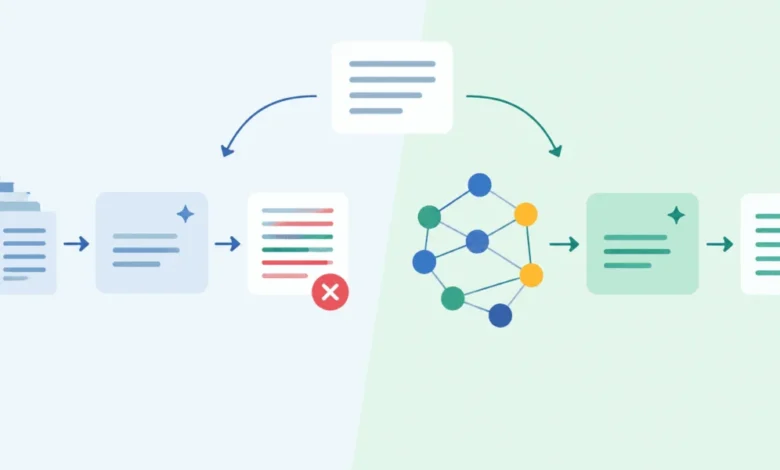
The evolution of Retrieval-Augmented Generation (RAG) systems has reached a critical inflection point, moving beyond simple vector similarity toward more robust, deterministic architectures. For enterprise applications where data integrity is paramount—such as financial auditing, medical record analysis, or legal discovery—the "lossiness" inherent in traditional vector-based retrieval has become a significant liability. Traditional RAG systems, which rely on embedding-based semantic proximity, often struggle when tasked with distinguishing between atomic facts, such as historical statistics, numeric identifiers, or granular entity relationships. To address this, developers are increasingly turning to a 3-Tiered Graph-RAG architecture, which enforces deterministic truth-tracking.
The Problem of Semantic Ambiguity in Vector Search
Standard RAG pipelines operate by converting documents into high-dimensional vectors. Retrieval is then performed by calculating the cosine similarity between a user’s query and the stored chunks. While this is highly effective for retrieving conceptually related documents, it is fundamentally ill-equipped for precision. In a scenario where a database contains multiple, overlapping facts about a specific entity—for example, a basketball player’s career average, their season average, and a single-game outlier—the vector search may return all three as "semantically similar." If the Language Model (LLM) is not explicitly guided, it may hallucinate by conflating these disparate numbers.
The 3-Tiered Graph-RAG architecture seeks to mitigate this by decoupling the storage of "hard facts" from unstructured text. By utilizing a Graph-based store for structured relationships and a Vector DB for unstructured context, the system creates a hierarchy of truth. The primary task is to determine whether this structural overhead actually improves output reliability or if it introduces new failure points through increased prompt complexity.
Benchmarking Methodology: Synthetic Data and LLM Capacity
To evaluate these competing methodologies, an experiment was designed using 50 synthetic data profiles. Each profile contained a specific, immutable "true" season average for a basketball player, alongside noisy, unstructured text containing conflicting figures—such as career averages and recent game performance.
The benchmarking environment utilized chromadb for vector storage and a SimpleQuadStore for graph-based lookups. The LLM selected for this evaluation was google/flan-t5-base. With approximately 250 million parameters, this model represents a "small" language model (SLM), offering a distinct perspective on how model capacity dictates the effectiveness of RAG strategies.
The evaluation loop performed 50 queries across both systems. The standard vector RAG was tasked with retrieving the top three relevant chunks and synthesizing an answer. The 3-Tiered Graph-RAG, conversely, followed a strict logic: query the graph for the specific, authenticated fact, then inject that fact into a prompt that treats the graph-retrieved data as the absolute truth, using the vector context only as a secondary reference.
Comparative Performance Results
The results of this benchmark provide a sobering reality check for AI engineers. The Standard Vector-RAG achieved an accuracy of 96.0%, while the 3-Tiered Graph-RAG followed at 92.0%.
These figures are counter-intuitive. Conventional wisdom suggests that adding a structured, deterministic layer to a RAG pipeline should inherently increase accuracy. However, the data reveals a different narrative: the "instruction following" requirement of the Graph-RAG approach significantly increased the prompt’s complexity. The flan-t5-base model, while efficient for simple retrieval-comprehension tasks, struggled to navigate the multi-context prompt architecture. In essence, the cognitive load required to reconcile "Context 1 (Absolute Truth)" and "Context 2 (Fallback Text)" exceeded the reasoning capacity of the smaller model, leading to higher failure rates than the simpler, more direct vector retrieval method.
Chronology of RAG Architectural Development
The shift toward hybrid systems did not occur in a vacuum. The timeline of RAG evolution generally follows three phases:
- Phase I (2020–2022): Native Vector RAG. Early implementations focused on indexing large bodies of text and performing semantic searches. This was largely successful for Q&A tasks but failed in technical or fact-dense domains.
- Phase II (2023): Query Expansion and Re-ranking. Engineers began using query expansion techniques and re-ranking models to filter out "noisy" results, improving accuracy but failing to resolve the fundamental issue of semantic overlap.
- Phase III (2024–Present): Graph-Augmented Retrieval. The current era is defined by the integration of Knowledge Graphs (KGs). This approach treats data as a network of nodes and edges, allowing for path-based reasoning that vector databases cannot perform.
Technical Implications for Production Engineering
The primary lesson from this benchmark is the necessity of matching architectural complexity to model intelligence. In production environments, engineers often reach for the most sophisticated architecture available, assuming it will perform better regardless of the underlying LLM. This benchmark suggests that such an assumption is a fallacy.
For smaller, local LLMs, the overhead of managing complex, multi-tiered logic can actually degrade performance. These models are often fine-tuned for direct, single-pass responses. When tasked with complex conflict resolution—such as prioritizing graph data over vector data—they may revert to probabilistic patterns rather than following the strict, deterministic logic provided in the prompt.
Conversely, when utilizing large-scale models like GPT-4, Llama 3 (70B), or Claude 3.5, the logic-handling capabilities are significantly higher. In these instances, the 3-Tiered Graph-RAG architecture likely realizes its potential, as these models are better equipped to handle nuanced instructions and perform true, multi-source conflict resolution.
Broader Industry Impact and Future Outlook
The industry trend toward "Small Language Models" (SLMs) is growing due to cost, latency, and data privacy concerns. However, as the benchmark illustrates, the RAG architecture cannot be treated as a "one-size-fits-all" solution.
If a company is constrained to using smaller models, the data suggests that they should optimize for "Context Purity" rather than "Context Hierarchy." This means focusing on data cleaning and pre-filtering the vector database to ensure that conflicting, noisy data is removed before the indexing stage, rather than relying on the LLM to filter that noise at runtime.
For organizations that must maintain high-density fact retrieval—such as those operating in legal or technical domains—the adoption of Graph-RAG remains the correct long-term trajectory. However, the path to implementation must include an assessment of the LLM’s reasoning threshold. Scaling the architecture requires scaling the reasoning capacity of the model.
In conclusion, while the 3-Tiered Graph-RAG offers a powerful theoretical framework for eliminating hallucinations in RAG systems, it is not a "silver bullet." The efficacy of this system is intrinsically linked to the model’s ability to perform logical reconciliation. As the industry continues to refine these systems, the focus must shift from merely building complex retrieval structures to ensuring that the LLM at the heart of the system is sufficiently robust to interpret and execute the provided logic. Future benchmarks will undoubtedly explore this intersection, likely showing that as model reasoning improves, the gap between simple vector retrieval and complex graph-augmented systems will widen in favor of the latter. For now, engineers are advised to start with the simplest architecture that satisfies their accuracy requirements before layering on the complexity of Graph-based retrieval.