TikTok 2026 Music Impact Report Reveals 94 Percent of Global Chart Hits First Went Viral on the Platform

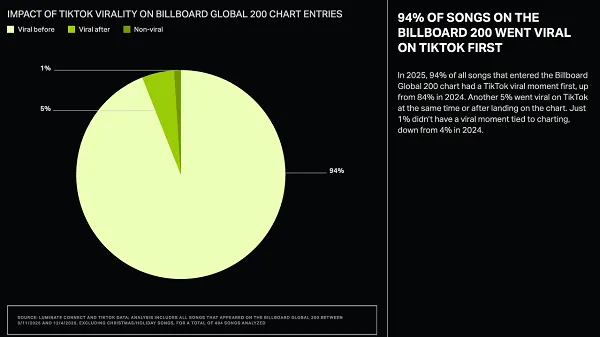
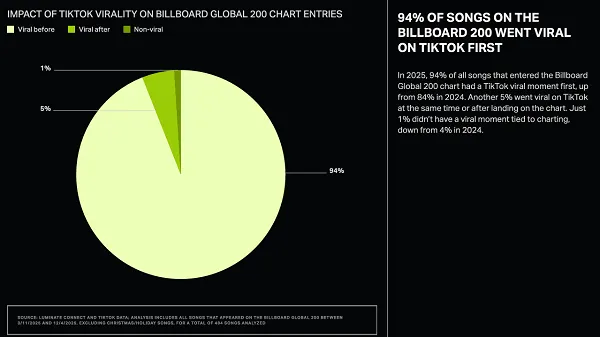
The modern music industry operates on a fast-paced, algorithmic ecosystem where digital virality dictates commercial success long before tracks ever hit traditional terrestrial radio waves or physical retail outlets. According to the newly released 2026 Music Impact Report published by TikTok, a staggering 94 percent of all songs entering the prestigious Billboard Global 200 chart experienced a viral moment on the short-form video platform prior to ascending the rankings. This striking figure represents a substantial increase from previous years, reinforcing the app’s position as the undisputed epicenter of contemporary music discovery, consumer engagement, and artist breakthroughs.
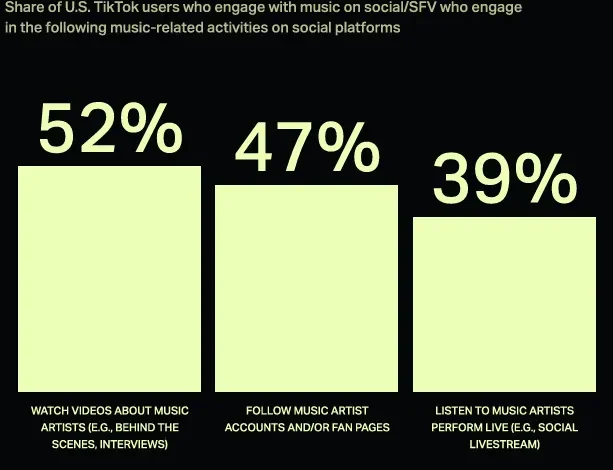
Compiled in strategic partnership with data analytics firm Luminate, the annual report draws on comprehensive market research, streaming metrics, and direct survey responses from more than 4,000 active U.S. TikTok users. The findings paint a definitive picture of shifting consumer behavior, demonstrating how audiences increasingly turn to social media algorithms rather than traditional media channels to unearth new sounds, emerging talent, and genre-defining hits.
The Ascendancy of Social-First Music Discovery
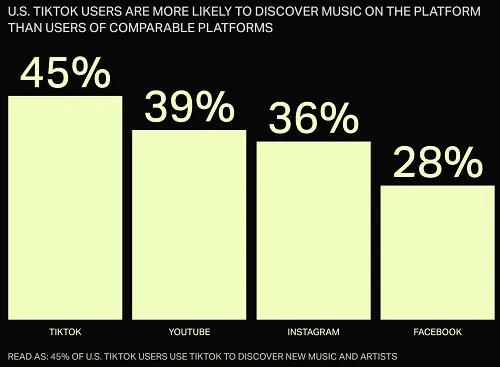
The data compiled by Luminate and published by TikTok highlights a fundamental shift in how listeners interact with recorded music. Among U.S. survey respondents, 45 percent explicitly stated that TikTok serves as their primary tool for discovering new music. This metric places the platform ahead of traditional heavyweights in the digital media landscape, including Alphabet’s YouTube, Meta’s Instagram, and Facebook.
For independent artists, major record labels, and music publishers, these insights mandate a radical restructuring of promotional strategies. In past decades, breaking a new track relied heavily on securing coveted rotation on MTV, landing high-profile commercial radio slots, or capturing editorial playlists on dedicated audio-streaming services like Spotify and Apple Music. Today, however, these traditional milestones increasingly function as lagging indicators rather than catalysts. A track typically builds momentum, fan communities, and micro-viral trends on TikTok first, creating a built-in demand that inevitably translates into chart placement on global tracking systems like the Billboard Global 200.
The correlation between TikTok virality and global chart success has tightened dramatically over recent years. In the 2025 Music Impact Report, TikTok and Luminate reported that 84 percent of Billboard Global 200 tracks had achieved prior viral traction on the application. The escalation to 94 percent in the 2026 report demonstrates that the music industry has moved past a transitional phase where social media was merely a supplementary marketing tool; it is now the foundational launchpad for mainstream commercial viability.

A Brief Chronology of TikTok’s Musical Evolution
To understand the weight of the 2026 findings, it is helpful to examine how TikTok evolved from a lip-syncing novelty into the most powerful kingmaker in the global recording industry.
- 2018–2019 (The Musical.ly Integration and Early Viral Seeds): Following ByteDance’s acquisition and merger of Musical.ly into TikTok, the platform quickly became a playground for creative choreography and comedic sketches. Early viral tracks, such as Lil Nas X’s "Old Town Road," demonstrated that short-form user-generated video loops could propel a genre-bending song to historic chart longevity, catching the attention of traditional music executives.
- 2020–2021 (The Pandemic Acceleration): Lockdowns catalyzed unprecedented user growth. With live touring halted entirely, artists turned to TikTok to connect with fans. Tracks like Nathan Evans’ "Wellerman" sea shanty proved that community-driven audio participation could turn obscure historical recordings into worldwide sensations overnight.
- 2022–2023 (Institutional Integration): Major and independent record labels established dedicated digital marketing divisions focused explicitly on creating native trends, meme formats, and dance challenges. Streaming analytics firms began formally integrating social data into their forecasting models to predict which unsigned acts would secure major label contracts.
- 2024–2025 (The Mainstream Standard): TikTok launched its first formalized Music Impact Reports in partnership with Luminate. By 2025, data confirmed that 84 percent of global hits originated on the platform, forcing a complete overhaul of release radar schedules and promotional budgets across the major label oligopoly.
- 2026 (Ubiquity and Dominance): The release of the 2026 report cements a 94 percent saturation rate, confirming that social-first discovery is no longer a trend, but the default operating system of the modern music business.
Industry Implications for Artists, Labels, and Marketers
The dominance of TikTok in the music discovery pipeline carries profound economic and creative implications for everyone operating within the entertainment sector. For artists, the pressure to generate visual, highly engaging, or conceptually malleable snippets—often lasting between 15 and 30 seconds—has transformed the actual songwriting and production process. Producers now construct tracks with "hook-first" arrangements, optimizing pre-choruses and drops specifically for looping video formats.
Major record labels, including Universal Music Group, Sony Music Entertainment, and Warner Music Group, have refined their data-sourcing pipelines. A&R (Artists and Repertoire) departments routinely scour platform analytics, looking at metrics such as user-generated video creation rates, sound retention, and off-platform streaming conversion before signing emerging talent. This data-driven scouting minimizes financial risk for conglomerates, as artists frequently bring an existing, validated audience to the negotiating table.
Furthermore, the implications extend far beyond the traditional music industry. Brands, corporate marketing agencies, and media planners are closely monitoring these cultural shifts. Because musical trends on TikTok frequently intersect with broader socio-cultural movements, fashion aesthetics, and generational humor, corporate campaigns that successfully align with trending audio assets experience significantly higher engagement rates. Marketers are learning to treat sound design as an essential component of brand identity, recognizing that a track’s viral trajectory on TikTok is often a reliable barometer for broader youth culture preferences.
Analyzing the Shifting Media Landscape
While platforms like YouTube and Instagram continue to command massive global user bases, TikTok’s algorithmic feed—specifically the "For You" page—has proven uniquely adept at bypassing traditional gating mechanisms. Unlike subscription-based audio streaming platforms where users must actively search out new material or rely on curated editorial lists, TikTok’s discovery model is passive yet hyper-personalized. Users are continuously exposed to emerging tracks embedded within engaging visual narratives, effectively breaking down resistance to unfamiliar music.
Critics and industry traditionalists have occasionally raised concerns over this shift, arguing that it favors fleeting, hook-driven micro-moments over deep-listening album experiences. Some artists have voiced frustration regarding the relentless demand to produce constant short-form video content alongside their primary craft of songwriting. Nevertheless, the empirical evidence presented in the 2026 Luminate partnership report makes the commercial reality impossible to ignore: ignoring the platform’s ecosystem drastically curtails an artist’s potential to reach a global audience.
As the music industry looks toward the remainder of 2026 and beyond, the boundary between social media engagement and chart success has effectively dissolved. TikTok is no longer merely a venue where songs happen to trend; it is the definitive crucible where modern hits are forged, tested, and validated before claiming their place on the world stage.
Related posts: