The Strategic Imperative of Building Partnerships Between WordPress Plugin Developers and Web Hosting Providers

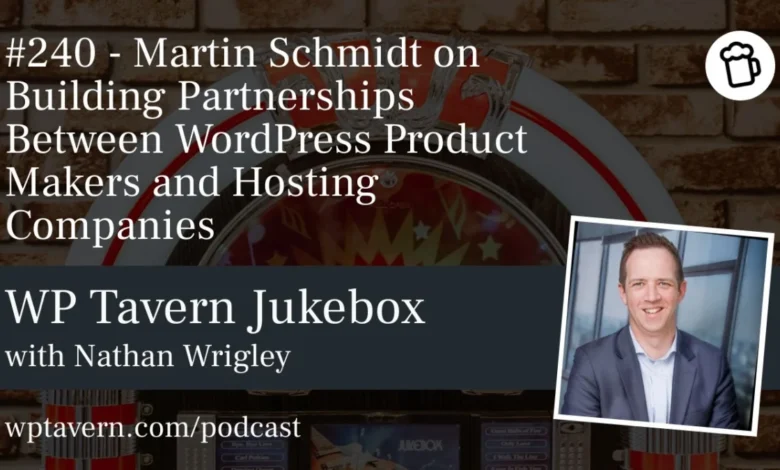
The WordPress ecosystem, a sprawling digital architecture powering over 40% of the internet, is currently undergoing a structural maturation phase. As the market becomes increasingly saturated—with an estimated 1,000 new plugins published to the official repository every week—independent software developers are facing an existential crisis regarding discoverability and sustainable growth. For many, the transition from successful code development to market-leading business operations remains a significant hurdle. A growing segment of industry experts, led by veteran strategist Martin Schmidt, suggests that the solution lies in a shift toward institutionalized partnerships between plugin companies and web hosting providers.
Historically, the relationship between these two entities has been informal or non-existent. However, as hosting companies seek to differentiate their services through value-added offerings and plugin developers search for reliable, high-volume distribution channels, the alignment of these two sectors has become a key driver of modern WordPress commerce.
The Evolution of the Hosting-Plugin Relationship
The history of the WordPress hosting market is defined by the transition from simple storage solutions to managed service platforms. In the mid-2000s, when early adopters like Martin Schmidt were deploying the first generation of WordPress travel blogs, the process was purely manual—requiring FTP uploads and manual core updates. Hosting was a commodity. By the early 2010s, the rise of managed WordPress hosting began to change the landscape, shifting the focus toward performance, security, and automated maintenance.
Today, the industry is witnessing a third phase: the ecosystem phase. In this model, hosting providers act as central hubs for an array of specialized tools. For developers, the goal is to integrate their solutions into these hosting platforms, effectively moving from the "wild west" of the open-source repository to a curated, trusted environment. This transition represents a shift from a product-first mentality to a partnership-first strategy.
Identifying the Market Gap: The "Builder’s Dilemma"
Data from industry analysts consistently shows that while the quality of plugins in the WordPress repository is at an all-time high, the failure rate of independent development shops remains substantial. The core issue is often identified as the "Builder’s Dilemma." Developers frequently invest the entirety of their capital and time into the technical build, leaving insufficient resources for business development, marketing, and relationship management.
According to industry observers, many developers assume that a superior feature set will lead to organic adoption. However, in an ecosystem where users are bombarded with thousands of new tools annually, technical superiority is rarely enough to ensure market penetration. Experts note that companies that neglect marketing in favor of feature bloat often fail to gain traction, regardless of their technical merit. The strategic pivot toward partnerships with web hosts is seen as an effective way to bypass the high cost of individual customer acquisition. By leveraging the existing user base of a hosting provider, a plugin developer gains instant access to a qualified audience that is already in the process of building or maintaining a website.
The Economic Logic of Strategic Alliances
The symbiotic relationship between a hosting provider and a plugin developer is built on three primary pillars: customer retention, average revenue per user (ARPU), and technical optimization.
- Churn Reduction: Hosting companies face constant pressure to reduce churn. By offering a curated selection of high-quality plugins—such as performance optimizers, security scanners, or SEO tools—hosts provide direct solutions to the pain points that typically cause customers to abandon their sites. A more functional site leads to a more satisfied customer, which in turn increases the lifetime value of that account.
- Revenue Expansion: For hosts, partnerships often manifest in revenue-sharing models or bundled service tiers. By selling premium plugins directly through the hosting control panel, the provider creates a secondary, recurring revenue stream.
- Technical Synergy: Hosting providers can optimize their servers for specific, trusted plugins, creating a "walled garden" experience that offers superior speed and stability compared to generic hosting environments.
The Roadmap to Successful Partnerships
Transitioning from a cold-outreach strategy to a formal partnership requires a disciplined approach. Industry experts recommend a chronological roadmap for developers looking to scale through partnerships:
- Phase 1: Internal Audit and Infrastructure Preparation: Before engaging a partner, developers must ensure their product is "partner-ready." This includes developing the necessary API integrations for automated provisioning and licensing, which allows the host to sell and manage the plugin seamlessly.
- Phase 2: Targeted Outreach to Tier-Two Providers: While the industry giants—such as GoDaddy, Ionos, or Newfold Digital—are the most visible targets, they are often the most difficult to secure as initial partners. Smaller, regional, or specialized hosting companies are frequently more agile and eager to differentiate their offerings. Successfully onboarding a mid-tier host provides the "proof of concept" and track record necessary to approach larger players later.
- Phase 3: The "Spoon-Feeding" Strategy: The most common failure in partnership pitches is a lack of empathy for the hosting provider’s workload. Product managers at major hosting firms are inundated with partnership requests. Successful developers distinguish themselves by providing a "turnkey" solution. This includes not just the product, but a detailed marketing plan, pre-designed collateral, and mock-ups showing exactly how the plugin will appear in the host’s control panel.
The Role of Professional Networks and Events
While digital communication is the standard, the human element remains a critical variable in securing high-value partnerships. Events like Cloudfest or various WordCamps serve as essential venues for face-to-face negotiation. The ability to articulate a value proposition in a low-pressure, in-person environment often circumvents the gatekeepers that protect the email inboxes of high-level executives.
Data suggests that deals finalized after in-person meetings tend to have higher longevity and stronger alignment, as the trust factor is established earlier in the negotiation cycle. For many developers, the transition to attending these events marks the moment their business moves from "hobbyist" to "enterprise."
Broader Implications for the WordPress Ecosystem
The increasing professionalization of plugin-hosting partnerships signals a long-term shift in how WordPress software is distributed. As the market continues to consolidate, the era of the solo developer attempting to scale solely through the official repository may be waning. Instead, the future appears to favor developers who can act as B2B partners, integrating their technology into the broader web infrastructure.
This trend also carries implications for the end-user. While the "curated" experience offered by hosting-partnered plugins provides stability and ease of use, there is an ongoing industry debate regarding the potential for reduced competition. If hosting companies only highlight a small subset of "partnered" plugins, newer, more innovative developers may find it increasingly difficult to reach the mass market.
However, from the perspective of market stability and business growth, the partnership model is widely regarded as a necessary evolution. By aligning the incentives of developers, who provide the functionality, with those of the hosts, who provide the infrastructure, the WordPress ecosystem is creating a more robust and sustainable foundation for its next decade of growth. For the independent developer, the path forward is clear: the code is only half the battle; the partnership is the engine that drives the business.