NYT Connections Hints and Answers for July 22 2026 Strategies for Solving the New York Times Word Puzzle and a Look at Its Cultural Impact

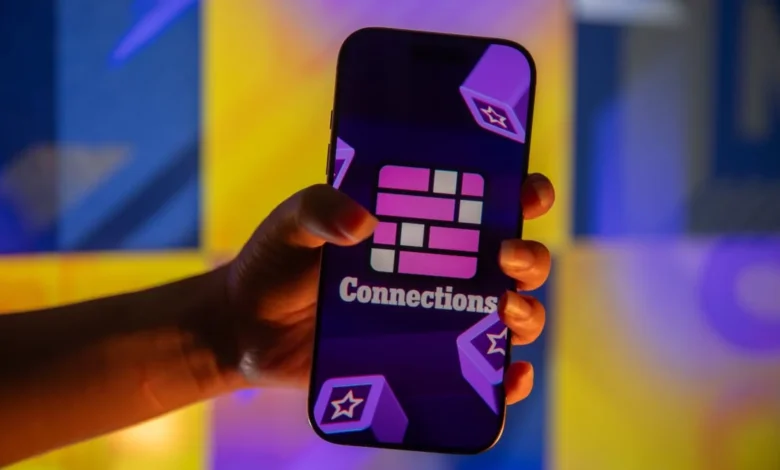
The New York Times has solidified its position as a titan in the digital puzzle space, with its daily word game Connections continuing to draw millions of players into a ritual of lateral thinking and linguistic analysis. On July 22, 2026, the latest iteration of the puzzle challenged users with a series of categories that required a keen eye for subtle associations, including a prominent theme centered on the world of golf. As the game enters its third year of mainstream popularity, its influence on daily digital habits and the broader media landscape has become a subject of intense interest for industry analysts and casual enthusiasts alike.
The Mechanics and Appeal of Connections
Connections, which launched in beta in June 2023 before becoming a permanent fixture of the New York Times Games portfolio, operates on a deceptively simple premise. Players are presented with a grid of 16 words and must organize them into four distinct groups of four. Each group is united by a common thread, which can range from literal definitions to more abstract concepts, such as homophones, parts of a compound word, or pop culture references.
The game’s difficulty is structured through a color-coded system that reveals itself only after a category is successfully identified. Yellow represents the most straightforward connection, followed by green, blue, and the notoriously difficult purple. Purple categories often involve wordplay, such as "Words that follow a specific prefix" or "Fill-in-the-blank" sequences, requiring a higher level of cognitive flexibility. Players are permitted only four mistakes before the game ends, adding a layer of tension that encourages careful deliberation over impulsive clicking.
The July 22, 2026, puzzle exemplified this design philosophy. By incorporating terms familiar to those who "hit the course," the editors utilized thematic overlap to create "red herrings"—words that appear to belong to one category but actually serve another. This technique is a hallmark of Associate Puzzle Editor Wyna Liu, who has been credited with bringing a sophisticated, often playful editorial voice to the game.
The Strategic Evolution of New York Times Games
The rise of Connections cannot be viewed in isolation from the New York Times’ broader business strategy. Following the blockbuster acquisition of Wordle from creator Josh Wardle in early 2022 for an undisclosed seven-figure sum, the publication has aggressively expanded its "Games" vertical. This move was a response to shifting media consumption patterns, where digital subscriptions have replaced traditional print revenue.
By the end of 2024, the New York Times reported reaching over 10 million total subscribers, a milestone driven significantly by the "bundle" offering which includes News, Cooking, Wirecutter, The Athletic, and Games. Data indicates that users who engage with the Games app daily are significantly more likely to retain their subscriptions compared to those who only read the news. Connections has become a "sticky" product, meaning it creates a habitual loop that brings users back to the platform every 24 hours.
A Chronology of the NYT Puzzle Expansion
To understand the current dominance of Connections, one must look at the timeline of the New York Times’ involvement in the puzzle industry:
- 1942: The New York Times Crossword is launched during World War II as a way to provide readers with a distraction from the gravity of global news.
- 2014: The Mini Crossword is introduced, catering to a younger, mobile-first audience with shorter attention spans.
- 2022: The acquisition of Wordle transforms the digital gaming landscape, proving that simple, shareable, once-a-day games could achieve viral status.
- 2023: Connections is launched in beta. Its success is almost immediate, quickly becoming the second most-played game in the NYT stable after Wordle.
- 2024–2026: The introduction of "Strands" and the continued refinement of Connections. The publication also integrates these games more deeply into its social media strategy, using platforms like X (formerly Twitter) and TikTok to foster a community of "solvers."
The Psychological Impact of Lateral Thinking Puzzles
Psychologists and cognitive scientists have noted that the appeal of Connections lies in its demand for "divergent thinking." Unlike the traditional crossword, which often relies on rote knowledge or vocabulary, Connections requires the player to see a single word through multiple lenses simultaneously. For instance, the word "CLUBS" could refer to a deck of cards, a golf bag, or a nightlife venue.
The "Aha!" moment—the psychological term for the sudden realization of a solution—releases dopamine, rewarding the player for their mental effort. However, the game also utilizes "misdirection," a tactic borrowed from magic and detective fiction. By placing four words that seem to relate to a specific topic (like golf) but only including three that actually belong to that category, the game forces players to reconsider their initial assumptions. This mental "pivot" is what makes the July 22 puzzle particularly engaging for veteran players.
Community Engagement and the "Social Grid"
One of the most significant factors in the longevity of Connections is its shareability. Like Wordle, the game generates a spoiler-free grid of colored squares that players can post to social media. This has created a global community where players compare their results and discuss the difficulty of the day’s categories.
Influencers and content creators have also found a niche in the Connections ecosystem. Platforms like Mashable regularly provide "hints" and "walkthroughs" for players who find themselves stuck on their final life. The "Mashable 101" list, which highlights influential creators, often includes those who specialize in digital literacy and gaming strategy, reflecting the game’s integration into modern digital culture.
Statements from the New York Times Games team emphasize that the goal is not to make a game that is impossible to solve, but one that feels like a conversation between the editor and the player. Wyna Liu has noted in various interviews that the categories are designed to be "fair but firm," ensuring that even the most difficult purple category makes sense once the answer is revealed.
Broader Implications for the Media Industry
The success of Connections has prompted other media outlets to attempt to replicate the model. Publications such as The Guardian, The Washington Post, and various digital-only outlets have introduced their own daily puzzles to boost engagement. However, the New York Times maintains a competitive advantage through its established brand authority and the editorial expertise of its puzzle desk.
The gamification of news platforms represents a shift in how media companies define "value." It is no longer enough to provide information; media companies must provide an experience. This transition is not without its critics, who argue that the focus on puzzles may distract from the core mission of journalism. However, the financial data suggests otherwise: the revenue generated by the Games and Cooking verticals provides a necessary subsidy for the high-cost investigative journalism for which the New York Times is known.
Analysis of the July 22 Puzzle Solutions
For the puzzle on July 22, 2026, the categories leaned heavily into specialized terminology while maintaining the broad accessibility that defines the game. The "golf" theme mentioned in the initial reports likely occupied the Green or Blue category, requiring players to distinguish between equipment and actions on the course.
The Yellow category—the easiest—typically involves synonyms for a common verb or noun. The Green category often moves into more specific groupings, such as "Types of Trees" or "Parts of a Car." Blue and Purple categories are where the game truly tests the player’s limits, often using homophones (e.g., words that sound like numbers) or words that can be preceded by the same adjective (e.g., "SQUARE" meal, "SQUARE" dance, "SQUARE" root).
Conclusion: The Future of Digital Word Games
As Connections continues to evolve, it remains a testament to the power of simple, well-crafted intellectual challenges. In an era of infinite scroll and short-form video content, the fact that millions of people stop each day to engage with 16 words on a grid is a remarkable phenomenon.
Looking ahead, the New York Times is expected to continue its trajectory of innovation in the "Games" space. Whether through the integration of AI to help generate new puzzle types or the expansion of competitive, multiplayer features, the core appeal of the game—the human-to-human connection through language—is likely to remain. For the solvers of July 22, 2026, the puzzle was more than just a game; it was a brief, sharp exercise in logic that connected them to a global community of thinkers.