Google is sunsetting its Website Translator widget and site owners must prepare for the October 1 2026 deadline

The digital landscape is undergoing a significant shift as Google prepares to officially retire its long-standing Website Translator widget. For over a decade, this tool served as a ubiquitous, low-friction solution for web developers and small business owners seeking to provide basic, real-time language translation for their site visitors. However, as of October 1, 2026, the service will no longer be supported, leaving thousands of websites that rely on the legacy snippet to find alternative solutions to ensure their content remains accessible to a global audience.
The Evolution and Retirement of a Web Staple
Google introduced the Website Translator widget during an era when the primary goal of the web was to connect users across borders without the technical complexity of full-scale internationalization. By simply pasting a small snippet of JavaScript into a site’s footer or header, developers could instantly offer a language dropdown menu that translated content on-the-fly using Google’s machine learning engine.
The decision to sunset this tool is not entirely unexpected. Google signaled its intent as early as May 2020, when it began shifting its focus toward more robust, enterprise-grade cloud solutions. The company is now steering developers toward the Google Cloud Translation API. Unlike the legacy widget, which was essentially a "plug-and-play" client-side script, the API requires integration within a backend architecture, allowing for more precise, scalable, and customizable translations. This transition reflects Google’s broader corporate strategy of moving free, broad-market web tools toward paid, specialized cloud infrastructure that provides higher performance and security.
Chronology of the Transition
The timeline for this transition has been carefully mapped out over several years to provide site administrators ample time to adjust:

- May 2020: Google publishes the initial announcement signaling that the Website Translator widget would eventually be deprecated, encouraging developers to look into the Cloud Translation API.
- 2020–2026: A six-year grace period during which the widget remained functional, allowing legacy sites to operate without interruption while web standards and translation technology evolved.
- September 2026: The final notification period. As of late September, site administrators are urged to audit their codebase to remove the aging snippets.
- October 1, 2026: The official end-of-support date. After this point, the script is expected to cease functioning, potentially leading to broken UI elements or missing translation dropdowns on websites that have not been updated.
Assessing the Technical Implications
The removal of the widget poses a specific challenge for the WordPress ecosystem, where the tool was frequently utilized as a quick fix for small, non-commercial, or localized projects. Because the widget was client-side—meaning the translation occurred within the user’s browser—it never required server-side processing or database changes.
For many developers, the immediate concern is not just the loss of the functionality, but the presence of "zombie" code in their themes. Many sites currently running the snippet may have been built years ago by developers who are no longer associated with the project, leaving current site owners unaware that the code even exists until the widget stops working in October.
The technical fix is relatively straightforward but requires manual intervention. Developers must scan their templates for identifiers such as google_translate_element or references to translate_a/element.js. Once identified, this code must be removed to ensure the site remains clean and to prevent potential console errors that could arise when the script calls a non-existent or deprecated Google endpoint.
Market Alternatives and the GTranslate Solution
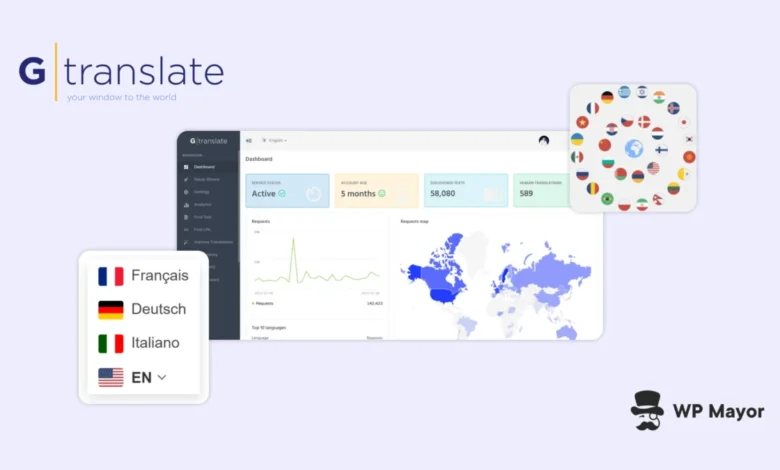
As the deadline approaches, various third-party services have emerged to fill the void. Among these, GTranslate has positioned itself as a primary successor, offering a tiered service model that caters to both the non-profit sector and commercial entities.
For non-commercial, educational, and personal projects, GTranslate offers a free version of its widget that mimics the ease of the original Google tool. Unlike the original Google widget, this modern iteration provides greater aesthetic control, allowing site owners to choose between floating selectors, flag icons, or globe motifs, all while maintaining the ability to toggle language options without complex coding.

For commercial enterprises, the requirements are more stringent. Professional websites often require features beyond basic text swapping, such as indexable translated content, which is a major pain point for search engine optimization (SEO). While Google’s old widget provided user-side translation, it did not create unique URLs for translated pages. This meant that a user in Spain might be able to read a page, but a search engine crawler would not index that content in Spanish, effectively rendering the site invisible in local international search results.
The SEO Dimension: Why Widgets Aren’t Enough
A critical distinction must be made between "browser-side" translation and "server-side" localization. A simple widget, such as the one being retired by Google, only translates the text currently displayed on the screen. It does not provide permanent, URL-based versions of the site in different languages.
Professional-grade multilingual strategies involve using subdirectories (e.g., example.com/es/), subdomains (e.g., es.example.com), or country-coded top-level domains (ccTLDs). These structures allow search engines to index specific content for specific regions. Furthermore, these setups enable the use of hreflang tags, which inform search engines about the language and regional targeting of a page, preventing issues with duplicate content.
For businesses looking to replace the Google widget, the retirement of the tool serves as a catalyst to reconsider their international strategy. If a company relies on international traffic for revenue, a simple "translate" button is likely insufficient. Moving to a professional translation plugin or API that supports indexed, localized URLs is a necessary step for long-term growth.
Official Guidance and Next Steps
Google’s recommendation to use the Cloud Translation API is aimed primarily at developers and large-scale applications. The API allows for "Neural Machine Translation" (NMT), which is significantly more accurate and context-aware than the older, phrase-based systems. However, implementing an API-based system involves costs associated with the volume of translated characters, as well as the technical overhead of integrating the service into a website’s CMS.

For the average site owner, the current landscape of alternatives is as follows:
- For Non-Commercial Sites: Utilize free widgets from providers like GTranslate. These offer a seamless transition for basic needs and are often available as plugins for platforms like WordPress, Drupal, and Joomla.
- For Commercial Sites: Evaluate whether a simple translation widget is sufficient or if the business case supports a transition to a full, SEO-friendly multilingual plugin. These tools often include advanced features such as manual editing of translations, WooCommerce support, and automated URL management.
- For Enterprise/Custom Apps: The Google Cloud Translation API remains the industry standard, providing high-quality, scalable translation services that can be integrated directly into a custom application’s logic.
Preparing for the Post-Widget Future
The retirement of the Google Website Translator widget marks the end of an era of "free, instant" web translation. While the loss of this tool may be viewed as an inconvenience for small site owners, it also serves as a reminder of the need for professional, sustainable, and indexable web practices.
As of late September 2026, the countdown is in its final days. Site administrators who have not yet audited their sites for the google_translate_element snippet should do so immediately to ensure a smooth transition. By replacing the legacy widget with a modern, supported alternative, site owners can ensure that they continue to offer a welcoming, accessible experience to their international visitors, regardless of the tools used to achieve that goal.
The shift, while disruptive in the short term, is a necessary evolution in how the internet handles global communication. By moving away from browser-side, non-indexed translation, the web becomes a more robust and professional space where language barriers are bridged through more reliable and sophisticated technologies.
Related posts: