Tesla Semi Volume Production Commences at Gigafactory Nevada Marking a New Era for Heavy-Duty Freight Logistics

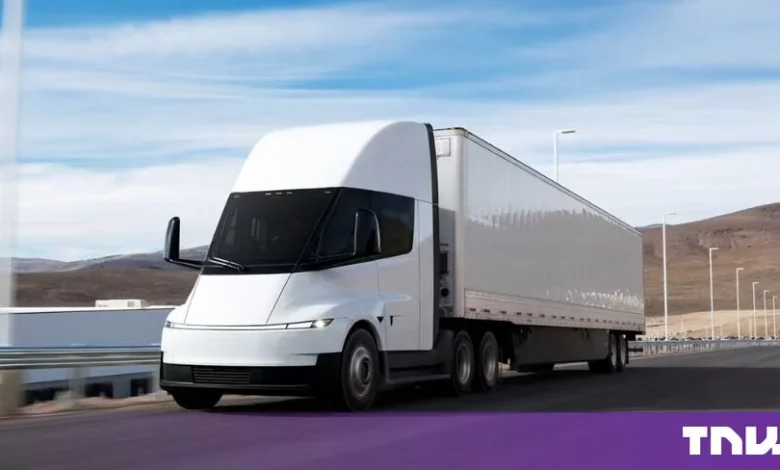
The commencement of volume production for the Tesla Semi at Gigafactory Nevada represents a watershed moment for the heavy-duty transportation sector. After a protracted gestation period spanning nine years since its initial unveiling, the Class 8 electric truck is finally transitioning from a proof-of-concept prototype to a commercial workhorse. As the first units roll off the assembly lines and reach initial customers this week, the industry is closely monitoring whether the vehicle can fulfill its promise of replacing diesel-reliant long-haul transport.
The logistical implications of this rollout are significant. Tesla has confirmed that the Semi, characterized by its aerodynamic silhouette and central driving position, is designed to operate at a maximum gross weight of 82,000 pounds. By leveraging a proprietary tri-motor powertrain capable of delivering up to 800 kilowatts of drive power, the vehicle aims to maintain highway speeds on steep gradients where traditional diesel engines often struggle. However, the commercial viability of this transition relies heavily on the supporting infrastructure—a challenge Tesla is addressing through the deployment of its Megacharger network.
A Long Road to Production: The Nine-Year Odyssey
The journey to this week’s delivery milestone has been defined by significant delays, technological pivots, and evolving market expectations. When Elon Musk first pulled the curtain back on the Semi in 2017, the company projected a market entry by 2019. That timeline proved optimistic, as the company faced supply chain constraints, the global semiconductor shortage, and the complexities inherent in scaling up production of its proprietary 4680 battery cells.
The intervening years have seen the project shift from a bold technological showcase to a pragmatic industrial necessity. While the core design principles—extreme aerodynamics and high-capacity battery storage—remained intact, the engineering focus moved toward ensuring the durability of the electric drivetrain under the punishing conditions of commercial freight. The transition to volume production at Gigafactory Nevada signals that Tesla has resolved the most critical manufacturing bottlenecks, allowing it to move beyond the small-batch hand-assembly methods used for initial pilot fleets.
Decoding the Specs: Real-World Performance vs. Idealized Metrics
Tesla’s performance claims for the Semi have been a subject of intense scrutiny by logistics analysts. The company touts a range of 500 miles for the Long Range variant and 325 miles for the Standard Range model. These figures are contingent upon highly specific operating parameters: a gross weight of 82,000 pounds, an average speed of 55 miles per hour, an ambient temperature of 20 degrees Celsius, and a flat-ground route profile.
While these conditions are necessary for standardized testing, they represent a "best-case" scenario for fleet operators. Industry observers note that real-world factors—such as extreme weather, varying topography, and frequent stop-and-go traffic—will inevitably impact these efficiency ratings. According to data filed with the California Air Resources Board (CARB), the usable energy capacity of the Long Range model is approximately 822 kWh, while the Standard Range utilizes 548 kWh. This energy density is powered by thousands of 4680 cells, which have been a point of strategic interest due to their potential for lower manufacturing costs despite documented performance hurdles in Tesla’s passenger vehicle lineup.
The charging architecture is arguably the Semi’s most revolutionary feature. By utilizing the MCS 3.2 (Megawatt Charging System) connector, the truck can ingest energy at rates up to 1.2 megawatts. Tesla claims this infrastructure allows for a 60% charge in approximately 30 minutes, effectively aligning the downtime of the vehicle with mandatory driver rest periods.
European Infrastructure Strategy: Building for a Future Market
Although the Semi is not slated for European delivery until 2027, Tesla is already laying the physical groundwork across the continent. The company has proactively installed over 100 megawatt-capable stalls across 21 strategic sites in Germany, France, the United Kingdom, Sweden, and the Benelux region.
This preemptive investment highlights a divergence between regulatory requirements and commercial ambition. European Union mandates, as documented by the International Council on Clean Transportation (ICCT), require 350 kW charging points at 60-kilometer intervals along the core Trans-European Transport Network (TEN-T) for heavy-duty vehicles. By installing megawatt-level chargers, Tesla is effectively "future-proofing" its network to exceed current legislative requirements, positioning its hardware as the gold standard for long-haul electric freight well before the truck’s regional launch.
Market Dynamics: Why Diesel Prices are Driving Adoption
The rapid scaling of the Semi project is being accelerated by macroeconomic pressures, specifically the volatility in global fuel prices. With diesel costs averaging over $6.50 per gallon in various parts of the United States, logistics companies are facing existential threats to their profit margins. This economic urgency has catalyzed a shift in purchasing behavior.
The most notable recent development is an order of 2,500 Semis by a consortium of major shipping firms—an order that, if fulfilled according to schedule, would effectively double the current population of heavy-duty electric trucks in the United States. Simultaneously, the Swedish freight technology firm Einride has committed to an order of 500 units. Einride’s involvement is particularly interesting given its deep integration with Amazon, which holds warrants for roughly 12% of the company. This partnership indicates that the push for electrification is being driven not just by Tesla, but by a broader ecosystem of logistics providers looking to de-risk their operations from fossil fuel price volatility.
Implications for the Freight Industry
The mass production of the Tesla Semi has profound implications for the global supply chain. For decades, the trucking industry has been tethered to the combustion engine due to the sheer energy density of diesel fuel. Tesla’s entry forces a reckoning with this status quo. If the company can hit its target of 50,000 units per year at full capacity, it will fundamentally alter the operational economics of North American trucking.
However, the success of this transition remains dependent on three critical factors: battery reliability, charging infrastructure density, and maintenance costs. The 4680 battery cells, while innovative in their manufacturing process, must prove their longevity over millions of miles of heavy-duty use. Furthermore, the reliance on a proprietary charging network creates a "walled garden" that may face regulatory scrutiny in the future, as governments push for universal, interoperable charging standards for all commercial electric vehicles.
As the first units move into the hands of commercial fleet operators, the industry will gain access to empirical data regarding the Semi’s true operational costs. Early feedback from these pilots will likely dictate the pace of adoption for the next half-decade. If the vehicles can achieve a lower "total cost of ownership" compared to their diesel counterparts—factoring in energy costs, reduced maintenance, and potential carbon tax credits—the transition may accelerate faster than legacy manufacturers currently anticipate.
A New Chapter in Logistics
The arrival of the Tesla Semi in the commercial market is not merely a product launch; it is the opening salvo in a broader transition toward the electrification of the heavy-duty sector. While the road to full-scale adoption is paved with technical and logistical hurdles, the sheer volume of recent orders suggests that the market is ready for a departure from traditional internal combustion.
As Gigafactory Nevada ramps up production, the focus for Tesla will shift from engineering challenges to manufacturing excellence and network expansion. The coming years will reveal whether the Semi can scale to meet the demands of global logistics, effectively bridging the gap between current environmental goals and the rigorous, non-stop requirements of modern freight transport. For now, the heavy-duty trucking industry is entering a period of unprecedented change, with the Tesla Semi serving as the primary catalyst for this shift toward a electrified future.