The Evolution of AI Agents: From Passive Chatbots to Active Website Operators in Enterprise Infrastructure


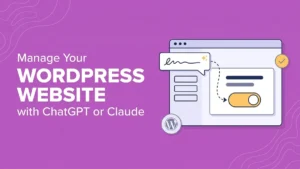
The landscape of artificial intelligence in enterprise technology is undergoing a structural paradigm shift. For years, digital assistants have functioned primarily in an advisory capacity—generating text, debugging code fragments, and answering technical inquiries while leaving the actual execution of workflows firmly in human hands. Today, that dynamic is evolving. Enterprise AI is shedding its passive advisory role, transitioning into autonomous and semi-autonomous agentic workflows capable of executing complex, multi-step digital operations across cloud infrastructure and content management systems.
This transformation is redefining how development teams, enterprise organizations, and digital agencies interact with platforms like WordPress. Rather than forcing administrators to manually navigate through nested dashboard menus, click-through configuration wizards, and command-line interfaces, modern AI agents are leveraging standardized application programming interfaces (APIs) and Model Context Protocols (MCP) to carry out routine administrative duties, execute code deployments, and triage performance anomalies.
Industry analysts project that this trend will accelerate rapidly over the coming years. Market research forecasts indicate that by 2028, a significant majority of enterprise organizations will transition away from purely assistive AI tools, favoring outcome-focused workflows where software assumes direct responsibility for procedural execution under human supervision.
The Technical Architecture Enabling Agentic Operations
The technical foundation making this transition possible relies on the standardization of digital actions. In the WordPress ecosystem, architectural milestones such as the Core Abilities API provide a standardized framework for core software, plugins, and themes to explicitly declare actions, inputs, outputs, and granular permission structures. Coupled with adapter mechanisms like the WordPress MCP Adapter, these capabilities are exposed as discrete, discoverable tools that authorized AI agents can invoke programmatically.
Concurrently, managed hosting providers have built out robust programmatic infrastructures. Comprehensive REST APIs—such as those deployed by enterprise hosting platforms like Kinsta—allow programmatic interaction with virtually every layer of server and site management. Developers can interact with environments via code to spin up staging servers, execute code pushes, purge content delivery network (CDN) caches, update software dependencies, and retrieve granular server logs.
By bridging these API layers with LLM-powered agent frameworks, organizations are establishing a new operational paradigm. Instead of the traditional workflow sequence of human operator interacting directly with a graphical user interface (GUI), operations now follow a triad model: human oversight, agent coordination, API execution, and final validation.
Real-World Operational Use Cases in Website Management

The integration of agentic workflows is proving most impactful in areas of digital management characterized by repetitive, highly structured tasks. Routine maintenance, deployment cycles, performance diagnostics, and administrative provisioning represent primary verticals for early enterprise adoption.
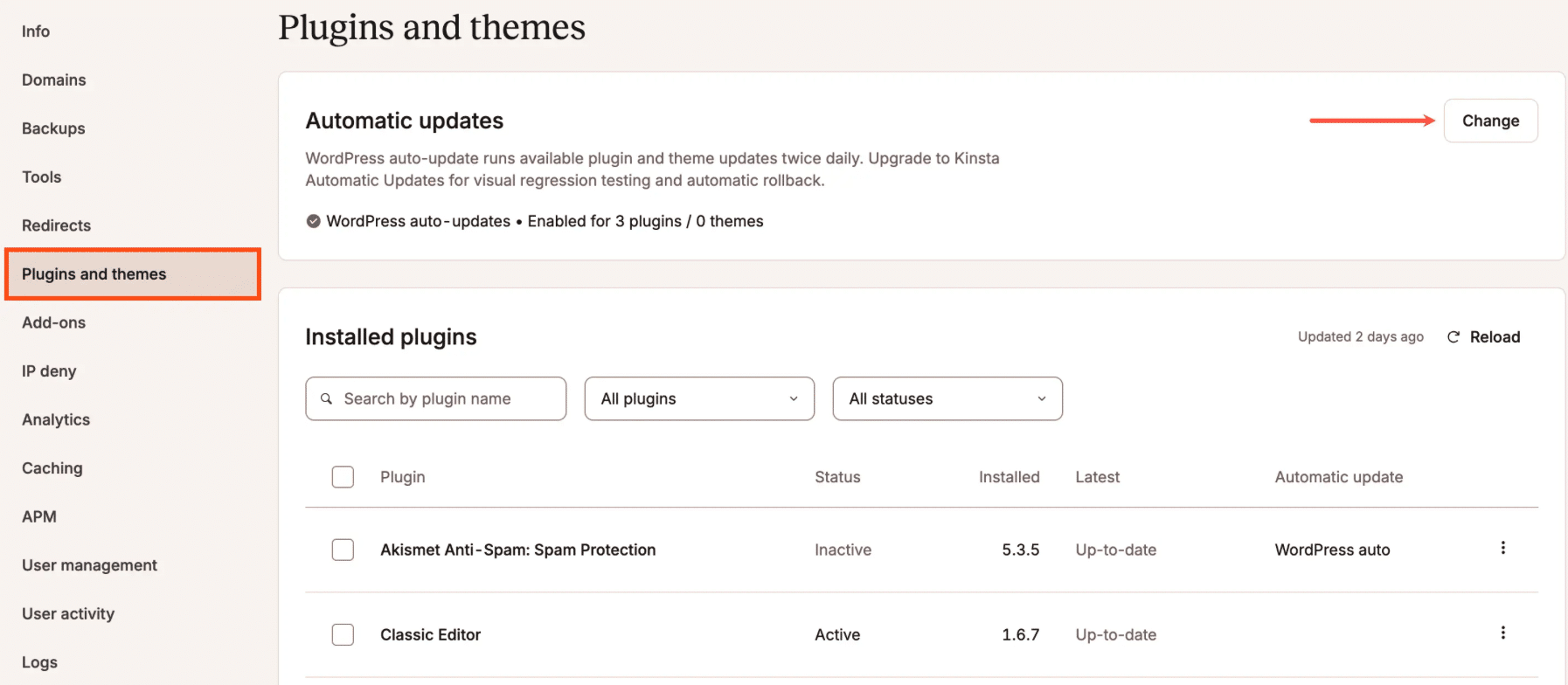
In the realm of software maintenance, managing dozens or hundreds of plugins and themes across multiple client sites traditionally consumes substantial technical overhead. AI agents can autonomously scan for available patches, evaluate compatibility metrics, push updates to isolated staging environments, and run automated visual regression testing. Should a regression error be detected—such as a broken layout element or an unhandled exception—the system can automatically initiate a rollback procedure, preserving production stability without requiring manual intervention from a systems administrator.
Deployment pipelines benefit from a similar division of labor. An agent can systematically construct a staging environment, apply a designated code branch, trigger automated integration tests, compile performance metrics, and prepare the release artifact for human review. Once verified by a senior engineer, the final production deployment can be authorized with a single confirmation.
Furthermore, troubleshooting performance bottlenecks—historically a time-consuming diagnostic process involving manual log parsing, metric correlation, and APM (Application Performance Monitoring) analysis—can be streamlined. When an application response time degrades or a spike in HTTP 500-series errors occurs, an agent can programmatically query server logs, evaluate database query bottlenecks, and correlate traffic patterns with recent code deployments. The agent then compiles a comprehensive forensic report or initiates pre-approved remediation protocols, drastically reducing mean-time-to-resolution (MTTR).
Guardrails, Governance, and the Principle of Least Privilege
As administrative software is granted the capability to execute changes directly on production environments, questions regarding security, governance, and operational risk management become paramount. Industry security standards dictate that the expansion of automation must be balanced with rigorous access controls and architectural guardrails.
Enterprise security frameworks emphasize the principle of least privilege. An AI agent tasked strictly with parsing performance analytics and generating weekly traffic reports requires no administrative permissions over domain name system (DNS) configurations, user management, or live database modifications. By compartmentalizing agent permissions according to discrete operational scopes, organizations can systematically contain the blast radius of any potential processing error.
Moreover, high-stakes operations—such as executing production releases, modifying core database tables, executing irreversible backup restorations, or altering security credentials—routinely require mandatory human-in-the-loop (HITL) approval gates. These checkpoints ensure that while software manages the procedural heavy lifting, strategic and consequential decisions remain anchored by human judgment.
To maintain accountability, comprehensive audit trails are essential. Enterprise platforms increasingly log all API-driven interactions, capturing precise metadata regarding which agent initiated a command, the exact timestamp of execution, the parameters passed, and the operational outcome. These programmatic logs integrate directly with centralized activity logs, ensuring transparency and enabling rapid forensic analysis should an unexpected workflow deviation occur.
Implications for Digital Agencies and Enterprise Delivery Models
The maturation of agentic workflows carries profound implications for the business models of digital agencies, managed service providers, and internal IT departments. Traditionally, the operational scale of an agency was directly bound to its human headcount; managing twice as many client websites inherently required a linear increase in manual maintenance hours spent on routine updates, security patches, and basic reporting.
By offloading repetitive execution tasks to supervised AI agents, agencies are restructuring their internal resource allocation. Technical personnel are increasingly shifting away from day-to-day maintenance and manual provisioning toward higher-value initiatives: architectural planning, security hardening, user experience optimization, custom software development, and strategic client consultation.
This shift alters the value proposition offered to enterprise clients. Rather than billing primarily for hours spent executing routine, administrative upkeep, service providers are pivoting toward outcome-based guarantees centered around site reliability, performance metrics, and rapid incident response times. Consequently, agencies can scale their active portfolio capacity without a corresponding inflation of routine overhead, establishing a more resilient and profitable operational framework.
Strategic Outlook: Preparing for the Agentic Enterprise
Organizations seeking to integrate agent-driven operations into their existing infrastructure are advised to adopt a phased, methodical implementation strategy rather than attempting an immediate, wholesale operational overhaul.
Phase one typically involves auditing existing workflows to identify highly repetitive, low-risk administrative tasks suitable for initial automation. Phase two focuses on standardizing internal documentation, API integrations, and permission hierarchies to ensure that any future agentic deployment operates within strict, well-defined boundaries. Phase three involves running agentic workflows in shadow or staging environments, carefully monitoring execution accuracy, exception handling, and rollback efficiency before granting access to production pipelines.
Ultimately, the advent of AI agents does not herald the obsolescence of human technical expertise. Rather, it marks the elevation of the developer and site operator from manual executors to orchestrators of automated systems. As software assumes responsibility for the intricate mechanics of day-to-day digital operations, human teams retain ownership of strategic intent, architectural vision, and operational governance.