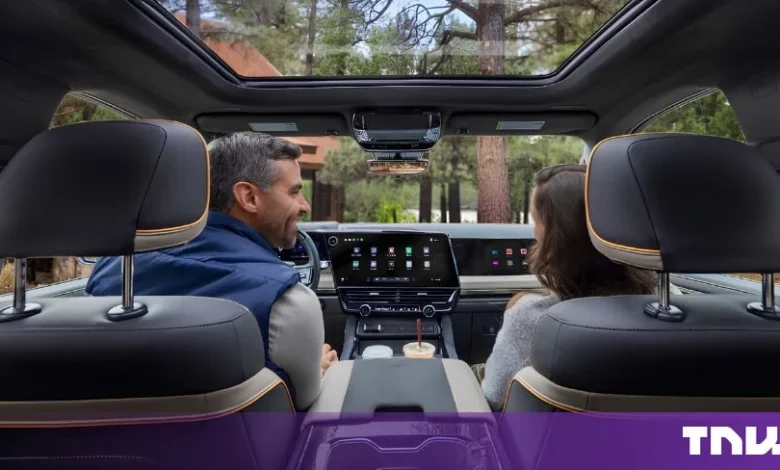
This strategic pivot marks a significant recalibration of General Motors’ software philosophy. For several years, the automotive giant had signaled a move toward a "walled garden" approach for its infotainment systems, aiming to capture more user data and provide a more integrated, brand-specific experience. However, the announcement regarding the 2027 Chevrolet Silverado and GMC Sierra suggests that the company is tempering its ambitions, choosing to harmonize its native software with the dominant phone-mirroring ecosystems that consumers have come to demand as a standard feature.
A Strategic Reversal on Phone Mirroring
The decision to retain Apple CarPlay and Android Auto—albeit in a split-screen configuration—represents a partial reversal of a policy previously championed by General Motors leadership. In recent years, GM executives, including CEO Mary Barra, had expressed skepticism toward third-party mirroring systems, arguing that the friction of switching between a vehicle’s native operating system and phone-based platforms created a fragmented and clunky user experience. The company had initially planned to phase out these systems entirely in favor of an internal software suite developed in partnership with Google.
However, market feedback proved louder than internal software strategy. Consumers, accustomed to the seamless connectivity of their smartphones, viewed the removal of CarPlay and Android Auto as a regression in utility. The new 2027 interface layout addresses these concerns by defaulting to a split-screen display. This allows the vehicle’s native navigation, climate controls, and vehicle settings to occupy one side of the high-definition touchscreen, while phone projection occupies the other. By allowing these systems to coexist, GM is effectively conceding that the "whole-screen takeover" approach of the past was less desirable than a multi-functional hub that prioritizes driver convenience over total software exclusivity.
Redesigning the Digital Cockpit: The User Experience Focus
The aesthetic and functional overhaul of the 2027 Silverado and Sierra is not limited to software integration. According to Sebastian Bauer, GM’s executive director of human interface, the primary driver for this redesign was the persistent user frustration regarding the complexity of navigating deep-layered menus. "What we heard was that people were hunting for controls, navigating through too many steps," Bauer stated, underscoring the shift toward a more streamlined, "fewer-taps" philosophy.
The design team has replaced the legacy blue-toned interfaces and pale, low-contrast icons with a sophisticated, high-contrast, jet-black theme. This change is not merely cosmetic; higher contrast levels are widely recognized in human-factors engineering as superior for rapid visual recognition, particularly in varying lighting conditions encountered by heavy-duty pickup truck drivers. Additionally, the quick-access menus have been made fully customizable, allowing users to pin their most-used functions to the home screen. The gauge cluster has also undergone a complete rework, designed to prioritize essential driving data while minimizing cognitive load.
The Regulatory Landscape: Euro NCAP and Global Standards
While GM’s software team focuses on user preferences, a more rigid force is reshaping the industry from the outside: safety regulation. The 2026 Euro NCAP (European New Car Assessment Programme) protocol has introduced stringent requirements that directly challenge the industry-wide trend of migrating physical buttons onto touchscreens.
Under the new European safety guidelines, a vehicle must feature distinct, tactile physical controls for five critical functions to qualify for a coveted five-star safety rating: turn signals (indicators), hazard lights, the horn, windshield wipers, and the eCall emergency notification system. The reasoning behind this mandate is data-driven; studies indicate that the time a driver spends looking at a screen to perform a secondary task—such as activating wipers or adjusting fan speed—significantly increases the risk of a collision. By mandating physical buttons for these core safety functions, regulators aim to return to "blind operation," where a driver can locate and engage a control by muscle memory alone without averting their eyes from the road.
This regulatory shift creates a complex hurdle for manufacturers like GM. While the 2027 Silverado and Sierra are primarily designed for the North American market, the ripple effects of these standards are global. GM’s current design maintains some physical buttons, such as those for headlights, but it remains to be seen if these will satisfy the evolving global benchmarks.
The Escalation in China: A More Stringent Benchmark
Beyond Europe, China has adopted an even more aggressive stance toward digital cockpit safety. As of July 2027, Chinese automotive standards will mandate physical controls for 19 specific functions. These controls must meet strict dimensional requirements—each must be at least 10mm square—and they must remain functional even in the event of a total electrical system failure.
This level of regulatory scrutiny is forcing a massive rethink in interior design. Where designers once dreamed of "minimalist glass cockpits" devoid of buttons, the industry is now witnessing a "return to tactility." For a company like General Motors, which relies on a shared global architecture, the need to comply with the most stringent regional regulations could eventually dictate the design language of its entire global fleet.
Implications for the European Market and Beyond
GM’s presence in Europe is currently centered on its high-end electric vehicle (EV) lineup, including the Optiq, Lyriq, and Vistiq. As the brand expands its footprint—most notably with its re-entry into the United Kingdom market—the question of how it will reconcile its UI strategy with European safety protocols becomes pressing.
While GM has confirmed that the new interface design will eventually propagate across its entire lineup, it has remained notably tight-lipped about whether phone projection will be included in the European versions of these vehicles. This uncertainty highlights a broader divergence in the industry. For example, Rivian has taken the polar opposite approach, choosing to omit Apple CarPlay and Android Auto entirely in favor of a proprietary, unified operating system, even as it targets the European market. GM, by contrast, appears to be attempting a "middle path"—integrating third-party services while maintaining control over the primary vehicle UI.
Fact-Based Analysis of the Software-Defined Vehicle
The pivot GM is making is emblematic of the "Software-Defined Vehicle" (SDV) era, which has proven to be more challenging than many automotive executives anticipated. The initial industry consensus was that consumers would readily abandon smartphone mirroring if the native vehicle software was sufficiently powerful and integrated. However, the data suggests that consumers view their smartphones as an extension of their personal identity and digital workspace. They demand continuity.
By allowing CarPlay and Android Auto to occupy a window rather than the full screen, GM is effectively creating a hybrid environment. This allows the manufacturer to retain data capture and control over critical vehicle functions (like battery management and navigation) while allowing the consumer the convenience of their preferred music, messaging, and podcast apps.
Looking Toward 2027 and Beyond
The 2027 model year will serve as a bellwether for the automotive industry. If the split-screen approach in the Silverado and Sierra succeeds in satisfying both user demand and regulatory scrutiny, it may become the new industry blueprint. Conversely, if the system is deemed too complex or fails to meet the increasingly strict safety standards in regions like Europe and China, GM may be forced to make further concessions, perhaps re-introducing physical buttons for climate and audio controls.
The trajectory of the next three years will be defined by this tension between the allure of the "all-digital" experience and the practical realities of safety, usability, and consumer preference. As GM continues to roll out its updated UI across its diverse brand portfolio—ranging from the rugged GMC Sierra to the luxury-oriented Cadillac Lyriq—the company will be navigating a complex path that balances the ambition of a tech-forward future with the grounded requirements of the present-day driver.
Ultimately, the lesson of the 2027 interface overhaul is one of humility. It suggests that even the most powerful automotive conglomerates are ultimately subject to the will of the driver, and that in the race to digitize the cockpit, the most successful strategy may not be the one that tries to replace the user’s phone, but the one that best learns to live alongside it.
Related posts: