A Gentle Introduction to Model Distillation and the Escalating Industry Conflict

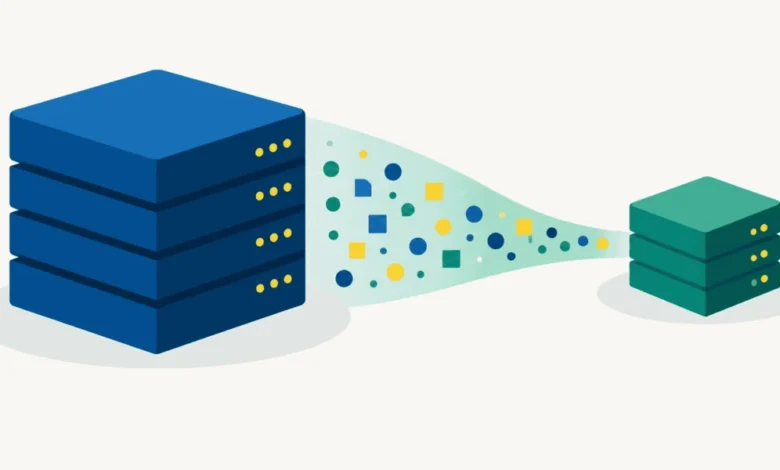
The most capable artificial intelligence models currently in existence represent a paradoxical triumph of engineering. Systems like OpenAI’s GPT-4, Anthropic’s Claude 3.5, and Google’s Gemini Ultra consist of hundreds of billions of parameters, requiring massive, multi-megawatt data centers to operate. While these models set the gold standard for reasoning, coding, and creative output, their sheer size renders them commercially and practically inaccessible for edge computing, mobile devices, or latency-sensitive applications. To bridge the gap between architectural complexity and real-world utility, the industry has turned to model distillation—a powerful, yet increasingly controversial, technique used to transfer the "intellectual property" of a massive AI system into a leaner, more agile counterpart.
The Mechanism of Knowledge Transfer
At its core, model distillation is the process of training a smaller "student" model to mimic the behavior of a larger "teacher" model. In traditional machine learning, models are trained on ground-truth labels—the binary classification of a data point as either "this" or "that." However, Geoffrey Hinton, a pioneer of the field, argued that such hard labels discard critical relational information.
When a teacher model processes an image or a text string, it produces a probability distribution. A sophisticated model does not simply label a photo of a dog as "dog"; it assigns a non-zero probability to related categories, such as "wolf" or "cat," based on visual similarities. Hinton termed these secondary probabilities "dark knowledge." By training a student model on these "soft" probability distributions—often flattened through a process known as temperature scaling—the student learns the nuance and structural reasoning of the teacher, allowing a model a fraction of the size to achieve near-teacher performance.
From Categorical Labels to Synthetic Data
While classical distillation functioned well for static tasks like image classification, the rise of Large Language Models (LLMs) required an evolution in methodology. Because LLMs generate text token-by-token across vast, complex vocabularies, researchers have shifted toward three primary modalities:
- Synthetic Data Distillation: Currently the industry standard, this involves using a teacher model to generate massive datasets of high-quality, reasoning-intensive text. The student model is then fine-tuned on this synthetic output. This method is highly effective because it requires only access to the model’s API, making it the primary vector for unauthorized distillation.
- Feature Distillation: Here, the student is forced to replicate the internal activation patterns of the teacher’s hidden layers. This requires "white-box" access to the model’s weights and architecture, typically limiting its use to internal R&D environments.
- Logit-based Distillation: This applies the classical soft-label approach to the token-prediction level, matching the teacher’s full probability distribution for every generated word. Like feature distillation, this requires direct access to the model’s internals.
A Timeline of Escalation: 2026 and Beyond
The perception of distillation shifted from a benign engineering practice to a high-stakes security threat in early 2026. As companies poured billions into training frontier models, the economic incentive to "steal" that intelligence via distillation became overwhelming.
- January 2026: OpenAI submits a formal memo to the U.S. House Select Committee on China, alleging that the laboratory DeepSeek utilized sophisticated, obfuscated routing methods to extract proprietary reasoning capabilities from GPT-4.
- March 2026: Anthropic publishes a technical security disclosure, revealing that over 24,000 synthetic accounts were identified generating 16 million queries directed at Claude. The patterns suggested an automated effort to harvest "agentic" and coding-specific knowledge.
- April 2026: During legal proceedings, Elon Musk confirms under oath that xAI had utilized OpenAI’s models during the training phase of Grok, categorizing the practice as a standard industry maneuver.
- June 2026: Anthropic alleges a massive campaign by the Qwen lab (Alibaba), claiming 28.8 million exchanges occurred over a 44-day period. Alibaba categorically denies the allegations, maintaining that their model improvements were the result of internal innovation.
- August 2026: Google’s Threat Intelligence Group reports the disruption of over 100,000 malicious prompts designed to perform "model extraction" attacks against Gemini, marking the first time a major provider explicitly framed distillation as a cyber-threat.
Economic and Legal Implications
The controversy surrounding distillation strikes at the heart of the "AI arms race." The cost of training a state-of-the-art model is estimated in the hundreds of millions, if not billions, of dollars. When a competitor can distill those capabilities into a smaller model for a fraction of the cost—sometimes estimated as low as a few million dollars—it fundamentally undermines the first-mover advantage.
Independent analysts at SemiAnalysis have suggested that the reported training costs of some international models may be artificially low because they essentially "outsource" the most expensive part of their R&D to the models of their competitors. If a company can train a high-performance model by distilling the intelligence of a $1 billion model, they are effectively capturing the value of that investment without bearing the full cost.
However, the legal path forward is murky. Under current U.S. law, AI outputs are generally not copyrightable, making it difficult to argue that "stealing" an output is equivalent to intellectual property theft. Most labs are forced to rely on Terms of Service (ToS) violations, which are notoriously difficult to enforce against international entities or anonymous botnets.
The Future of Technical Defenses
The industry is currently engaged in a frantic search for technical deterrents. Proposed solutions include:
- Dynamic Watermarking: Embedding subtle, imperceptible patterns in model outputs that allow developers to identify if a text was generated by their specific model.
- Anomaly Detection: Implementing AI-based "gatekeepers" that monitor for the repetitive, structured, or high-volume query patterns indicative of an extraction attempt.
- Rate Limiting and Latency Injection: Artificially slowing down or restricting users who exhibit behaviors consistent with programmatic data scraping.
These defenses, however, carry a high cost. Stringent security measures can degrade the user experience for legitimate customers and hamper the open-source community’s ability to build upon existing models.
Conclusion: A Structural Dilemma
Model distillation sits at a critical intersection of efficiency and ethics. While it remains a vital tool for making AI more accessible and sustainable—enabling everything from local privacy-focused LLMs to efficient enterprise assistants—it also acts as a conduit for the unauthorized replication of frontier intelligence.
As the industry moves forward, the tension between the push for open-weight models and the need to protect proprietary intellectual capital will likely intensify. The current standoff suggests that there is no "clean" technical solution. Instead, the future of AI will be defined by a delicate balance of aggressive security, evolving legal frameworks, and a continued, albeit more regulated, reliance on the distillation of knowledge. As labs share intelligence on extraction attempts, the barrier to entry for unauthorized distillation will rise, but the fundamental reality remains: if a model can be queried, its knowledge can be extracted. The industry has effectively entered an era where the act of sharing an AI’s intelligence is, by definition, an act of exposing it.