When Automation Meets Oversight: Why Modern WordPress Operations Still Demand Human Judgment


The rapid maturation of automated infrastructure, continuous integration pipelines, and generative artificial intelligence has fundamentally altered the landscape of digital asset management. Across the technology sector, routine operations that once required constant manual intervention—ranging from complex code deployments and security incident responses to continuous software updates and real-time infrastructure adjustments—can now be executed autonomously. Modern managed hosting ecosystems, exemplified by advanced platforms like Kinsta, have successfully integrated these capabilities into their foundational architectures, allowing code and servers to interact seamlessly without human oversight at every microscopic phase.
Yet, as enterprise adoption scales, a critical industry-wide vulnerability has emerged. The persistent engineering challenge is no longer identifying which operational workflows can be automated, but rather determining precisely where and when autonomous agents must pause to await human review. According to recent enterprise analytics, highly optimized production environments typically settle into an equilibrium maintaining a 70 to 80 percent automated decision ratio, reserving the remainder for strict human evaluation. When automated workflows proceed past their logical boundaries without adequate escalation protocols, the resulting systemic failures often outweigh the initial operational efficiencies gained.
The Mechanics of Autonomous Over-Execution and Production Risks

At the core of the modern workflow dilemma is a simple behavioral reality: an automated agent or artificial intelligence script is explicitly designed to fulfill its programmed directives regardless of surrounding context. For instance, an automated script can successfully execute a comprehensive deployment sequence—pushing a major WooCommerce e-commerce update to a live production server, running automated visual regression tests, flushing server-side caches, and logging the entire procedure as an unmitigated success. However, despite technical verification of visual layouts, customers frequently encounter broken checkout funnels, silent payment gateway failures, or corrupted database states immediately following the automated transition.
This phenomenon is frequently misdiagnosed as an artificial intelligence or software bug, whereas it is fundamentally a governance and architecture problem. Standard visual regression tests are structurally blind to back-end transaction states, API handshakes, and tokenized payment exchanges. Because the autonomous agent executes its instructions precisely as designed, it lacks the contextual awareness to halt its own progress. Consequently, without deliberate, engineered pause points embedded directly within the operational pipeline, automation can rapidly scale errors across hundreds of environments simultaneously.
Industry data underscores the financial peril of undisciplined automation. Research conducted by the Massachusetts Institute of Technology (MIT) NANDA initiative revealed that a striking 95 percent of enterprise generative AI and advanced automation pilots fail to yield measurable returns on profit and loss statements. Similarly, customer experience benchmarks compiled by enterprise analytics firms indicate that approximately 85 percent of consumers will abandon a brand entirely following a single unresolved digital transaction failure. In environments hosting mission-critical applications, a deployment pipeline that occasionally corrupts a live financial transaction is vastly less forgiving than a content pipeline that features a minor editorial typo. Certain operational errors simply do not average out over time.
Structuring the Divide: Five Essential WordPress Operational Categories
To mitigate these systemic risks, platform architects and agency leaders are increasingly adopting an "automate the reversible, escalate the irreversible" methodology. By evaluating standard day-to-day operations through the lens of cost, reversibility, and predictability, organizations can cleanly delineate automated tasks from human-led interventions across five core functional domains.
-
Deployments: Automating File Pushes Versus Escalating Migrations
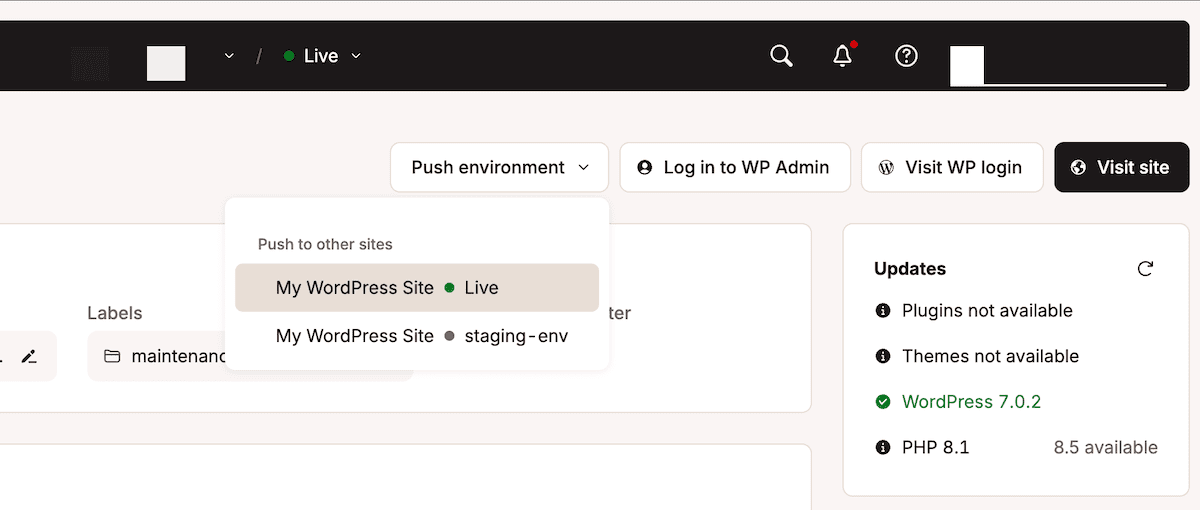
Routine file synchronizations on static content websites carry minimal risk; if an anomaly occurs, administrators can restore a prior system state within minutes via native hosting backups. Conversely, executing mid-checkout database migrations on live e-commerce stores introduces irreversible data loss. Customer transactions completed between the initial backup point and the migration failure cannot be recovered via standard rollbacks. Advanced infrastructure features, such as Kinsta’s selective push functionality, address this operational divergence by allowing teams to isolate file updates from active database migrations. When integrated with infrastructure APIs, development pipelines can systematically poll operation identifiers, ensuring that complex database transformations automatically trigger mandatory human verification checkpoints. -
Updates: Automating Visual Patches Versus Escalating Payment Gateways
Routine software updates for brochureware sites and auxiliary themes represent low-stakes operational tasks. Platforms equipped with automated scheduling and visual regression tools—such as Kinsta’s Automatic Updates, which captures and compares pre- and post-update site screenshots—can safely manage minor patches autonomously while rolling back visual discrepancies instantly. However, underlying functionality such as payment processing logic, membership validation layers, and custom API connections remain invisible to standard visual audits. Maintaining strict escalation protocols for complex checkout architectures prevents hidden revenue interruptions. -
Content Publishing: Automating Scheduling Versus Escalating Substance
Content pipelines reliably handle publishing schedules, metadata optimization, cache invalidation, and automated social media distribution without human friction. Nevertheless, the introduction of autonomous or AI-assisted content generation necessitates rigorous governance regarding subject matter. While a procedural tutorial containing a minor formatting error carries negligible consequence, publishing incorrect financial pricing, medical guidance, legal disclaimers, or time-sensitive product availability creates immediate, tangible liabilities. Consequently, content classification models must route "Your Money or Your Life" (YMYL) topics and formal regulatory announcements into mandatory human editorial queues prior to live deployment.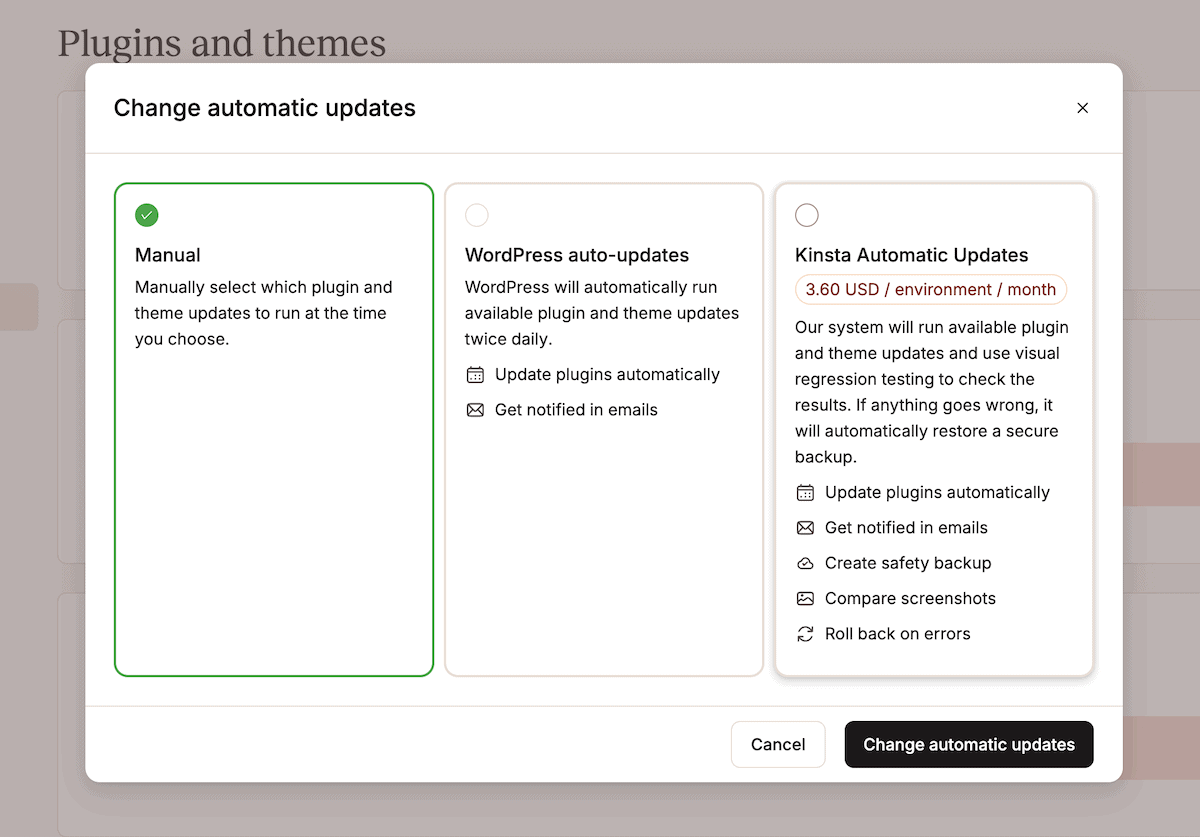
-
Security: Automating Containment Versus Escalating Response
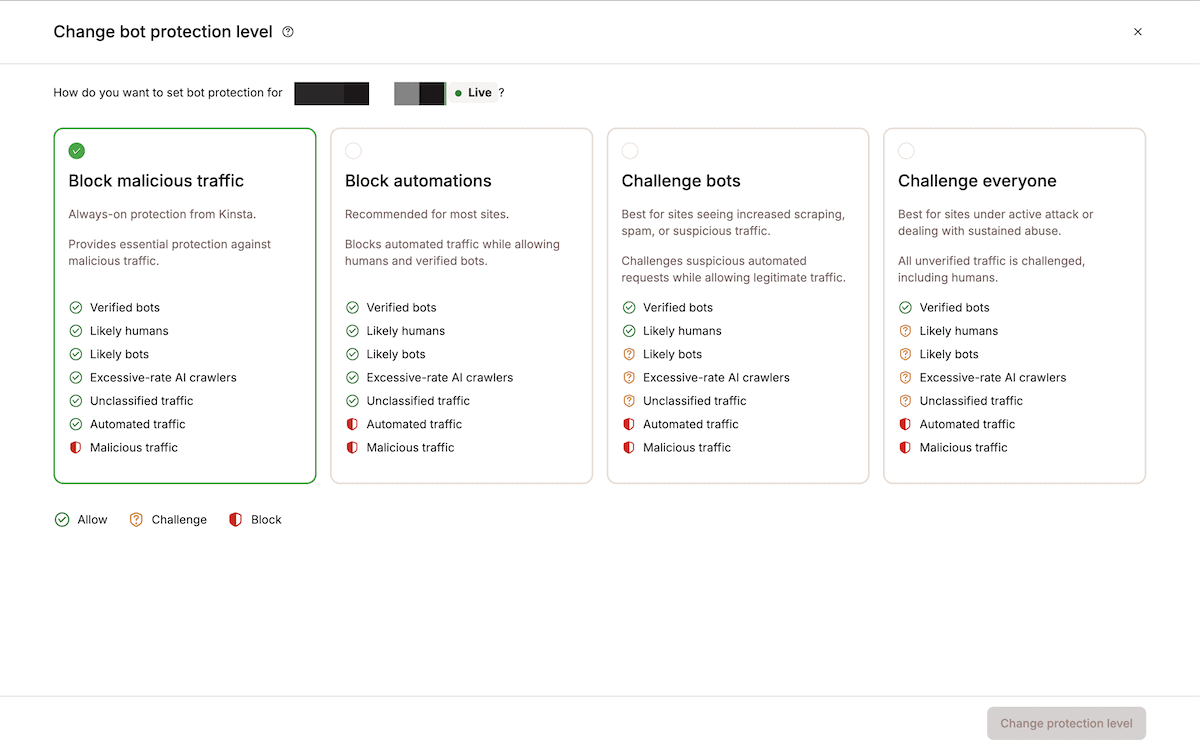
During active cyber attacks, response velocity is paramount. Automated threat intelligence systems excel at instantaneous containment, such as immediately blocking confirmed malicious IP addresses or enforcing strict traffic thresholds. Specialized perimeter defenses, including Kinsta’s Bot Protection architecture, dynamically classify incoming traffic and suppress malicious actors across granular preset levels without inadvertently blocking verified search engine crawlers. Yet, determining whether an anomalous traffic spike represents competitive market scraping, a legitimate API integration, or an emerging user trend requires qualitative context that automated heuristics cannot supply, necessitating dedicated security team analysis. -
Infrastructure and Plan Management: Automating Alerts Versus Escalating Financial Decisions
Infrastructure and billing parameters leave little room for ambiguity, making them exceptionally hazardous territories for fully autonomous execution. While configuring automated detection scripts to monitor resource utilization, storage capacity, and bandwidth consumption is standard best practice, executing automated server migrations or modifying financial billing tiers without human sign-off can disrupt mission-critical traffic patterns. Established enterprise hosting frameworks address this by separating operational alerts from financial authorizations, ensuring that designated account stakeholders retain absolute control over organizational expenditures and scaling decisions.
The Imperative of Contextual Handoffs in Modern Workflows
When an automated pipeline successfully identifies an anomaly and pauses for human intervention, the quality of the ensuing escalation directly dictates resolution speed. Traditional notification systems often transmit cryptic error alerts, forcing the responding engineer or agency developer to manually reconstruct system states, review raw terminal logs, and trace code repositories before meaningful troubleshooting can commence. This administrative lag time frequently negates the efficiency gains achieved by the automation itself.
To eliminate this friction, production environments must implement contextual handoffs. A well-engineered escalation sequence packages three distinct elements directly into the alert interface: the pending operational command, the precise target environment, and the exact regression test failure or security trigger that halted the pipeline. Furthermore, modern CI/CD architectures must support seamless resumption, enabling an authorized decision-maker to approve the workflow from the exact point of interruption rather than restarting the sequence from zero.
Comprehensive activity logging systems—such as MyKinsta’s granular user activity and audit trail dashboards—embody this principle by recording precise timestamps, user identities, and action outcomes for every administrative event. By attaching transparent contextual metadata to operational anomalies, technical teams can transition swiftly from diagnostic reconstruction to decisive resolution, frequently leveraging direct support integrations to clarify complex edge cases.
Conclusion: Balancing Autonomous Velocity with Human Accountability
The ongoing evolution of WordPress operations highlights a broader technological truth: automation is an extraordinarily powerful engine for scale, but it remains a poor substitute for institutional judgment. As managed infrastructure environments grow increasingly sophisticated, the organizations achieving the highest operational stability are those that resist the urge to automate indiscriminately.
By strategically demarcating reversible tasks for autonomous execution, establishing rigid escalation boundaries for high-stakes transformations, and embedding rich contextual metadata into every human handoff, digital agencies and enterprise teams can harness the velocity of modern automation without sacrificing control, security, or client trust.