The CSS Working Group (CSSWG) has officially moved to address one of the most persistent pain points in stylesheet management: the verbosity required to target multiple class variations. As of August 2026, the draft specification for Selectors Level 5 has been updated to include the "class prefix selector," a proposal that promises to streamline CSS by allowing developers to target classes sharing a common prefix using a concise, wildcard-style syntax.
The Problem: Verbosity and Performance
For over a decade, developers managing complex design systems—particularly those utilizing BEM (Block, Element, Modifier) methodology or utility-first frameworks—have struggled with inefficient selector strategies. Currently, developers looking to apply shared styles to a group of related classes (such as .btn-primary, .btn-secondary, and .btn-danger) are forced into a trade-off.
The most common approach involves grouping selectors with commas, which can lead to bloated, unmaintainable CSS files as the design system grows. Alternatively, developers often rely on attribute selectors, such as [class^="btn-"] or [class*=" btn-"]. While functional, these attribute selectors are notoriously suboptimal in terms of rendering performance. Browser engines must evaluate these selectors by performing string comparisons against the entire class list of every element, a process that is significantly more resource-intensive than matching a standard class selector.
Chronology of the Proposal
The journey toward the class prefix selector began in early 2024, when developer Lea Verou formally introduced the proposal to the CSSWG. Verou, a long-time advocate for cleaner CSS syntax and improved developer experience, argued that the existing methods for prefix matching were relics of an era before CSS had become a robust application-development language.
Following months of debate regarding the potential impact on browser engine architecture, the proposal gained momentum throughout 2025. Technical advocates, including Bramus Van Damme, a prominent voice in the Chrome Developer Relations team, championed the feature for its potential to reduce the cognitive load on developers. By August 2026, the CSSWG reached a consensus to adopt the feature. On August 17, 2026, the syntax was officially integrated into the W3C’s Selectors Level 5 working draft, signaling that the feature is now on the path to standardization.
Technical Mechanics and Syntax
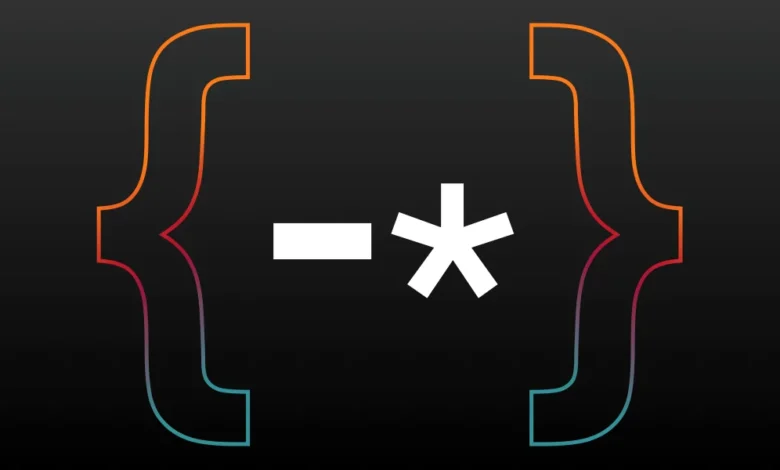
The proposed syntax, .prefix-*, represents a significant departure from standard CSS behavior. Under the current specification draft, the selector would allow developers to write:
.btn-*
  padding: 0.5rem 1rem;
  border-radius: 4px;
This declaration would effectively apply to any element with a class starting with "btn-". According to the current technical specifications, this selector is intended to carry the same specificity weight as a standard class selector—(0,1,0). This is a critical design choice, as it ensures that developers can predict how their styles will cascade without needing to account for the heightened specificity usually associated with attribute selectors.
However, the CSSWG has been careful to define the boundaries of this feature. The wildcard syntax is strictly limited to prefix matching. It does not support arbitrary pattern matching (such as .prefix* or .prefix-*-suffix), nor does it currently support suffix matching. These constraints are intentional, designed to maintain high performance in browser engines by allowing them to optimize lookups based on the known prefix.

Industry Reactions and Expert Analysis
The reception within the web development community has been largely positive, though it is not without its skeptics. Proponents highlight the ergonomics of the syntax, noting that it brings CSS closer to the convenience found in modern JavaScript frameworks or preprocessors like Sass, but with the added benefit of being a native browser feature.
Conversely, some engineers have raised concerns regarding the "progressive enhancement" gap. Because this is a new feature, it will not be immediately available in all browser versions. Developers will be required to utilize @supports queries to ensure that their styles do not break in older environments:
@supports selector(.btn-*)
  .btn-*  /* New syntax */
This creates a dual-track development process that may deter early adoption. Furthermore, industry analysts have pointed out that while the feature solves a syntax problem, it does not necessarily solve the underlying architectural challenges of large-scale CSS. There is a lingering debate as to whether this encourages "class soup"—the practice of layering too many classes onto single DOM elements—rather than promoting more semantic HTML structures.
Broader Implications for Web Components and Frameworks
The implications of the class prefix selector extend beyond simple button styling. One of the most anticipated use cases involves the styling of Web Components. Developers frequently struggle with scoping styles within Shadow DOM, and the ability to target classes dynamically could simplify the integration of third-party libraries.
Dave Rupert, a lead developer in the open-source community, noted that this feature could significantly lower the barrier for developers attempting to style encapsulated components. By allowing for more flexible, pattern-based overrides, the selector could reduce the need for complex, deep-nesting strategies that currently plague many component-based architectures.
Future Outlook and Standardization
The inclusion of the class prefix selector in the Selectors Level 5 draft is merely the first step. The CSSWG must now move through the phases of "Candidate Recommendation" and "Proposed Recommendation" before the feature reaches "W3C Recommendation" status. During this time, browser vendors—including Chromium, WebKit, and Gecko—will begin the process of implementation and testing.
While there is no fixed timeline for browser implementation, the rapid adoption of the proposal by the CSSWG suggests a high level of confidence in its viability. For the average developer, this represents a shift toward a more expressive and efficient language. As the web platform continues to mature, the focus is increasingly shifting toward features that not only add new capabilities but also refine the day-to-day experience of writing CSS.
Whether this feature will eventually replace the need for preprocessors remains to be seen. However, as native CSS becomes more powerful, the reliance on external build tools to handle simple prefixing tasks may diminish, leading to lighter, faster, and more maintainable codebases across the web ecosystem. As it stands, the community remains in a period of observation, waiting to see how browser vendors finalize the implementation details and when this tool will become available for widespread production use.