New Tools for Merchants: A Roundup of Q4 2026 E-commerce Innovations and Agentic Platforms


The e-commerce landscape is undergoing a profound transformation as the integration of "agentic" artificial intelligence shifts the industry from passive analytical tools to active, decision-making systems. This week’s surge in product releases highlights a clear trend: merchants are moving beyond mere data visualization toward automated workflows that handle complex tasks—from international tax compliance and cross-border payments to dynamic wholesale product discovery.
The Rise of Agentic Commerce
The most significant trend defining the current quarter is the emergence of agentic commerce. Unlike traditional AI, which typically provides insights that a human must manually implement, agentic systems are designed to "reason" and execute tasks.

Lightspeed Commerce, a leading point-of-sale and payment platform, has pioneered this shift by introducing new agentic capabilities to its retail suite. By leveraging internal data—including catalog, inventory, and sales performance—Lightspeed AI can now recommend specific inventory adjustments or purchasing orders, presenting these to retailers for quick approval. This reduces the cognitive load on small business owners, allowing them to manage complex operations through simple, conversational interfaces.
Similarly, Loops, an enterprise-focused AI startup, recently secured $3.5 million in seed funding to build an "AI operating system" for commerce. With backing from A16z Speedrun and other institutional investors, Loops aims to synthesize various disparate AI tasks—such as product discovery and customer decision-making—into a single, unified workflow. This indicates a broader industry movement toward "autonomous retail," where the software anticipates and resolves operational friction points without requiring constant human oversight.
Streamlining Wholesale and B2B Operations
The B2B e-commerce sector is experiencing a parallel evolution, with major players like Algolia and TopDawg launching tools that cater to the unique complexities of wholesale distribution.

Algolia has launched a native integration for Shopify B2B, a move that addresses a longstanding pain point in wholesale: the need for personalized product discovery. By syncing with Shopify’s B2B infrastructure, Algolia now allows retailers to show business customers only the inventory they are authorized to purchase, at pre-negotiated price points. This integration is critical for large-scale distributors who manage thousands of SKUs across varied client tiers, as it replaces generic storefront experiences with tailored, account-specific catalogs.
On the distribution front, TopDawg has expanded its multichannel hub, providing a centralized system for U.S.-based suppliers and wholesalers. The platform’s ability to sync inventory and process orders across multiple sales channels effectively lowers the barrier for manufacturers to enter the direct-to-consumer and dropshipping markets. By making participation in its distribution network free, TopDawg is positioned to increase the liquidity of wholesale inventory in an increasingly fragmented digital marketplace.
Global Payments and Cross-Border Complexity
As businesses expand beyond domestic borders, the logistical and financial hurdles of international trade remain a primary obstacle to growth. Fiserv’s launch of its "Commerce Hub" is a direct response to this challenge. The platform serves as an orchestration layer, allowing merchants to manage local payment methods, regulatory compliance, and settlement options through a single API. By consolidating these functions, Fiserv is helping reduce the technical debt associated with maintaining separate integrations for different geographic markets.
Complementing this, Mastercard and fintech firm BVNK have launched the Global Money Platform, which integrates stablecoin technology with traditional payment networks. This infrastructure allows merchants to handle cross-border payments using both fiat and stablecoins. The implication for global trade is substantial: by leveraging stablecoins for near-instant foreign exchange and settlement, merchants can mitigate the volatility and high costs often associated with traditional international bank transfers.
Intelligence in Marketing and Sales
Marketing technology is also leaning into the "agentic" paradigm. Startups such as Marklo and Miracly are deploying AI agents that act as virtual marketing departments. Marklo, which recently raised $5 million in seed funding, provides Shopify brands with a system that continuously scans sales data and inventory levels to identify revenue opportunities. Rather than just reporting on performance, Marklo generates full campaign proposals for marketers to review.
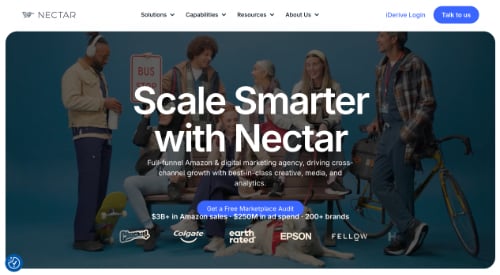
In the Amazon ecosystem, Nectar has introduced "Customer Atlas," an Amazon Marketing Cloud (AMC) tool that reorients search advertising strategy. By shifting the focus from keyword-based bidding to shopper-segment targeting, Nectar allows brands to optimize their ad spend based on historical purchase data. This represents a more surgical approach to digital advertising, potentially improving ROAS (Return on Advertising Spend) by excluding segments that are unlikely to convert.

Financial and Operational Efficiency
The administrative burden of scaling a startup—specifically in accounting and tax compliance—is being addressed by new, AI-first platforms. Oracle NetSuite has introduced "QuickStart," a free, AI-driven financial platform designed to guide early-stage technology startups from their inception through to an eventual IPO. By embedding AI agents into accounting and subscription management, NetSuite is democratizing access to enterprise-grade financial infrastructure.
Furthermore, FinStackk has launched "SalesTaxx" to address the chaotic nature of U.S. sales tax nexus. With the landscape of state-by-state tax requirements changing constantly, the ability to monitor thresholds automatically and integrate with major platforms like Shopify, Amazon, and Xero provides a necessary layer of protection against compliance audits.
Strategic Implications for Retailers
The influx of these tools suggests that the next phase of e-commerce maturity will be defined by "efficiency at scale." For years, merchants have been forced to juggle dozens of disjointed SaaS products. Today’s releases suggest that platforms are now competing to become the "central nervous system" of the business.
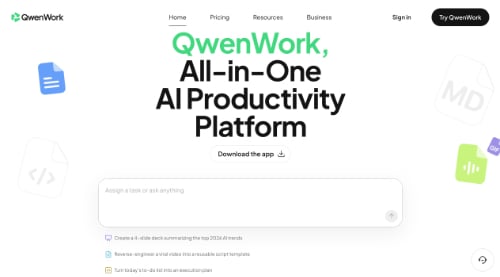
- For Small to Mid-Sized Businesses: The availability of free or low-cost tools like QwenWork and NetSuite QuickStart lowers the cost of entry, allowing smaller players to operate with the same level of analytical rigor as larger enterprises.
- For Large Retailers: The shift toward agentic platforms (such as the new Square Kiosk with its voice-based AI) signals that labor-intensive tasks—like point-of-sale management and customer service—are becoming increasingly automated.
- For Marketplaces: The launch of EasyShop in 21 European countries demonstrates the ongoing potential for cross-border marketplace models, provided they can handle the complexity of local VAT and cross-jurisdictional sales automatically.
Looking Ahead
The rapid integration of AI agents across every facet of the commerce stack—from content creation and marketing to logistics and tax compliance—is not merely an incremental update; it is a fundamental shift in how businesses operate. As these tools continue to mature, the competitive advantage will likely move away from those who simply have the most data to those who have the most effective "agents" acting upon that data in real time.
For merchants, the current period represents a crucial window for evaluation. Integrating these autonomous systems requires a high degree of trust in the underlying algorithms. However, as the industry moves toward 2027, those who adopt these agentic frameworks are likely to see a significant reduction in operational overhead, enabling them to focus more on brand building and product innovation rather than manual administrative upkeep.