Navigating the 2026 Midterms: How AI Voice Clones and Election Scams Exploit America’s Digital Democracy

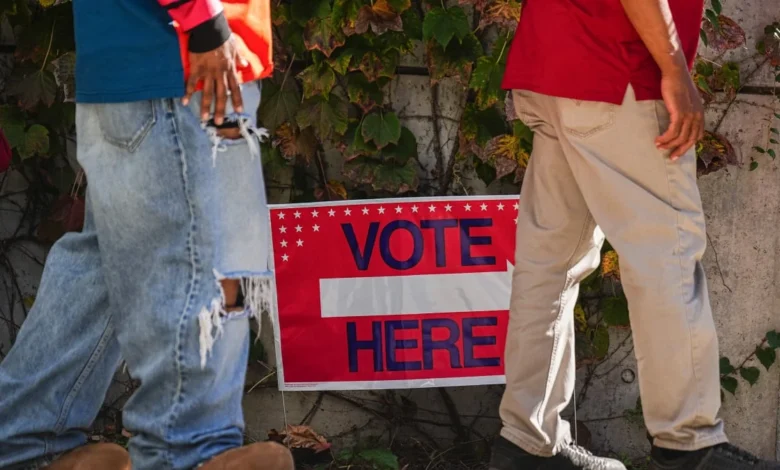
As the United States approaches the climax of the midterm election cycle, citizens are experiencing a relentless digital barrage. By the time the final ballots are tallied, Americans will have received an estimated 60 billion political text messages, translating to an average of roughly 170 messages per individual voter. Concurrently, political campaigns, political action committees (PACs), and advocacy groups have shattered financial records, pumping more than $11 billion directly into campaign advertising across television, digital, and social media platforms.
Yet, this unprecedented influx of campaign outreach has created an ideal environment for malicious actors. Cybersecurity experts and fraud prevention specialists warn that the cacophony of legitimate political chatter provides the perfect camouflage for sophisticated scammers. Because voters are conditioned to expect a high volume of uninvited texts, phone calls, and donation requests during election seasons, fraudulent communications easily blend into the background noise, leaving millions of Americans vulnerable to financial theft and identity compromise.
The Mechanics of Election Fraud: Why Scammers Thrive During Midterms
The vulnerability of the American electorate during high-stakes election cycles is not a new phenomenon, but the sophistication of the tactics used by bad actors has evolved dramatically. Traditionally, election-related scams relied on deceptive emails, fraudulent websites, and basic telemarketing scripts. Today, however, fraudsters are leveraging cutting-edge artificial intelligence, comprehensive public databases, and advanced social engineering techniques to deceive voters.
A primary driver of this trend is the legal and regulatory framework surrounding political communications. In the United States, political campaigns enjoy broad exemptions from many provisions of the national Do Not Call registry, the official opt-out database managed by the Federal Trade Commission (FTC) that shields consumers from standard commercial telemarketing. While political organizations are still bound by federal regulations regarding automated and prerecorded calls—such as rules governing prior consent under the Telephone Consumer Protection Act (TCPA)—the sheer volume of legitimate exceptions creates widespread confusion. Voters are often left unable to distinguish between a genuine campaign volunteer conducting a poll and a cybercriminal attempting to harvest personal data.
Furthermore, public records laws require political campaigns to disclose detailed financial contributions, donor lists, and staff directories. Bad actors exploit these publicly available datasets to map out campaign structures, adopt the names, logos, and slogans of legitimate candidates, and craft highly targeted phishing campaigns. According to public service announcements issued by federal law enforcement agencies, these fraudulent operations are frequently designed to solicit illegal campaign contributions, sell counterfeit merchandise that is never delivered, or pilfer personally identifiable information (PII) for broader identity theft schemes.
The Evolution of Threat: From Text Phishing to AI Voice Cloning
While malicious text messages remain a pervasive nuisance, security analysts emphasize that phone calls—particularly those utilizing artificial intelligence—pose a significantly higher psychological risk to voters.
Ron Kerbs, CEO of the AI fraud prevention firm Kidas, highlights the psychological impact of audio deception. When individuals answer a phone call and hear a familiar voice, particularly that of a recognized candidate, public official, or trusted community leader, their natural skepticism tends to plummet. Historically, voice replication required specialized studio equipment and hours of clean audio recordings. Today, generative AI tools can analyze publicly available speeches, television appearances, or podcast interviews of virtually any prominent political figure and synthesize a nearly identical replica of their voice within seconds.
This technological leap moved from theoretical threat to reality during the 2024 political primaries. In an infamous incident that sent shockwaves through the cybersecurity and political communities, New Hampshire voters received AI-generated robocalls featuring a voice that closely mimicked former President Joe Biden. The deceptive audio urged recipients to stay home and skip the primary election, explicitly advising them to "save your vote for the November election."
The incident prompted an immediate and aggressive federal response. The Federal Communications Commission (FCC) swiftly moved to close regulatory loopholes, expanding the scope of the TCPA to formally and effectively classify unsolicited AI-generated robocalls as illegal. Federal regulators, alongside the Department of Justice, have since ramped up enforcement actions against telecommunications carriers facilitating illegal traffic, emphasizing that using artificial intelligence to interfere with democratic processes or deceive voters constitutes a severe federal offense.
However, regulatory crackdowns on telecommunications networks have not completely eradicated the threat. Scammers continue to utilize caller ID spoofing—a technique that alters the information displayed on a recipient’s caller ID display—to make fraudulent calls appear as though they originate from local campaign headquarters, national party committees, or official election administration offices. When combined with a cloned voice, these spoofed calls create a compelling illusion of legitimacy.
A Typology of Election Scams: How Fraudsters Target Voters
Security analysts categorize election-related fraud into several distinct operational models, each designed to exploit different aspects of the voting process.
First, financial solicitation scams represent the most common direct-loss vector. Fraudsters establish fake political action committees or impersonate legitimate campaigns to solicit donations via peer-to-peer text messaging, social media advertisements, or phone calls. Victims who believe they are supporting their preferred candidate instead transfer funds directly to offshore accounts or criminal syndicates. In many cases, these operations also involve the sale of unauthorized campaign merchandise—such as hats, shirts, and commemorative coins—that never arrive.
Second, administrative interference and voter suppression scams aim to manipulate democratic participation rather than directly steal money. Similar to the New Hampshire primary incident, these campaigns utilize disinformation, false polling location updates, and fabricated warnings about voter registration status to discourage targeted demographics from casting ballots. Victims may be told that their voter registration has lapsed or that outstanding legal issues will prevent them from voting unless they take immediate remedial action over the phone.
Third, identity harvesting campaigns use the context of the election to capture sensitive personal data. Fraudsters frequently pose as election officials, census takers, or non-partisan civic groups offering to update voter registration records over the phone. To complete the supposed update, the caller requests highly sensitive information, including Social Security numbers, dates of birth, driver’s license numbers, and banking details. Once acquired, this information is utilized for comprehensive identity theft, financial fraud, or secondary cyberattacks.
Recognizing the Red Flags: The Anatomy of a Political Scam
Because modern election scams are engineered to mimic legitimate political discourse, identifying them requires looking past the surface-level presentation of the message or call. Fraud experts stress that a communication can sound completely professional, feature recognizable names and logos, and display a familiar phone number, yet still be entirely fraudulent.
Nevertheless, specific behavioral patterns and operational red flags consistently betray the intentions of malicious actors:
-
Artificial Urgency: Urgency is universally recognized as the primary indicator of fraud. If a caller or texter insists that an administrative action, registration update, or financial donation must be completed immediately to avoid losing voting rights, it is almost certainly a scam. Legitimate election offices and campaigns operate on structured timelines and do not employ high-pressure tactics demanding immediate compliance.
-
Requests for Sensitive Information: Official election administration bodies will never ask a voter to verify or provide sensitive personal information over an unsolicited phone call or text message. This includes Social Security numbers, banking details, passwords, verification codes, and driver’s license numbers.
-
Unconventional Payment Methods: Political campaigns and official charities process donations through secure, recognized merchant platforms. Any request to contribute funds or pay administrative fees via cryptocurrency, wire transfers, peer-to-peer payment apps, or pre-paid gift cards is a definitive indicator of fraudulent activity.
-
Registration Claims: No organization or individual can legally update a citizen’s voter registration status over an unsolicited phone call. Voter registration must be completed directly through official state election portals, local election offices, or designated government agencies.
Defensive Strategies: Protecting Yourself During Election Season
As the frequency of political outreach reaches its peak, cybersecurity professionals urge the American public to shift from passive reception to active defense. Protecting personal data and financial security requires adhering to a strict set of digital hygiene protocols throughout the election cycle.
First, consumers should adopt a default posture of skepticism toward all unsolicited communications. Letting unknown calls roll to voicemail is one of the most effective ways to filter out automated threats; legitimate callers seeking to discuss campaign matters or polling will typically leave a detailed message providing verifiable callback information.
Second, citizens should independently verify the identity of any individual or organization claiming to represent a political campaign or election office. Rather than engaging with the incoming caller or clicking links embedded within text messages, voters should navigate directly to the official website of the candidate, political party, or state election board to confirm legitimacy.
Third, individuals must guard their personal information vigilantly. Security experts emphasize that seemingly innocuous data points—such as a middle name, birthdate, or employer—should never be shared over the phone with unverified entities. When combined with data breaches from unrelated commercial sectors, even small fragments of information can allow criminals to construct comprehensive profiles used for complex identity theft.
Finally, voters who suspect they have been targeted by an election scam or targeted with voter suppression tactics should report the incident immediately. Complaints can be filed with federal authorities, including the Federal Bureau of Investigation’s Internet Crime Complaint Center (IC3), the Federal Communications Commission, and state-level election integrity divisions.
As artificial intelligence tools become more accessible and the financial stakes of political campaigns continue to soar, the intersection of cybersecurity and democratic participation will remain a critical battleground. By understanding the tactics employed by bad actors and maintaining rigorous defensive habits, voters can safeguard their personal security while engaging in the democratic process.