The Evolution of Referral Traffic in the AI Era
For two decades, the hierarchy of web traffic has been dominated by organic search, social media referrals, and direct visits. With the rapid adoption of Large Language Models (LLMs) like OpenAI’s ChatGPT, Perplexity, and Google’s Gemini, the user journey has fundamentally shifted. Instead of navigating a list of ten blue links, users are increasingly turning to generative AI for immediate, synthesized answers.
While the volume of traffic from these platforms may seem modest compared to Google Search, qualitative data suggests that users arriving from AI platforms are often further along in the decision-making process. Because they have already interacted with an AI to narrow down their needs, the traffic arriving at a destination URL is frequently more qualified and highly engaged.

The Visibility Crisis: Why GA4 Misses the Mark
The primary challenge for digital analysts is that ChatGPT and other AI interfaces frequently utilize a "noreferrer" attribute when generating outbound links. This technical protocol is designed to protect user privacy by stripping away the HTTP header that identifies the source of the traffic. Consequently, analytics platforms are unable to distinguish this traffic from "Direct" or "Unassigned" sources.
In many corporate analytics dashboards, this leads to a skewed interpretation of performance. As AI usage grows, marketing managers may observe a suspicious rise in "Unassigned" traffic, which, in reality, represents a burgeoning channel of AI-driven referrals. This misattribution creates a blind spot in performance tracking, preventing businesses from accurately measuring the Return on Investment (ROI) for content optimized for AI discovery.
Tracking and Analyzing AI-Driven Traffic
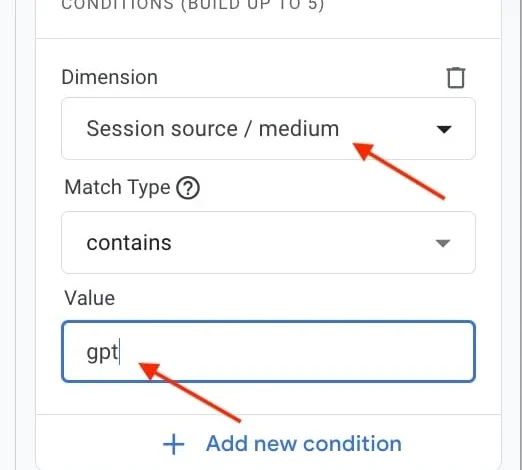
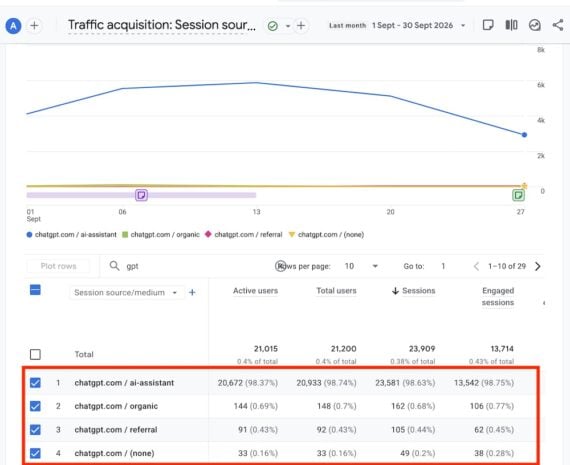
To overcome these limitations, data analysts must move beyond standard out-of-the-box reports. By implementing custom filters within GA4, administrators can better isolate potential AI traffic.
Establishing a Tracking Framework
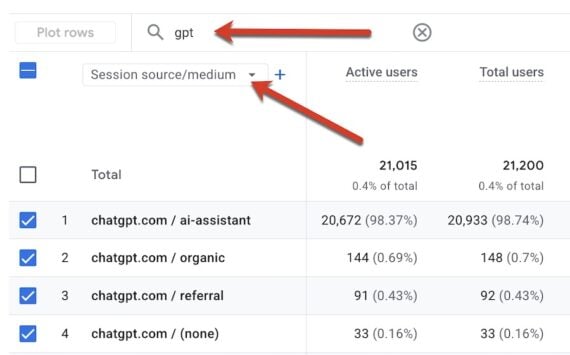
The most effective method involves creating custom reports focused on traffic source patterns. By utilizing the "Build filter" interface in GA4, analysts can create a regex filter that isolates sources containing terms like "gpt," "openai," or "bard" (now Gemini). While this will not capture 100% of the traffic due to the "noreferrer" stripping mentioned above, it provides a statistically significant sample size to monitor trends.
Interpreting Landing Page Data
Because AI models do not pass along the specific prompts used by the consumer, marketers must engage in reverse-engineering. By reviewing the landing pages that receive the most traffic from these identified AI sources, analysts can deduce the user’s intent. For example, if a specific product comparison page receives an uptick in traffic from an AI referral, it is logical to conclude that the AI model identified that page as the authoritative answer to a specific user query.
Chronology of the Shift Toward Generative Search
The shift in traffic patterns can be traced back to the public release of ChatGPT in late 2022. During the first half of 2023, the industry viewed AI primarily as a content creation tool. By late 2023 and early 2024, the narrative shifted toward "Search Generative Experience" (SGE) and the integration of conversational search.
By the first quarter of 2025, industry data began to reflect a measurable change in traffic acquisition. Analysts began reporting that while total click-through rates from search engines were plateauing or declining, the quality of traffic arriving from AI-synthesized summaries was increasing. This necessitated a shift in SEO strategy, moving from keyword-density tactics to "answer optimization," where the goal is to provide concise, structured data that AI models can easily parse and cite.
Broader Industry Implications
The implications for publishers and e-commerce platforms are significant. If an organization does not optimize its content for AI ingestion, it risks losing visibility in the new "answer engine" ecosystem.
- Content Structuring: To remain competitive, content must be structured in a way that allows AI models to extract definitive answers. This includes the use of schema markup, concise headers, and clearly defined FAQ sections.
- Engagement Benchmarking: Because AI traffic often exhibits lower bounce rates and higher session durations, it serves as a bellwether for content quality. Websites that are frequently cited by AI models are effectively being vetted by machine learning algorithms for relevance and accuracy.
- Future-Proofing Analytics: As browser and privacy standards evolve, the "noreferrer" issue may become even more prevalent. Organizations must invest in server-side tracking or other proprietary data collection methods to maintain visibility into how users find their sites.
Strategic Recommendations for Marketing Teams
To effectively navigate this environment, marketing departments should adopt a two-pronged approach. First, they must treat "Unassigned" and "Direct" traffic spikes with greater scrutiny. If a sudden influx of traffic correlates with a new product launch or a viral content piece, it is highly likely that AI platforms are driving a portion of that surge.

Second, analysts should actively use AI tools to test their own visibility. By querying ChatGPT or similar models with prompts related to their core business, companies can see if their site is being recommended. If it is not, this identifies a gap in the organization’s current SEO and content strategy.
Conclusion
The transition toward AI-mediated discovery is not merely a temporary trend but a permanent shift in how information is accessed globally. While current analytics tools are struggling to keep pace, the underlying data confirms that AI is an increasingly influential driver of high-intent traffic. By implementing more sophisticated filtering techniques in GA4 and focusing on the content attributes that AI models favor, businesses can maintain a competitive edge.
The task for the modern digital marketer is no longer just to win the search engine rankings, but to become the authoritative source that the AI cites when a user asks for a solution. As the ecosystem matures, the ability to track, analyze, and optimize for these AI referrals will become a defining factor in the success of digital brands. The data is clear: though the traffic volume might appear small today, the engagement potential is immense, and those who ignore this channel risk being left behind in the next phase of the digital information revolution.
Related posts: