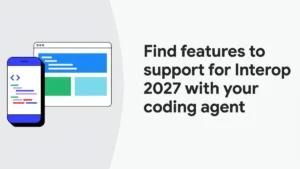
The global web development community has officially entered a critical period of governance and standardization as the Interop project opens its call for proposals for its 2027 initiative. Launched globally on September 3, 2026, the ongoing multi-browser effort—which historically unites major tech entities including Google, Apple, Microsoft, and Mozilla alongside independent contributors—seeks to eliminate browser inconsistencies that have long plagued web development. Developers, engineers, and standards advocates now have a narrow window until September 23, 2026, to submit, debate, and champion the web platform features they believe require urgent, unified implementation and cross-browser testing rigor.
The Interop initiative has fundamentally transformed the web development landscape since its inception. By establishing transparent, measurable benchmarks for browser engines (such as Blink, Gecko, and WebKit), the project has shifted the industry away from proprietary silos toward a cohesive, predictable ecosystem. As the proposal phase for Interop 2027 gets underway, stakeholders across the industry are assessing the achievements of current benchmarks while preparing to chart the course for the next generation of web capabilities.
Chronology and the Evolution of Cross-Browser Interoperability
The journey toward seamless cross-browser compatibility has historical roots in the fragmented "browser wars" of the late 1990s and 2000s, where developers frequently had to write bespoke code for Internet Explorer, Netscape, and early iterations of other browsers. While standards organizations like the World Wide Web Consortium (W3C) and WHATWG established specifications, the actual implementation timelines and bug-free execution across different rendering engines often varied wildly.
To address these pain points systematically, browser vendors and industry stakeholders introduced the Interop benchmark series in the early 2020s. The program moved away from vague commitments to standards and introduced a hard-data scoring system tied directly to the Web Platform Tests (WPT) suite.
- Interop 2022 and 2023: These foundational years focused heavily on historically troublesome areas such as CSS Flexbox, Grid, sticky positioning, form controls, and editable content, quickly driving browser compliance scores from mediocre levels into the high 80s and 90s.
- Interop 2024 and 2025: The scope expanded to include advanced layout tools, color spaces, pointer events, and baseline web APIs, proving that competitors could collaborate transparently on complex, high-impact features.
- Interop 2026: Entering its third quarter of progression by September 2026, the current initiative has demonstrated unprecedented success. Recent data from the Interop 2026 dashboard reveals that major browsers are operating in significantly stronger alignment than at any prior point in the project’s history. Experimental browser metrics show industry leaders closing in rapidly on the elusive 100% completion mark, with Chrome and Edge tracking at 98 points, Firefox at 96 points, and Safari at 92 points.
- Interop 2027 Launch (September 3, 2026): The official opening of the proposal repository marks the official start of the next cycle, setting strict deadlines for community input, evaluation, and eventual feature locking.
Criteria for Success: What Makes a Viable Proposal?
The Interop project is strictly designed to finalize and harmonize features that have already traversed the preliminary standards pipeline, rather than serving as an incubator for entirely raw ideas. Consequently, submitting a successful proposal requires meeting stringent technical prerequisites established by the WPT governance team.
According to the official Interop 2027 guidelines, prospective features must satisfy two primary criteria:
- A Stable Specification with Vendor Consensus: The underlying technology must possess a stable, mature specification without outstanding, unresolved objections from one or more major browser vendors. Historically, successful proposals feature implementations that already exist in at least one browser engine, signaling that the specification is technically feasible and robust.
- A Comprehensive Test Suite: Because the Interop scoring mechanism relies entirely on automated passing rates within the Web Platform Tests, a feature cannot be selected unless a rigorous test suite already exists. Proposals lacking sufficient test coverage face immediate hurdles during the evaluation phase, as the community cannot accurately measure multi-browser compliance without robust testing infrastructure.
To assist developers in navigating these technical boundaries, project organizers have pointed contributors toward diagnostic tools like webstatus.dev, which audits the implementation status of web features across different engines. Additionally, the developer-signals repository on GitHub acts as a clearinghouse for real-world use cases, community demand, and developer sentiment.
Data-Driven Selection and Developer Signals
The methodology for choosing features has evolved to heavily incorporate empirical data rather than purely anecdotal requests. Organizers look closely at annual industry surveys—such as The State of CSS and broader developer sentiment metrics—alongside public issue engagement metrics.
Features that dominate developer wishlists or consistently rank in the top tiers of developer-signals repositories receive heightened attention during the multi-week curation window. This data-centric approach ensures that Interop priorities directly reflect the pain points experienced by frontline engineers building production-grade web applications. For instance, many of the complex layout, typography, and color management features integrated into Interop 2026 were direct responses to widespread developer frustration documented in these exact channels.
Following the close of the proposal window on September 23, 2026, the organizing committee will evaluate all submissions against a transparent, publicly available selection process framework hosted on GitHub. This framework weighs technical readiness, community demand, testing maturity, and strategic value to the broader web ecosystem.
Broader Industry Impact and Economic Implications
The implications of the Interop project extend far beyond technical compliance; they translate directly into substantial economic efficiencies and enhanced user experiences. For enterprises, digital agencies, and independent developers, fragmented browser behavior has historically necessitated extensive cross-browser testing, costly debugging cycles, and the maintenance of fragile polyfills or alternative code paths.

By driving major browser engines toward uniform compliance, Interop significantly reduces the total cost of web development. Developers can write cleaner, standards-compliant code with the confidence that it will render and execute identically regardless of whether an end-user accesses the application via Chrome, Safari, Firefox, or Edge. Furthermore, this predictability accelerates the adoption of cutting-edge web technologies, enabling rich web applications, advanced animations, complex layouts, and sophisticated performance APIs to reach users faster and more reliably.
How the Community Can Participate
While formal proposals must adhere to specific governance and specification criteria, the Interop project relies heavily on grassroots community engagement to gauge feature importance. Developers and web enthusiasts who do not have a specific feature to pitch are strongly encouraged to review the growing repository of community submissions, upvote critical items, and participate in technical discussions on GitHub.
Industry experts emphasize that public advocacy plays a vital role in elevating features that might otherwise be overlooked by large corporate roadmaps. By sharing the call for proposals across developer communities, professional networks, and social media channels, practitioners can directly influence the trajectory of web standards for the year 2027.
As the September 23 deadline approaches, the global web engineering community faces a pivotal opportunity to shape the tools, APIs, and layout engines that will power the digital landscape. Through continued collaboration, transparent testing, and rigorous standard enforcement, Interop 2027 promises to push the open web one step closer to absolute consistency.