India denounces US Vice President Vance’s remarks on foreign workers as offensive amid PERM program suspension

The diplomatic relationship between New Delhi and Washington faces a significant test this week following a provocative characterization of international tech workers by United States Vice President JD Vance. During a high-level briefing in New Delhi on Friday, the Indian Ministry of External Affairs (MEA) issued a formal rebuke, labeling the Vice President’s recent comparison of foreign workers at Microsoft and other tech giants to "indentured servants" as deeply offensive. The statement, read by official spokesperson Randhir Jaiswal, underscored the Indian government’s dissatisfaction with the rhetoric used by the administration to justify sweeping changes to immigration and labor policies.
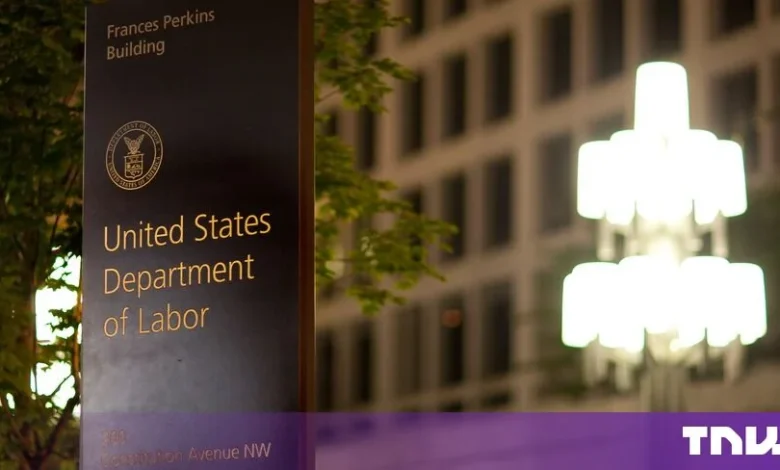
The controversy stems from a policy shift announced on Thursday by Vice President Vance, confirming that the U.S. Department of Labor has suspended eight major corporations from the Program Electronic Review Management (PERM) process. This program serves as the foundational regulatory hurdle for employers seeking to sponsor foreign workers for permanent residency, commonly known as a green card. The companies currently barred from the process include Microsoft, Adobe, Cognizant, Infosys, Tata Consultancy Services (TCS), Wipro, HCL, and the French multinational Capgemini.
Chronology of the Policy Shift
The escalation of tensions began earlier this week when the U.S. executive branch signaled a more aggressive stance toward foreign labor utilization in the technology sector. By Thursday, the Labor Department, acting under the direction of the administration, confirmed the immediate suspension of these eight firms. Labor Secretary Keith Sonderling noted that the department would cease the processing of all pending applications and refuse the intake of new ones, marking a significant bureaucratic bottleneck for thousands of highly skilled professionals.
This move follows a series of regulatory pressures placed on the tech industry throughout 2025 and 2026. In August 2026, the sector witnessed a major settlement involving OpenAI, which paid $3.2 million to resolve Department of Justice allegations regarding the recruitment processes for PERM-eligible positions. Furthermore, the administration has recently proposed an unprecedented $103,265 fee for new H-1B visa applications, a measure intended to disincentivize the reliance on foreign labor, which the administration claims is being used to undercut domestic wages.
Analyzing the Rhetoric and Economic Impact
The administration’s central argument, championed by Vice President Vance, asserts that companies like Microsoft have systematically replaced laid-off American workers with foreign nationals hired at lower salary tiers. Microsoft, however, has consistently disputed this narrative, clarifying in public disclosures that the vast majority of its H-1B filings are not for new offshore hires, but rather for existing employees already residing within the U.S. who are transitioning into permanent residency.
The Indian government’s response emphasizes that such rhetoric ignores the economic reality of the U.S. tech ecosystem. Ministry spokesperson Jaiswal noted that Indian professionals are among the most educated and skilled contributors to the American economy, playing a pivotal role in maintaining the global competitiveness of U.S.-based firms. By employing "painful historical and colonial legacy connotations," the administration has effectively alienated a key strategic partner, according to the MEA’s statement.
Data on PERM and Visa Reliance
To understand the gravity of the suspension, one must examine the scale of the PERM program. According to data analysis from GeekWire, Microsoft stands as the most significant user of the program, with the Labor Department adjudicating 3,161 of its applications in the fiscal year ending September 2025. In comparison, competitors like Amazon and Google utilized the system for significantly fewer cases during the same period, suggesting that the administration’s focus on these specific eight companies may be intended to set a broad regulatory precedent.
Across the broader U.S. economy, the Labor Department certified approximately 140,000 PERM applications in fiscal year 2025. A significant portion of these—roughly 30%—involved software developers, computer systems analysts, and data scientists. The suspension of the eight companies effectively creates a "wait-and-see" environment that threatens to disrupt the career trajectories of thousands of employees who are approaching the mandatory six-year limit on their H-1B visas. For these workers, the PERM process is the primary bridge to legal permanent residency; without it, their ability to remain in the U.S. becomes precarious.
Implications for the Tech Sector and Legal Challenges
The immediate market reaction to the news was mixed. While Microsoft saw a roughly 1% decline in its share price following the announcement, other companies, including Adobe, saw gains. Interestingly, the Indian stock market showed resilience on Friday; major IT firms like TCS, Wipro, HCL, and Infosys experienced a rally, with TCS shares rising by 5.5% by late morning. Analysts suggest that investors may be discounting the long-term impact of the PERM suspension, noting that Indian IT companies have already diversified their operations and reduced their reliance on the H-1B visa pipeline over the last several years.
Nasscom, the industry association representing the Indian technology sector, has been quick to reiterate that Indian firms have significantly decreased their dependence on H-1B visas. The organization highlighted that only a small fraction of their U.S.-based workforce relies on PERM for residency, suggesting that the administration’s actions may have a disproportionate impact on firms that are already in the process of restructuring their human resources strategies.
However, legal experts caution that the administration’s power to enforce such a suspension is not without limits. Ted Chiappari, an attorney with Duane Morris, noted that federal law allows the Labor Department to suspend an employer for a maximum of 180 days without a formal, protracted investigation. After an investigation, the department may bar an employer for up to three years, but such actions are almost certain to trigger litigation. Kripa Upadhyay of the Seattle-based firm Buchalter predicted that lawsuits challenging the legality of the suspension could be filed as early as next week, citing potential procedural overreach by the executive branch.
Diplomatic and Long-term Consequences
The friction between the U.S. and India regarding high-skilled migration marks a departure from the collaborative approach that has defined the bilateral relationship for decades. The Indian government has made it clear that "talent mobility" is a mutually beneficial endeavor that supports not only the employees but also U.S. corporations and their shareholders. By interrupting this flow, the administration risks damaging the innovation pipeline that many U.S. companies rely on to maintain their lead in artificial intelligence, cloud computing, and data analytics.
The phrase "indentured servants" has caused particular ire in New Delhi, as it draws a direct, albeit historically inaccurate, parallel to the era of British colonial indentured labor in the 19th century. By using this terminology, the Vice President has inadvertently signaled that the administration views the current migration framework not as a professional recruitment system, but as a form of labor exploitation. This framing is seen by Indian officials as an affront to the professional standing of millions of Indian citizens who work in the United States under stringent legal requirements.
As the situation develops, the focus will likely shift to the courts and the potential for a diplomatic resolution. While the White House has signaled that the suspension will last "as long as it needs to," the reality of the global technology market suggests that a prolonged freeze on labor mobility will be difficult to sustain without incurring significant economic costs. For now, thousands of workers at the affected companies remain in a state of professional limbo, waiting for a resolution to a conflict that has moved from the office of the Labor Department to the center of international diplomacy. The coming weeks will be critical in determining whether the administration seeks a compromise or continues to push for a radical restructuring of the H-1B and PERM systems, regardless of the diplomatic or economic fallout.