
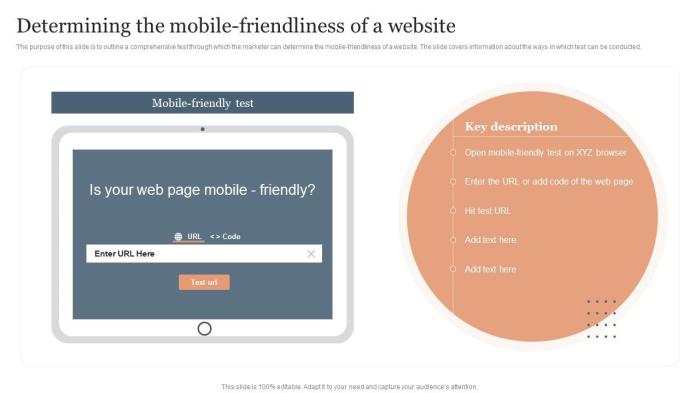

How to improve the mobile friendliness of your website before googles mobil – How to improve the mobile friendliness of your website before Google’s mobile update? This guide dives deep into the crucial steps to ensure your site excels on all devices. We’ll explore responsive design, optimizing website elements for mobile, testing, and a mobile-first approach to create a seamless user experience.
Mobile-friendliness is no longer a nice-to-have; it’s a necessity. Ignoring this critical aspect can lead to lost traffic, frustrated users, and ultimately, a diminished online presence. Understanding Google’s mobile-first indexing and adopting best practices for mobile design is paramount for long-term success.
Understanding Mobile-Friendliness

A website’s success in today’s digital landscape hinges heavily on its mobile-friendliness. Users increasingly access the web primarily through their smartphones and tablets, making a positive mobile experience paramount. This means more than just displaying content; it’s about optimizing the entire user journey for the smaller screens and different interaction styles of mobile devices.Mobile-friendliness isn’t just a trend; it’s a crucial factor in search engine rankings and user satisfaction.
Google, recognizing this, prioritizes mobile-friendly websites in its search results, giving them a significant advantage over those not optimized for mobile. Understanding the nuances of mobile-friendliness is key to achieving a strong online presence.
What Constitutes a Mobile-Friendly Website?
A mobile-friendly website is designed to adapt seamlessly to various screen sizes and orientations. This adaptability ensures that the site’s content, navigation, and overall layout are easily accessible and usable on smartphones and tablets. Crucially, this involves more than simply shrinking the desktop site; it necessitates a thoughtful approach to design and functionality.
Factors Google Considers for Mobile-Friendliness
Google employs a sophisticated algorithm to evaluate mobile-friendliness. Key factors include:
- Screen responsiveness: The website’s layout and elements adjust automatically to fit different screen sizes, ensuring optimal viewing and navigation on various mobile devices.
- Fast loading speeds: Mobile users expect quick page loads. Google prioritizes websites that deliver content swiftly, minimizing delays and maximizing user satisfaction.
- Easy navigation: Intuitive and clear navigation is essential. Mobile users need simple ways to explore the site’s content without frustration. This includes clear menu structures, prominent call-to-actions, and logical organization.
- Readability: Text should be large enough and easily readable on small screens. Font choices, spacing, and color contrasts all play a role in making content accessible.
- Touch-friendly design: Buttons and interactive elements are designed to be easily tapped on touchscreens. Avoid using small, difficult-to-target elements that may frustrate users.
Importance of Mobile-Friendliness for Website Success
A mobile-friendly website is essential for attracting and retaining users. It improves user experience, leading to higher engagement, lower bounce rates, and ultimately, increased conversions. The benefits extend to rankings, as Google prioritizes mobile-friendly sites in its search results. Mobile-friendliness is no longer a choice; it’s a necessity for any website aiming for success in the modern digital landscape.
Mobile-Friendly vs. Non-Mobile-Friendly Websites
The difference between mobile-friendly and non-mobile-friendly websites is stark. A mobile-friendly site adapts effortlessly, offering a smooth browsing experience. Conversely, a non-mobile-friendly site often displays poorly, with cluttered layouts, difficult navigation, and slow loading times. This leads to frustrated users and potential loss of customers.
Impact on User Experience
Mobile-friendliness significantly impacts user experience. A seamless mobile experience encourages exploration, engagement, and conversions. Users are more likely to return to a site that prioritizes their mobile experience. Conversely, a poorly designed mobile site can lead to abandonment, negatively affecting brand perception and hindering business objectives.
Responsive Design Principles
Responsive design is crucial for ensuring a positive user experience across various devices. It allows websites to adapt seamlessly to different screen sizes, from smartphones to desktops, offering a consistent and engaging browsing experience regardless of the platform. This adaptability is vital for maintaining user engagement and achieving optimal search engine rankings.Responsive design isn’t just about making a website look good on smaller screens; it’s about optimizing the entire user journey.
It requires a holistic approach, considering not only visual elements but also the site’s functionality and overall user flow. This adaptability fosters a more inclusive and accessible web experience for everyone.
Getting your website mobile-friendly is crucial before Google’s mobile-first index kicks in. Optimizing for mobile is more than just responsive design; it’s about user experience. Want to craft highly effective landing pages that convert? Check out this comprehensive guide on ultimate guide high converting geo landing pages for tips on targeting specific geographic areas. This deep dive into geo-targeting will undoubtedly help your website’s mobile experience, ensuring a positive user journey and higher rankings.
Fluid Grids
Fluid grids are essential for creating layouts that adjust dynamically to different screen widths. They employ relative units, such as percentages, instead of fixed pixel values. This allows the layout to scale proportionally, maintaining its structure and balance across various devices. For instance, a grid structured with 50% width for each column will adjust to occupy half the available space on a mobile phone, while still maintaining the desired relationship between elements.
This ensures that content remains organized and readable, regardless of screen size.
Flexible Images
Flexible images are another key component of responsive design. Images should resize proportionally to the available space, preventing them from distorting or looking pixelated on different devices. Using the `max-width: 100%;` property is a common technique. This ensures the image doesn’t exceed the width of its container, automatically scaling down to fit the screen. This is a key aspect of responsive design, preventing images from becoming a source of visual clutter or interfering with the overall layout.
Optimizing your website for mobile devices is crucial before Google’s mobile-first indexing. This ensures a seamless user experience, boosting engagement and conversions. Learning how to attract more customers is also key, and recent research offers valuable insights on this topic, check out how to get more business new research shows the way. Ultimately, a mobile-friendly website is a cornerstone of any successful online presence.
Media Queries
Media queries are powerful tools for tailoring styles based on specific device characteristics, such as screen size, orientation, and resolution. They allow developers to apply different styles to the same HTML elements based on the device the user is using. For example, a website might use a different font size for mobile devices to improve readability. This dynamic approach allows developers to precisely target and optimize the user experience.
This fine-grained control is critical for maintaining a high-quality experience across a wide range of devices.
Ensuring Consistent Layouts
To ensure consistent layouts across devices, developers must employ a combination of fluid grids, flexible images, and media queries. Using a combination of these techniques, a responsive website can seamlessly adapt to different screen sizes, maintaining its structure and visual appeal. This method guarantees a uniform experience across a broad range of devices.
Adapting Content and Functionality
Adapting content and functionality for different screen sizes involves careful consideration of the user experience. On smaller screens, prioritize essential content and simplify navigation. Complex forms might need to be broken down into smaller sections for easier interaction on mobile devices. Clear and concise text is crucial on mobile, as users often prefer a less cluttered experience.
For example, lengthy paragraphs might be broken into shorter segments for improved readability.
Table of Key Features of Responsive Design
| Feature | Description | Example | Implementation |
|---|---|---|---|
| Fluid Grids | Layouts adjust dynamically to screen size using relative units (e.g., percentages). | A website header that takes up 20% of the screen width on all devices. | CSS using `%` for width and height properties. |
| Flexible Images | Images resize proportionally to fit the available space without losing quality. | A product image that scales down on a mobile phone without becoming pixelated. | CSS using `max-width: 100%;` and potentially `height: auto;` |
| Media Queries | Styles are applied based on specific device characteristics (screen size, orientation). | A navigation menu that changes to a hamburger menu on smaller screens. | CSS using `@media` rules to apply different styles. |
Optimizing Website Elements for Mobile: How To Improve The Mobile Friendliness Of Your Website Before Googles Mobil

Crafting a mobile-friendly website isn’t just about making it visually appealing on smaller screens; it’s about creating a seamless and intuitive user experience. This involves optimizing various website elements to ensure smooth navigation, quick loading times, and clear calls to action. Understanding the nuances of mobile design principles is crucial for maximizing engagement and achieving optimal results.Mobile users expect websites to load quickly and function flawlessly.
By carefully optimizing images, improving page loading speed, and designing intuitive navigation, you can significantly enhance the mobile experience. This section will explore practical strategies to optimize key elements of your website for mobile devices.
Website Elements Requiring Mobile Optimization, How to improve the mobile friendliness of your website before googles mobil
Various website elements demand special attention when adapting for mobile devices. These include images, page loading speed, navigation, calls to action, and forms. Each element plays a critical role in user experience, and optimizing them can significantly impact user engagement and conversions.
Image Optimization for Faster Loading Times
Images are crucial for visual appeal, but large file sizes can drastically slow down mobile loading times. Efficient image optimization is vital for providing a positive mobile experience.
- Image Compression: Reduce the file size of images without compromising quality. Tools like TinyPNG and ImageOptim can effectively compress images while maintaining visual clarity. Modern web browsers have built-in image compression capabilities, enabling better performance for image delivery.
- Image Format: Choose appropriate image formats like WebP or JPEG for optimized file size and quality. WebP is generally preferred due to its high compression ratio and support in modern browsers. JPEG is suitable for photographic images, while PNG is better for graphics and icons. Selecting the right format ensures the optimal balance between image quality and file size.
- Image Size: Ensure images are appropriately sized for the intended display. Unnecessary large images consume bandwidth and increase load times. Optimize image dimensions to fit the mobile screen resolution without sacrificing visual quality. This can be done by using responsive image techniques that adjust image sizes dynamically based on the user’s device screen size.
Techniques to Improve Page Loading Speed
Page loading speed is a critical factor in user engagement. Mobile users often have limited patience and will abandon a website if it takes too long to load. Employing strategies to improve loading speed is essential.
- Optimize CSS and JavaScript: Minify CSS and JavaScript files to reduce their size and optimize their loading times. Minification removes unnecessary characters from the code without changing its functionality. This reduces the amount of data that needs to be transferred, thus improving page load times.
- Use a Content Delivery Network (CDN): Distribute website assets across a global network of servers, reducing latency and improving page load times for users worldwide. CDNs store copies of your website’s files in multiple locations, bringing them closer to users’ devices, improving loading times.
- Enable browser caching: Enable browser caching to store static website assets on the user’s device. This reduces the need to download these assets each time the user visits the site, leading to faster loading times.
Intuitive Navigation for Mobile Devices
Intuitive navigation is essential for a positive mobile user experience. Users should be able to easily find what they need on your website.
- Use a touch-friendly navigation system: Employ a simple, clean, and easily accessible navigation system for mobile users. This may involve using a hamburger menu or a tabbed interface, depending on the website’s design. Ensure buttons and links are large enough to tap accurately on smaller screens.
- Implement a clear site structure: Structure your website logically and clearly to improve usability and accessibility. Ensure the navigation system reflects the website’s structure, guiding users effortlessly through the content.
Importance of Clear Calls to Action (CTAs) on Mobile
Clear calls to action are vital for guiding users toward desired actions on mobile devices.
- Design prominent CTAs: Design CTAs that are visually appealing and easily noticeable on smaller screens. Use contrasting colors and clear typography to make CTAs stand out. Use large buttons with ample spacing to facilitate easy tapping on touch screens.
- Ensure CTAs are actionable: Make sure CTAs are easily accessible and lead to the desired action. Users should immediately understand what they need to do after clicking on a CTA. Implement clear and concise language to inform the user of the action.
Making Forms Accessible and Functional on Mobile
Forms are crucial for collecting user information. However, poorly designed forms can deter users on mobile devices.
- Design forms with a focus on mobile usability: Ensure that form fields are sized appropriately for mobile screens, allowing users to input data comfortably. Consider the optimal layout for mobile devices to minimize scrolling and ensure smooth form completion.
- Optimize form fields for touch input: Make sure form fields are large enough to be easily tapped on mobile devices. Employ clear visual cues to help users understand how to interact with the form fields.
Best Practices for Optimizing Images
| Optimization Technique | Description | Example | Implementation |
|---|---|---|---|
| Image Compression | Reducing file size without significant loss of quality. | Using tools like TinyPNG | Compress images before uploading them to the website. |
| Image Format | Choosing the appropriate format (WebP, JPEG, PNG) for optimal quality and size. | Using WebP for general images. | Select the appropriate format based on image type. |
| Image Size | Optimizing image dimensions to fit the intended display. | Using responsive image techniques. | Adjust image dimensions dynamically based on screen size. |
Testing and Debugging Mobile Experiences
Ensuring your website is mobile-friendly is crucial for a positive user experience and improved search engine rankings. However, simply designing a responsive website isn’t enough. Thorough testing and debugging are essential to identify and fix potential issues that might arise across various devices and screen sizes. This stage of the process is vital to ensure a seamless and efficient mobile experience.A well-tested mobile website delivers a consistent experience across a range of devices, from smartphones to tablets.
This involves not only visual layout but also performance, functionality, and user flow. By understanding user behavior on mobile, you can tailor the experience to meet their needs and expectations.
Mobile Device Testing Strategies
Various tools and methods are available to test mobile website experiences. Thorough testing is crucial to ensure a seamless and enjoyable experience across different devices. This involves simulating user interactions and evaluating performance under different conditions.
- Emulators and Simulators: Emulators and simulators replicate mobile device environments on desktop computers, allowing for testing on a variety of screen sizes and operating systems without needing physical devices. Tools like Chrome DevTools and specialized mobile emulators offer valuable insights into how the website renders on different screen sizes.
- Real Device Testing: Testing on actual mobile devices provides the most accurate representation of the user experience. While more resource-intensive, this method allows for the identification of device-specific issues and subtle rendering differences that emulators might miss.
- Browser Developer Tools: Browser developer tools, integrated within web browsers like Chrome, provide invaluable diagnostic capabilities. These tools allow you to inspect the website’s code, analyze network requests, and measure performance metrics specific to mobile devices.
Seamless Transitions Between Devices
Ensuring a smooth transition between different mobile devices requires careful attention to responsive design principles. The website should adapt seamlessly to various screen sizes and resolutions.
- Consistency in Navigation: Maintain consistent navigation elements across all devices. The menu structure and call-to-action buttons should be accessible and intuitive on different screen sizes.
- Adaptive Content Layout: Content should adapt to the available screen space without sacrificing readability or functionality. Images, text, and other elements should adjust their size and position to fit the device.
- Performance Optimization: Optimize the website for faster loading times on mobile devices. Image compression, code optimization, and efficient caching are crucial for delivering a positive user experience.
Debugging Mobile-Related Issues
Debugging mobile issues requires a systematic approach. Identifying the source of problems and implementing effective solutions are critical for a smooth user experience.
- Console Logging: Utilize browser developer tools to identify errors and warnings in the JavaScript code. This helps to pinpoint areas that need attention.
- Network Monitoring: Monitor network requests to identify slow-loading assets. This can help identify bottlenecks in the loading process.
- Inspecting Element Styles: Inspect the CSS styles applied to different elements on various devices to ensure that the design adapts correctly.
Analyzing User Behavior on Mobile
Analyzing user behavior on mobile devices is critical for understanding how users interact with the website. This data helps inform optimization strategies.
- Tracking User Interactions: Use analytics tools to track user interactions, such as clicks, scrolls, and form submissions, on mobile devices. This provides insights into areas of high engagement and potential pain points.
- Heatmaps and Session Recordings: Heatmaps and session recordings visualize user behavior on the website, highlighting areas of high interaction and user navigation patterns.
- Conversion Rate Tracking: Monitor conversion rates on mobile to assess the effectiveness of the mobile experience in driving desired actions.
A/B Testing for Mobile Optimization
A/B testing is an essential technique for optimizing mobile experiences. Testing different versions of the website can help identify improvements that resonate with mobile users.
- Experimentation with Design Variations: Test different design variations, such as button styles, layout arrangements, and call-to-action placement, to determine which performs best.
- Optimizing for Mobile-Specific Metrics: Focus on mobile-specific metrics, such as bounce rate, time on site, and conversion rate, to understand the effectiveness of changes.
- Utilizing A/B Testing Tools: Leverage dedicated A/B testing tools to efficiently compare different versions of the mobile website and determine which performs better.

Using Browser Developer Tools for Mobile Testing
Browser developer tools provide a powerful suite of tools for mobile website testing. They offer detailed insights into website performance and functionality.
Getting your website mobile-friendly is crucial before Google’s mobile-first index hits. While improving your site’s responsiveness is key, don’t neglect other marketing strategies to boost your visibility. Consider exploring 12 marketing techniques to increase your firm’s visibility, like social media marketing or search engine optimization, which can complement your mobile-friendliness efforts. Ultimately, a combination of solid mobile optimization and strategic marketing is the best way to ensure your business thrives in today’s digital landscape.
For more on these marketing techniques, check out this helpful resource: 12 marketing techniques to increase your firms visibility. This holistic approach will make your website not only mobile-friendly but also highly visible to potential customers.
- Inspecting Elements and Styles: Use the element inspector to identify and troubleshoot issues with website elements and their styles on different mobile devices.
- Network Monitoring and Performance Evaluation: Monitor network requests and evaluate website performance to identify bottlenecks and optimize loading times.
- Emulating Device Features: Emulate different mobile device features to simulate user interactions and identify potential usability issues.
Content Strategy for Mobile Users
Crafting a compelling content strategy for mobile users necessitates a deep understanding of their unique needs and behaviors. Mobile users often have shorter attention spans and different expectations for information consumption compared to desktop users. This requires a shift in perspective, prioritizing concise, engaging, and easily digestible content.Optimizing content for mobile goes beyond simply shrinking the text size.
It’s about understanding the limitations of the smaller screen and designing the content flow to accommodate them effectively. This involves careful consideration of visual hierarchy, clear calls to action, and an overall user-centered design philosophy.
Adapting Content for Shorter Attention Spans
Mobile users often scan content rather than read it linearly. This means the content needs to be easily digestible, with clear headings, subheadings, bullet points, and short paragraphs. Using visuals like images, videos, and infographics can break up text and improve engagement. Short, impactful headlines and compelling visuals are crucial for grabbing attention quickly. Think of how social media posts are designed; their effectiveness stems from this understanding of shorter attention spans.
Concise and Clear Language for Mobile
Using clear and concise language is paramount for mobile content. Avoid jargon, complex sentence structures, and lengthy explanations. Prioritize direct communication and active voice. Mobile users appreciate content that gets straight to the point. Using bullet points, numbered lists, and short, impactful sentences can greatly enhance readability.
Content Structure for Easy Readability
Structuring content for easy readability on small screens is critical. Employ clear headings and subheadings to guide users through the information. Use bullet points and numbered lists to break up text and improve scannability. Short paragraphs and white space are essential for creating a visually appealing and easy-to-navigate experience. Remember, visual hierarchy is key.
Emphasize important information through larger font sizes or bold text.
Mobile-Friendly Fonts
Choosing appropriate fonts is crucial for readability on mobile devices. Fonts should be clear, legible, and easily readable at smaller sizes. Avoid overly decorative or complex fonts that can be difficult to read on smaller screens. Consider using sans-serif fonts, which are generally easier to read on mobile than serif fonts. Test various font options to see which ones work best for your specific content and target audience.
For example, Roboto, Open Sans, and Arial are popular choices for their readability across various devices.
Examples of Mobile-Optimized Content
Examples of mobile-optimized content include concise product descriptions on e-commerce sites, easily scannable articles with short paragraphs and visuals, and visually engaging social media posts. News websites that prioritize headlines and bullet points to provide information quickly are also good examples. These examples demonstrate how content can be tailored for mobile by focusing on brevity, clear visuals, and easy navigation.
Mobile-First Approach
The mobile-first approach is a fundamental shift in website development, recognizing the increasing prevalence of mobile internet usage. This approach prioritizes the mobile experience, designing the site initially for smaller screens and then adapting for larger displays. It’s not simply about making a website smaller; it’s about crafting a tailored experience for the mobile user.This approach isn’t merely a trend; it’s a necessity in today’s digital landscape.
A mobile-first design ensures that your website is optimized for speed, usability, and accessibility on the most common device type. This prioritization leads to a more positive user experience, ultimately driving better engagement and conversions.
The Concept of Mobile-First
A mobile-first approach to web design involves initially designing the website for smaller screens, such as smartphones and tablets. This means focusing on simplified navigation, concise content, and a streamlined user interface. Only after the mobile version is fully functional and optimized is the design adapted for larger screens, like desktops and laptops. This iterative approach ensures a core mobile experience that’s intuitive and effective, which then acts as a foundation for expanding to larger screen sizes.
Advantages of Mobile-First
The mobile-first approach provides numerous advantages:
- Improved User Experience: Prioritizing the mobile experience leads to a better overall user experience across all devices. The site is designed to be usable and accessible on the platform where most users engage.
- Faster Load Times: Mobile-first designs often result in faster load times. Focusing on the core mobile experience means avoiding unnecessary elements and code, leading to quicker page rendering and a positive user perception.
- Enhanced : Search engines favor websites optimized for mobile devices. A mobile-first approach directly addresses Google’s mobile-first indexing, leading to improved search engine rankings.
- Cost-Effectiveness: Designing for mobile first often reduces the overall development costs and time compared to a desktop-first approach. This is because the design is more focused, leading to a leaner codebase and a streamlined development process.
- Better Accessibility: Mobile-first design inherently considers accessibility principles, leading to a more inclusive user experience for individuals with disabilities. Features like large text and clear navigation are crucial aspects of mobile design.
Impact on User Experience
A mobile-first approach dramatically improves the user experience by ensuring:
- Intuitive Navigation: The design prioritizes clear and simple navigation, especially important for users on smaller screens.
- Easy Content Consumption: The focus on concise content and optimized readability allows users to easily absorb information on the go.
- Fast Loading Speeds: By eliminating unnecessary elements and optimizing code for mobile devices, users experience faster page load times, which is crucial for maintaining engagement.
- Improved Responsiveness: The site adapts seamlessly to different screen sizes and orientations, ensuring a smooth user experience regardless of the device.
Comparison to Desktop-First Approach
The desktop-first approach traditionally focused on designing the website for large screens and then adapting it for smaller devices. This can lead to:
- Increased Development Time: Adapting a desktop-first design for various mobile screens can be a complex and time-consuming process.
- Potential for Poor Mobile Experience: The mobile version may feel clunky and unintuitive, especially for users who primarily access the website on mobile devices.
- Challenges: A poorly optimized mobile version can negatively impact search engine rankings, impacting visibility and traffic.
A Structured Approach to Mobile-First
Adopting a mobile-first approach involves a systematic process:
- Define Mobile-Specific Requirements: Thoroughly analyze the needs and expectations of your target mobile audience. What features are crucial for their experience?
- Design for Simplicity and Clarity: Prioritize intuitive navigation and concise content for a seamless mobile experience. Minimize clutter and ensure easy accessibility.
- Optimize for Performance: Ensure fast load times by optimizing images, reducing code, and leveraging caching techniques.
- Test and Iterate: Continuously test and refine the mobile design based on user feedback and analytics data. A mobile-first approach is not static, it’s a continuous improvement process.
Last Word
In conclusion, preparing your website for Google’s mobile-first indexing is a proactive strategy for enhancing user experience and maintaining a competitive edge. By understanding the principles of responsive design, optimizing your site for mobile elements, testing thoroughly, and implementing a mobile-first approach, you’ll ensure your site performs optimally across all devices. This ultimately translates to a more satisfying experience for your users, higher engagement, and improved search engine rankings.