
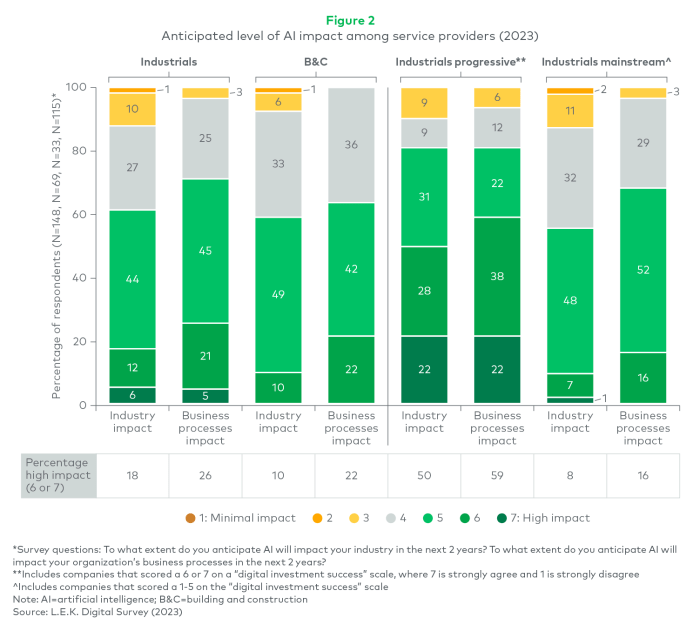

How AI has rocked professional services, from legal eagle document reviews to accounting fraud detection, is a story of rapid transformation. AI is automating tasks, enhancing decision-making, and revolutionizing client interactions across various sectors. This overview explores the profound impact of AI on specific professional services, the automation of processes, the improvement of decision-making capabilities, the changes in client interactions, the ethical considerations, and future predictions.
The shift is undeniable. AI tools are now integral to the daily operations of firms in legal, accounting, and consulting, and other industries. From streamlining workflows to analyzing vast datasets, AI is dramatically altering the landscape of professional services, offering opportunities for increased efficiency and effectiveness. However, the rapid adoption of AI also presents unique challenges, including ethical concerns and potential job displacement.
This report delves into the intricate interplay between human expertise and technological advancement.
Impact on Specific Professional Services Sectors
AI is rapidly transforming professional services, from law and accounting to consulting and beyond. This shift is driven by the ability of AI tools to automate repetitive tasks, analyze vast datasets, and provide insights that were previously inaccessible. The impact is profound, altering the way professionals work and the services they offer. These advancements, however, also present new challenges, particularly in areas like maintaining accuracy and ethical considerations.The integration of AI in professional services isn’t just about replacing human labor; it’s about augmenting human capabilities.
By automating mundane tasks, AI allows professionals to focus on higher-level strategic thinking, complex problem-solving, and client interaction. This shift necessitates a proactive adaptation from professionals to leverage these new technologies for enhanced efficiency and effectiveness.
Legal Services Transformation
AI tools are significantly impacting legal services by automating tasks like document review, contract analysis, and legal research. These tools use natural language processing (NLP) to identify key information and relationships within documents, enabling lawyers to quickly sift through large volumes of data. Machine learning (ML) algorithms can also be trained on past case precedents to predict outcomes and identify potential risks.One notable example is the use of AI for e-discovery in litigation.
AI can quickly and accurately identify relevant documents, reducing the time and cost associated with this critical process. This efficiency translates to substantial savings for clients and frees up lawyers to focus on the strategic aspects of the case. The use of NLP allows AI to understand the context and nuances of legal documents, enabling more precise analysis and identification of crucial information.
Accounting Sector Enhancement
AI is revolutionizing accounting by automating tasks like data entry, invoice processing, and financial reporting. This automation streamlines processes, leading to improved accuracy and reduced errors. Furthermore, AI can identify patterns and anomalies in financial data, enabling early detection of potential fraud. Machine learning algorithms are crucial in this process, learning from past data to predict future trends and flag suspicious transactions.For instance, AI-powered fraud detection systems can analyze transaction data in real-time to identify potentially fraudulent activities, enabling swift intervention and minimizing financial losses.
This real-time analysis, coupled with historical data analysis, is critical in enhancing the accuracy and efficiency of financial audits. This automation of routine tasks frees accountants to focus on more strategic advisory roles.
Consulting Services Enhancement
AI is also transforming consulting services by enabling more comprehensive data analysis and strategic planning. AI tools can process vast amounts of data from diverse sources to identify trends, patterns, and insights that would be difficult or impossible for human analysts to discern. This enhanced analysis allows consultants to develop more effective and targeted strategies for clients.Machine learning models can analyze market data, competitor information, and internal company data to generate actionable insights for businesses.
AI’s impact on professional services is massive, automating tasks and streamlining processes. To stay competitive, leveraging the power of targeted email campaigns is key. Check out these 15 best email newsletter marketing practices 15 best email newsletter marketing practices for a powerful edge. Ultimately, understanding how to craft effective email marketing strategies is crucial in this AI-driven landscape for any professional service looking to thrive.
By combining these insights with the human element of consulting, the strategic recommendations are more comprehensive and impactful. AI can provide accurate predictions based on the data analysis, which supports informed decision-making in consulting.
AI’s impact on professional services is undeniable. From automating tasks to boosting efficiency, it’s revolutionizing the way we work. But as AI continues to reshape the landscape, it’s also interesting to consider how Generation Z is shaping the future for digital how generation z is shaping the future for digital. Their digital-native mindset is driving innovation and pushing the boundaries of what’s possible, ultimately influencing the very tools and processes that AI is integrated into, thereby further amplifying the impact AI has on professional services.
Comparison and Key Applications
| Sector | AI Application | Impact | Challenges |
|---|---|---|---|
| Legal | Document review, contract analysis, legal research | Increased efficiency, reduced costs, enhanced accuracy | Maintaining accuracy, ethical concerns, potential for bias in algorithms |
| Accounting | Data entry, invoice processing, fraud detection, financial reporting | Improved accuracy, faster processing, reduced errors, enhanced risk management | Job displacement concerns, maintaining data security, ensuring compliance |
| Consulting | Data analysis, market research, trend identification, strategic planning | Enhanced insights, improved decision-making, more comprehensive strategies | Maintaining objectivity, ensuring data quality, managing the complexity of data |
Automation of Tasks and Processes
AI is rapidly transforming professional services, and one of the most significant impacts is the automation of routine tasks. This shift is freeing up human professionals to focus on higher-value activities, leading to increased efficiency and improved client service. By automating repetitive processes, AI is enhancing the overall productivity of professional service firms.
AI-Driven Task Automation in Professional Services
AI is adept at automating a wide range of tasks previously handled manually by human professionals. This automation is leading to significant improvements in efficiency and productivity across diverse sectors. Examples include the use of AI in legal research, financial analysis, and customer service interactions.
Specific Tasks Automated by AI
A significant portion of routine tasks in professional services are now being handled by AI. These tasks often involve data processing, analysis, and report generation. Legal research, for example, can now be significantly accelerated through AI tools that can sift through vast amounts of legal documents, identify relevant precedents, and summarize key findings. Similarly, in financial services, AI can automate the analysis of financial statements, identify investment opportunities, and generate reports, dramatically reducing the time required for these tasks.
Streamlining Workflows and Reducing Manual Intervention
AI-powered tools are streamlining workflows by automating sequential processes, eliminating manual intervention, and reducing errors. In legal firms, AI can automatically categorize documents, flag potential conflicts of interest, and even draft initial legal documents, allowing human lawyers to focus on more complex aspects of cases. In accounting, AI can automatically extract data from invoices and financial statements, reducing the risk of errors and freeing up accountants to focus on higher-level tasks.
Increased Productivity and Output
The automation of tasks through AI has the potential to significantly increase productivity and output in professional services. By offloading routine work, AI allows professionals to dedicate more time to strategic tasks, client interaction, and knowledge work. This increased focus on value-added activities translates to enhanced service quality and potentially higher profitability for firms.
Table: Tasks Automated and Time Saved
| Task | AI Automation | Time Saved (Estimated) | Impact on Staff |
|---|---|---|---|
| Legal Document Review | AI-powered document review tools | 50-80% reduction in review time | Allows lawyers to focus on complex case strategy and client interaction. |
| Financial Statement Analysis | AI-powered financial analysis software | 20-40% reduction in analysis time | Empowers accountants to conduct more in-depth analysis and provide more sophisticated financial advice. |
| Customer Service Inquiries | AI-powered chatbots and virtual assistants | 70-90% reduction in handling time for simple inquiries | Reduces staff workload, allows staff to focus on more complex customer issues and build stronger client relationships. |
| Contract Drafting (Simple Contracts) | AI-powered contract generation tools | 30-70% reduction in drafting time | Frees up legal professionals for more complex and nuanced contract negotiations and reviews. |
Enhancement of Decision-Making Capabilities
AI is rapidly transforming professional services, moving beyond simple automation to significantly enhance decision-making processes. This shift leverages data analysis and predictive modeling to provide professionals with actionable insights, ultimately improving client outcomes and driving strategic advantage. The ability to analyze vast datasets and identify intricate patterns allows for more informed and effective decisions, leading to better results for both the professional service provider and their clients.AI-powered tools are becoming indispensable for professionals in diverse fields, from legal consulting to financial advisory.
By processing massive amounts of information, these tools can unearth hidden patterns and trends, providing a more comprehensive understanding of complex situations. This translates into more accurate assessments, leading to better-informed decisions and more successful client outcomes.
Examples of AI Support for Better Decision-Making
AI tools can assist professionals in various ways. For instance, in legal cases, AI can analyze precedent cases, identifying relevant similarities and differences to inform legal strategies. In financial advisory, AI can assess a client’s financial situation and predict potential risks, helping advisors develop personalized investment strategies.
Data Analysis and Predictive Modeling in Improving Client Outcomes
Data analysis and predictive modeling play a crucial role in enhancing decision-making. By analyzing historical data and identifying patterns, AI can predict future outcomes with greater accuracy. For example, in real estate, AI can analyze market trends, property valuations, and historical sales data to predict future market conditions, helping real estate agents advise clients on optimal purchase or sale timing.
This predictive capability enables more effective decisions and often leads to better returns on investment for clients.
AI Tools Analyzing Large Datasets to Identify Trends and Patterns
AI excels at processing and analyzing large datasets, identifying trends and patterns that might be missed by human analysts. In marketing consulting, AI can analyze customer data from various sources to identify key demographics, buying behaviors, and preferences. This analysis can then be used to develop targeted marketing strategies that yield better results and higher conversion rates. For instance, an AI-powered tool might identify a correlation between certain demographics and a higher likelihood of purchasing a specific product, enabling the consultant to focus their efforts on those key demographics.
AI-Powered Insights for Informed Strategic Decisions
AI tools provide insights that facilitate more informed and effective strategic decisions. In management consulting, AI can analyze market data, competitor activities, and internal company performance to identify potential opportunities and risks. This allows consultants to develop more effective strategies for clients, leading to improved business outcomes. For example, an AI tool might identify a gap in the market for a specific product or service, allowing the consultant to advise the client on developing a new product line that targets this gap.
Table Illustrating AI Tools’ Support in Decision-Making
| Professional Service | AI-Driven Insight | Improved Decision | Client Benefit |
|---|---|---|---|
| Legal Consulting | Analysis of precedent cases, identifying relevant similarities and differences | More effective legal strategies, improved case outcomes | Reduced legal costs, higher likelihood of success |
| Financial Advisory | Assessment of financial situation, prediction of potential risks | Personalized investment strategies, risk mitigation | Optimized investment returns, minimized financial risks |
| Real Estate | Analysis of market trends, property valuations, historical sales data | Prediction of future market conditions, optimal purchase/sale timing | Improved investment returns, better decision-making |
| Marketing Consulting | Analysis of customer data, identification of demographics, buying behaviors, preferences | Targeted marketing strategies, improved conversion rates | Higher ROI, increased customer engagement |
| Management Consulting | Analysis of market data, competitor activities, internal company performance | Identification of opportunities and risks, development of effective strategies | Improved business outcomes, enhanced competitiveness |
Impact on Client Interactions and Services: How Ai Has Rocked Professional Services
AI is rapidly transforming professional services, and this impact is most keenly felt in client interactions. No longer are clients confined to traditional methods of communication and service delivery. The integration of AI tools has streamlined processes, enhanced personalization, and improved accessibility, ultimately leading to a more efficient and satisfying client experience.
AI-Powered Client Interactions
AI-powered chatbots and virtual assistants are revolutionizing how professional services firms interact with clients. These tools can handle a wide range of client inquiries, from scheduling appointments and providing basic information to answering frequently asked questions (FAQs). This capability frees up human professionals to focus on more complex tasks and higher-level client interactions, leading to increased efficiency and productivity. For example, a legal firm might use a chatbot to answer initial client questions about case procedures, allowing their lawyers to dedicate more time to complex legal analysis.
Personalization of Services
AI algorithms can analyze vast amounts of client data to personalize services and recommendations. By understanding client preferences, past interactions, and project needs, AI can tailor service delivery to optimize outcomes. For instance, a financial advisor might use AI to create personalized investment portfolios based on the client’s risk tolerance, financial goals, and market conditions. This level of personalization fosters stronger client relationships and increases the likelihood of achieving desired outcomes.
Improved Accessibility, How ai has rocked professional services
AI is breaking down barriers to access for clients. Real-time language translation capabilities, for example, can enable clients from different linguistic backgrounds to access services more easily. Furthermore, AI can help create customized content, making complex information easier to understand and more accessible. For instance, a consulting firm might use AI to generate summaries of complex reports in different formats, ensuring accessibility for clients with various learning styles.
Comparison of Traditional and AI-Enhanced Service Delivery
| Method | Client Interaction | Efficiency | Accessibility |
|---|---|---|---|
| Traditional Service Delivery | Face-to-face meetings, phone calls, email exchanges; limited availability | Often slower due to manual processes and scheduling constraints; limited capacity for immediate responses | Dependent on physical location and staff availability; potentially limited language support |
| AI-Enhanced Service Delivery | AI chatbots, virtual assistants, automated email responses; 24/7 availability | Faster response times, automated tasks; scalability and reduced human error | Wider reach through online platforms; multiple language support, customized content |
Ethical Considerations and Challenges
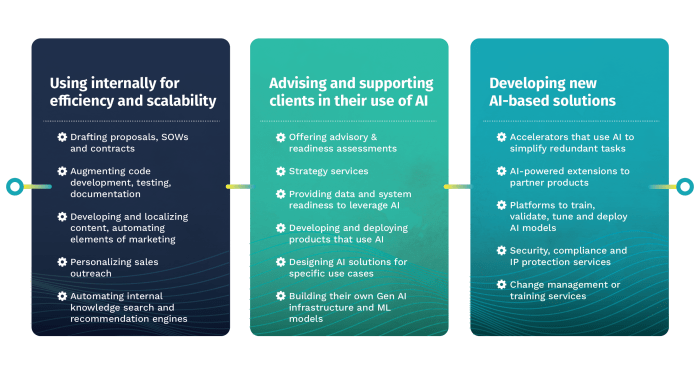
AI’s transformative impact on professional services brings forth crucial ethical considerations. As AI systems become more integrated into various aspects of these services, questions regarding fairness, transparency, and accountability emerge. These ethical challenges demand careful consideration and proactive measures to ensure responsible AI development and implementation. A critical understanding of potential biases and the need for regulatory frameworks is essential to harness the benefits of AI while mitigating potential harm.The implementation of AI in professional services raises complex ethical dilemmas that require a proactive and thoughtful approach.

Failure to address these issues could lead to serious consequences, including reputational damage, loss of client trust, and even legal repercussions. A robust ethical framework is paramount to ensure that AI systems are used responsibly and effectively in the professional services sector.
Potential for Bias in AI Algorithms
AI algorithms, trained on vast datasets, can inadvertently inherit and amplify existing societal biases. These biases can manifest in various ways, potentially leading to discriminatory outcomes in professional services. For example, an AI system used to assess loan applications might unfairly discriminate against applicants from certain demographics based on historical data reflecting societal biases. Such biases can have severe consequences, impacting individuals and perpetuating existing inequalities.
Need for Responsible AI Development and Implementation
Responsible AI development and implementation in professional services require a multi-faceted approach. It necessitates careful data selection and preprocessing to minimize bias, explainable AI models to enhance transparency, and rigorous testing and validation processes to ensure accuracy and fairness. This proactive approach is essential to prevent unintended consequences and ensure equitable access to professional services.
Role of Regulation and Standards in Ensuring Ethical AI Practices
The development and implementation of clear regulatory frameworks and industry standards are crucial for ensuring ethical AI practices in professional services. These frameworks should address issues such as data privacy, algorithm transparency, and accountability for AI-driven decisions. Such regulations are necessary to prevent misuse and ensure that AI systems are used for the benefit of all stakeholders. For instance, regulations could mandate the disclosure of how AI algorithms make decisions, thereby increasing transparency and accountability.
AI’s impact on professional services is undeniable, streamlining tasks and boosting efficiency. For example, Google’s recent expansion of Responsive Search Ads, as detailed in this article ( google extends responsive search ads ), highlights how AI is reshaping how businesses connect with customers online. This innovative feature, powered by AI, is just one example of how technology is transforming the landscape of professional services, making them more agile and customer-centric.
Ethical Considerations Table
| Ethical Concern | Impact | Mitigation Strategies | Examples |
|---|---|---|---|
| Bias in Algorithms | Unfair or discriminatory outcomes, perpetuation of societal inequalities | Diverse and representative datasets, bias detection and mitigation techniques, explainable AI models | Loan applications, hiring processes, risk assessments |
| Lack of Transparency | Reduced trust, difficulty in understanding AI decisions, hindering accountability | Explainable AI models, clear documentation of AI processes, independent audits | Legal advice, financial analysis, medical diagnoses |
| Data Privacy and Security | Potential breaches, misuse of sensitive client data | Robust data security measures, compliance with privacy regulations, anonymization techniques | Legal documents, client financial information, patient records |
| Accountability and Responsibility | Difficulty in assigning blame for errors or biases, lack of oversight | Clear lines of responsibility, independent oversight bodies, ethical guidelines for AI development | Investment decisions, due diligence reports, expert opinions |
Future Trends and Predictions
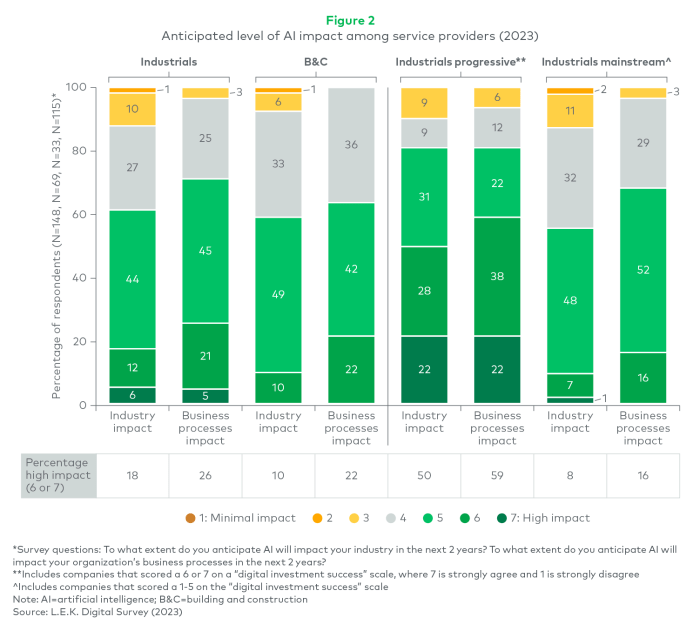
AI is rapidly transforming professional services, and this trend is only accelerating. From automating routine tasks to augmenting human expertise, AI’s impact is profound and multifaceted. Predicting the precise trajectory of this evolution is challenging, but understanding the emerging technologies and their potential applications is crucial for navigating the future of work.The future of professional services will be heavily intertwined with the evolution of AI.
Expect a significant shift in how professionals interact with clients and collaborate with each other. This transformation will create new opportunities, while also presenting challenges related to workforce adaptation and ethical considerations.
AI-Powered Automation in Professional Services
The increasing sophistication of AI algorithms will enable the automation of more complex tasks. This includes not only routine administrative work but also tasks requiring a degree of judgment and analysis. For example, AI-powered legal research tools can now sift through vast legal databases, identifying relevant precedents and statutes much faster than any human could. This frees up legal professionals to focus on higher-level strategic tasks and client interactions.
Emerging AI Technologies and Their Impact
Several emerging AI technologies are poised to significantly impact professional services. Natural Language Processing (NLP) is rapidly advancing, enabling AI systems to understand and respond to human language with greater accuracy. This has implications for customer service, legal document review, and even financial analysis. Machine learning models are also becoming increasingly sophisticated, allowing for more accurate predictions and insights.
For example, AI can now analyze vast datasets to predict potential risks in financial portfolios, enabling more proactive and informed decision-making.
Reshaping the Future Job Market
The integration of AI in professional services will undoubtedly reshape the future job market. Some roles will become less relevant as AI takes over repetitive tasks, while new roles requiring expertise in AI implementation and management will emerge. The key will be adaptability and upskilling. Professionals who can leverage AI tools to enhance their capabilities and add value to their work will be better positioned for success.
For instance, consultants using AI-powered data analysis tools can offer more insightful recommendations to their clients, leading to more effective strategies and better outcomes.
Potential Benefits and Drawbacks
The integration of AI presents both exciting opportunities and potential challenges. Benefits include increased efficiency, reduced costs, and enhanced decision-making capabilities. However, concerns exist regarding job displacement, data security, and the potential for bias in AI algorithms. It is crucial to address these concerns proactively to ensure a fair and equitable transition to the AI-powered future. For example, educational institutions and professional development programs must adapt to prepare professionals for the changing demands of the job market.
Projected Growth of AI Adoption in Professional Services (Next 5 Years)
| Year | Technology | Adoption Rate | Impact |
|---|---|---|---|
| 2024 | AI-powered document review | 30% | Increased efficiency in legal and consulting firms. |
| 2025 | AI-driven customer service chatbots | 45% | Improved client experience and reduced response time. |
| 2026 | Predictive analytics for risk assessment | 60% | More informed financial and strategic decision-making. |
| 2027 | AI-powered legal research platforms | 75% | Enhanced legal research capabilities for attorneys. |
| 2028 | Personalized AI assistants for professionals | 85% | Improved productivity and workflow optimization. |
Closing Notes
In conclusion, AI’s impact on professional services is undeniable, reshaping traditional practices and demanding adaptation. While challenges exist, the potential for increased efficiency, enhanced decision-making, and improved client experiences is significant. As AI continues to evolve, professional service firms must embrace the opportunities it presents while addressing the ethical considerations and potential job market disruptions. The future of professional services hinges on navigating this evolving technological landscape with strategic planning and ethical awareness.