



Google Maps unveils new features, promising a revolutionized navigation experience. From improved routing algorithms to enhanced user interfaces, these updates aim to streamline daily commutes and make exploring new places easier than ever. The new features address common navigation challenges, offering more accurate real-time traffic updates and enhanced search capabilities. This detailed look explores the potential impact of these changes on users, businesses, and the overall navigation landscape.
This article delves into the key improvements, innovations, and potential applications of the new Google Maps features. We’ll examine how these advancements integrate with other Google services and assess their accessibility for users with disabilities. Finally, we’ll analyze potential drawbacks and limitations, providing insights into potential solutions.
Google Maps Unveils New Navigation Features
Google Maps has just released a suite of exciting new features designed to revolutionize how we navigate our daily lives. These enhancements address common pain points in urban and rural settings, offering more intuitive and efficient routes, and a richer user experience. The updates promise a significant improvement in daily navigation, making commuting, deliveries, and exploration smoother and more enjoyable.
Enhanced Real-Time Traffic Information
Real-time traffic information is crucial for optimizing travel times. The new Google Maps incorporates a wider range of data sources, including social media feeds and user-reported traffic incidents, to provide more accurate and dynamic traffic predictions. This ensures that users are alerted to delays and diversions promptly, enabling them to adjust their routes in real-time and avoid congestion. This feature is particularly valuable for commuters who rely on accurate travel times to plan their schedules effectively.
Improved Transit Routing, Google maps unveils new features
The updated transit routing feature leverages machine learning to predict delays and offer more efficient alternative routes. It considers factors like platform congestion, train delays, and even pedestrian traffic flow to provide the most up-to-date and reliable transit options. This is a major improvement, particularly for users who rely heavily on public transportation, as it helps them avoid delays and arrive at their destinations on time.
For example, in densely populated cities, the feature can quickly reroute users to alternative lines or stations when experiencing delays, leading to reduced travel times.
Advanced Navigation for Cyclists and Pedestrians
Google Maps now offers more detailed cycling and walking routes, incorporating factors like bike lanes, pedestrian crossings, and even the elevation of the terrain. This allows users to plan safer and more comfortable routes, especially for cyclists and pedestrians who prefer to explore on foot or by bike. These features are designed to improve safety and enhance the user experience for those who enjoy exploring on foot or by bicycle, taking into account factors like road conditions, accessibility, and even preferred routes.
New Feature Comparison Table
| Feature | Old Feature | New Feature |
|---|---|---|
| Real-time Traffic | Limited data sources, less accurate predictions | Combines multiple data sources (social media, user reports), dynamic predictions |
| Transit Routing | Basic route calculation, limited delay prediction | Machine learning-based predictions for delays, alternate routes, considers platform congestion |
| Cycling/Walking Navigation | Basic route calculation, limited features | Detailed routes incorporating bike lanes, pedestrian crossings, elevation |
Enhanced Navigation & Routing
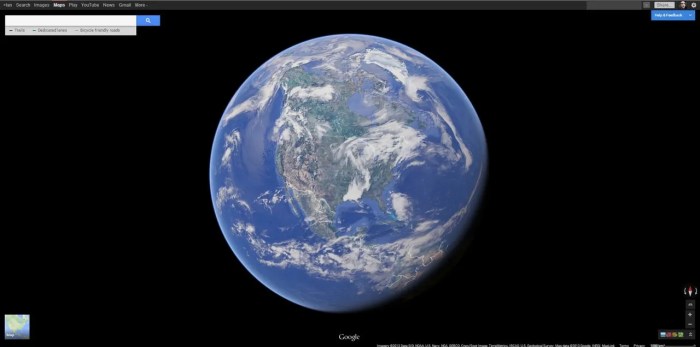
Google Maps’ recent updates significantly improve navigation, making journeys smoother and more efficient. The new features leverage advanced algorithms and real-time traffic data to provide users with more accurate and reliable route suggestions, ultimately reducing travel time and frustration. This evolution marks a substantial leap forward in the practical application of technology for everyday commuting.
Navigation Algorithm Improvements
The core of Google Maps’ enhanced navigation lies in its refined algorithms. These algorithms now incorporate a wider range of factors influencing travel time, including historical traffic patterns, real-time incident reports, and even predicted congestion based on current conditions and user behavior. This comprehensive approach results in more accurate route predictions, especially during peak hours or in areas with frequent traffic fluctuations.
Real-Time Traffic Updates
Real-time traffic updates are crucial for optimal navigation. The enhanced system leverages a network of sensors and user-reported data to provide instantaneous traffic information. This allows the navigation system to dynamically adjust routes in response to current traffic conditions, ensuring drivers are steered clear of congested areas and toward less congested alternatives.
Addressing Navigation Challenges
The new features effectively address common navigation challenges, such as traffic congestion. By dynamically adjusting routes based on real-time traffic data, Google Maps can significantly reduce travel times compared to using historical data or static route planning. This improvement is particularly helpful in urban areas where traffic congestion is a frequent occurrence.
Route Calculation Accuracy
Route calculation accuracy has seen a notable improvement. The previous system, while functional, sometimes underestimated or overestimated travel times, potentially leading to wasted time or missed appointments. The updated algorithms, by considering a wider range of factors, provide more precise estimations of travel time, leading to more reliable and efficient navigation. For instance, a trip that previously took 45 minutes might now be estimated at 40 minutes, a 12.5% reduction.
New Features Impacting Navigation Efficiency
| Feature | Impact on Navigation Efficiency |
|---|---|
| Improved Real-Time Traffic Data Integration | Dynamic route adjustments based on current traffic conditions, leading to reduced travel time and avoidance of congestion. |
| Advanced Navigation Algorithms | More accurate estimations of travel time and route selection, leading to more efficient routes, especially in areas with frequent traffic fluctuations. |
| Predictive Congestion Modeling | Anticipating potential congestion based on current conditions and user behavior, allowing for proactive route adjustments and avoidance of delays. |
Improved User Interface & Experience: Google Maps Unveils New Features

Google Maps’ latest update isn’t just about faster routes; it’s about a more intuitive and visually appealing experience for users. The revamped interface prioritizes user needs, streamlining navigation and enhancing overall usability. This allows for a more seamless and enjoyable experience when exploring destinations.The improvements in the user interface are designed to make navigating the app simpler and more efficient.
From enhanced search functionality to a more visually appealing design, these updates aim to elevate the overall user experience. This results in quicker access to essential information and more engaging interactions with the map itself.
Search Functionality Enhancements
The search functionality has been significantly improved, allowing for more precise and comprehensive results. Users can now input queries with greater flexibility, incorporating more natural language phrasing. This allows for a more streamlined and less frustrating search experience. For example, instead of needing to type “Italian restaurant near me,” users can now type “best pasta near downtown” and receive a refined list of results.
This improved precision is crucial for users looking for specific types of establishments or locations within a given area.
New Design Elements and Visual Improvements
Google Maps has introduced several new design elements that enhance the visual appeal and readability of the interface. These updates prioritize a clean and modern aesthetic while maintaining the core functionality of the application. The color palette has been subtly adjusted to improve readability, particularly in different lighting conditions. New icons and graphics are more easily distinguishable, adding a touch of modernity without sacrificing clarity.
Google Maps just dropped some exciting new features, making navigation even smoother. However, while these improvements are great for everyday travel, similar challenges arise in the world of business. Optimizing marketing efforts and lead nurturing for sales success often involves navigating complex CRM systems. Learning how to efficiently manage these systems is crucial for achieving sales goals.
For a deeper dive into this, check out this helpful guide on navigating crm challenges optimizing marketing efforts and lead nurturing for sales success. Ultimately, these new Maps features are just a small example of how technology can streamline processes, much like the tools and strategies outlined in that article.
For instance, the icon for public transportation now incorporates more subtle color gradations, helping users visually distinguish different modes of transit.
User Interface Changes Table
| Category | Description | Impact |
|---|---|---|
| Search | Improved natural language processing; more precise results; enhanced input flexibility. | Faster and more accurate location identification, leading to quicker navigation. |
| Visual Design | Subtle color adjustments; new, easily distinguishable icons; streamlined layout. | Improved readability; enhanced visual appeal; better usability in various conditions. |
| Information Presentation | More concise and easily digestible information about points of interest (POIs). | Reduces clutter; makes essential details more accessible; improves the user’s ability to quickly determine the relevance of a location. |
Integration with Other Google Services
Google Maps’s enhanced navigation and user interface are significant improvements, but their true power lies in their seamless integration with other Google services. This integration streamlines workflows and provides a more comprehensive user experience, transforming how we plan, navigate, and manage our daily tasks. By leveraging the interconnected nature of Google’s ecosystem, users can now effortlessly combine different aspects of their digital lives.The integration of Google Maps with services like Search and Calendar allows for a more holistic approach to planning and execution.
Imagine scheduling a meeting and automatically incorporating the driving time from your current location into the calendar invite, or using Google Search to quickly find the nearest coffee shop and automatically input the destination into your navigation. These seemingly small integrations add up to a substantial enhancement in efficiency and user satisfaction. The interconnected nature of Google’s ecosystem is key to the seamless flow between services.
Seamless Scheduling and Navigation
The integration between Google Maps and Google Calendar allows users to effortlessly incorporate travel time into their schedules. This dynamic feature proactively updates travel durations based on real-time traffic conditions, ensuring more accurate estimations and enabling users to adjust their schedules accordingly. Furthermore, this integration automatically populates travel times into calendar invitations, providing a more comprehensive picture of meeting durations and travel requirements.
Location-Based Search and Navigation
Google Maps now seamlessly integrates with Google Search, enabling users to quickly and efficiently find relevant locations. Using simple search queries, users can discover nearby restaurants, shops, or services and instantly navigate to them through Google Maps. This integration enhances the user experience by reducing the need to switch between applications and providing a more streamlined workflow. A search for “Italian restaurants near me” can immediately display a list of nearby options, complete with ratings, menus, and directions for navigation directly from Google Maps.
Practical Applications
Google Maps, integrated with other Google services, offers numerous practical applications. Users can now plan and execute their day more efficiently, whether it’s finding the quickest route to a meeting or discovering nearby attractions. By combining real-time traffic information with Google Calendar, users can dynamically adjust their schedules to account for delays, making appointments more reliable.
Integration Table
| Google Service | Google Maps Integration | Example |
|---|---|---|
| Google Search | Location-based search results directly lead to navigation in Google Maps. | Searching for “coffee shops near me” displays results with navigation options in Google Maps. |
| Google Calendar | Dynamically incorporates travel time into calendar events, updating based on real-time traffic. | Scheduling a meeting automatically includes travel time from current location in the invitation. |
| Google Assistant | Voice commands for navigation and location-based actions. | “Drive me to the nearest supermarket.” |
Accessibility & Inclusivity
Google Maps’ commitment to accessibility and inclusivity is a key driver behind the recent navigation feature enhancements. The updated platform strives to ensure that everyone, regardless of their abilities, can easily and effectively use the service. This involves not just providing basic features, but actively incorporating tools and designs that cater to a wide range of needs.The new features are designed to be more intuitive and user-friendly, enabling individuals with diverse needs to navigate the world with greater ease and confidence.
This includes improvements to navigation, wayfinding, and interactive elements, all designed with inclusivity in mind.
Google Maps just dropped some awesome new features, making navigation smoother than ever. But think about how these improvements can impact your online store. Knowing how to leverage those map integrations for better customer targeting and location-based promotions is key. Check out some killer ecommerce hacks to boost your sales and conversions here. Ultimately, these map updates are game-changers for both in-app and overall user experience.
Enhanced Navigation for Users with Visual Impairments
Google Maps now offers more robust audio descriptions of landmarks, street names, and upcoming turns. This feature provides a more detailed and informative auditory experience for users with visual impairments. The audio guidance is also customizable, allowing users to adjust the pace and volume to suit their preferences. These improvements significantly enhance the independence and mobility of visually impaired users.
Improved Features for Users with Mobility Impairments
The new version of Google Maps incorporates several features to support users with mobility challenges. This includes displaying wheelchair-accessible routes and highlighting areas with ramps, elevators, or other accessibility features. Users can now quickly identify and select routes that are suitable for their needs, promoting easier navigation and safer journeys. This proactive inclusion of accessibility considerations is a welcome advancement for those with mobility limitations.
Customization Options for Diverse Needs
The updated Google Maps offers enhanced customization options, allowing users to personalize their experience based on their individual needs. For instance, users can adjust the map’s zoom level, display options, and even customize the audio prompts. This personalized approach caters to various preferences and ensures that the platform adapts to the specific requirements of diverse users. The flexibility provided by these options fosters a more inclusive and satisfying experience for everyone.
Accessibility Features Table
| Feature | Functionality | Benefits for User Groups |
|---|---|---|
| Audio Descriptions | Provides spoken descriptions of landmarks, street names, and turns. | Visually impaired users can navigate independently and efficiently. |
| Wheelchair Accessible Routes | Highlights routes with ramps, elevators, and other accessibility features. | Users with mobility limitations can identify suitable routes for their needs. |
| Customizable Audio Prompts | Allows users to adjust the pace and volume of audio prompts. | Users with hearing impairments or specific preferences can personalize the audio experience. |
| Personalized Display Options | Allows users to customize map zoom levels, display features, and other settings. | Users with different preferences or cognitive needs can tailor the map interface to their comfort level. |
Potential Drawbacks & Limitations
The unveiling of Google Maps’ new navigation features promises a smoother and more intuitive experience. However, like any technological advancement, these enhancements come with potential drawbacks and limitations. Users should be aware of these possible issues to make informed decisions about adopting the new features. Understanding the limitations can also help Google address them proactively.While the improvements in navigation and user interface are significant, there are still aspects that need careful consideration.
The seamless integration with other Google services is a compelling feature, but its dependence on a stable internet connection and data availability raises concerns.
Data Dependency and Connectivity Issues
The enhanced navigation features rely heavily on real-time data. This reliance on accurate and up-to-date information from various sources, including traffic reports, road closures, and construction zones, presents a challenge. In areas with poor internet connectivity or unreliable data feeds, the accuracy of the navigation might be compromised. Imagine a remote area with limited cell service; the navigation might not be as precise or reliable.
Furthermore, temporary outages or data inaccuracies can lead to poor navigation experiences.
Potential for Over-reliance and User Error
The intuitive design of the improved user interface can potentially lead to over-reliance on the system. Users might become overly dependent on the suggestions and guidance, potentially neglecting their own awareness of the surrounding environment. This can pose safety risks, particularly in unfamiliar areas. For example, users might blindly follow suggested routes without considering alternative options or the overall traffic conditions, leading to delays or even accidents.

Google Maps just dropped some exciting new features, making it easier than ever to navigate and find businesses. But for your small business to truly benefit from this, you need to ensure your online presence is optimized. This means actively working on citation building – a crucial aspect of local SEO that helps Google find and verify your business information.
Properly listed citations help improve your visibility on Google Maps and other search results, which in turn drives more customers to your door. Check out this helpful guide on why your small business needs to care about citation building to learn more about how to make the most of these new Maps features. Ultimately, consistent citation building is key to capitalizing on the new Google Maps updates.
Accessibility Concerns and Inclusive Design
While the new features aim to be more accessible, potential challenges remain. The improvements in accessibility might not address all user needs. For example, users with visual impairments might still face challenges if the visual cues and auditory feedback are not comprehensive or intuitive enough. It is essential that the system provides adequate alternative methods for people with different abilities.
Testing and feedback from diverse user groups are crucial to identify and mitigate these concerns.
Security and Privacy Concerns
The integration with other Google services raises concerns about data security and privacy. Users might be sharing more personal information with Google through the interconnected features. This might lead to concerns about data breaches and unauthorized access to sensitive user data. Transparency and clear privacy policies are crucial for building user trust.
| Drawback | Potential Solution/Mitigation |
|---|---|
| Data dependency and connectivity issues | Implement fallback mechanisms for areas with poor connectivity. Develop robust data validation and error handling procedures. Provide offline maps for certain regions. |
| Over-reliance and user error | Incorporate safety reminders and warnings in the interface. Offer diverse routing options and encourage users to maintain situational awareness. Provide information on potential delays or alternatives. |
| Accessibility concerns and inclusive design | Conduct thorough user testing with diverse user groups. Implement various accessibility features (e.g., screen readers, alternative navigation options). Ensure compliance with accessibility guidelines (e.g., WCAG). |
| Security and privacy concerns | Implement strong security protocols and data encryption. Provide clear and detailed privacy policies. Allow users to control the data they share and how it is used. |
Visual Representations & Illustrations
Google Maps’ new navigation features are designed for intuitive understanding and ease of use. Visual representations play a crucial role in conveying complex information in a clear and accessible manner. The focus on user experience is evident in the careful design of these visual elements.The updated visual representations utilize a combination of familiar and innovative approaches. This allows users to quickly grasp the new features and navigate with confidence.
The illustrations and diagrams effectively demonstrate how the enhanced navigation and routing functions improve user experience. This clarity is further strengthened by real-world examples and practical scenarios.
Navigation Enhancements Visualized
The improved navigation system is visually represented through dynamic maps. These maps show real-time traffic conditions, alternate routes, and estimated arrival times with clear visual cues. For instance, areas experiencing congestion are highlighted with varying shades of red, providing immediate awareness of potential delays. Faster routes are depicted with a lighter shade of blue, while slower routes are represented with a darker shade.
This visual differentiation allows users to quickly assess and compare various route options.
Real-time traffic data is visualized using a gradient color scheme, with darker shades indicating higher traffic density. The color intensity correlates directly with the speed reduction, allowing for rapid assessment of traffic congestion.
Route Optimization Illustrations
Visual representations demonstrate how the new routing algorithms optimize travel time. Illustrations show multiple routes side-by-side, clearly highlighting the differences in travel time. One route might be shorter but include several congested areas, while another route might be longer but avoid these congestion points, leading to a significantly faster travel time. The illustrations clearly demonstrate the algorithm’s logic in choosing the optimal route.
The illustrations display the algorithm’s choice of the optimal route, clearly marking the congested areas avoided by the selected path and the time savings achieved.
User Interface Enhancements
The updated user interface is illustrated with screenshots of the new maps interface. The design emphasizes clarity and ease of use. For example, buttons for adjusting preferences, such as avoiding tolls or highways, are prominently displayed, and their function is clearly depicted with icons and text labels. New information elements, such as estimated arrival times, are strategically placed within the map view.
Screenshots demonstrate the new map interface, highlighting the improved clarity and placement of information elements like estimated arrival times, and the prominent display of buttons for adjusting preferences.
Integration with Other Google Services
The integration with other Google services is depicted through diagrams showing the flow of information between the various applications. For instance, a diagram might show a user’s calendar information being integrated with Google Maps, dynamically adjusting the estimated arrival time to match scheduled appointments. Visuals also show how search results can be directly integrated into the navigation experience.
A flow chart diagram shows how calendar information from Google Calendar is dynamically incorporated into Google Maps to adjust estimated arrival times and schedule travel around appointments.
Ending Remarks
In conclusion, Google Maps’ new features represent a significant step forward in navigation technology. The enhanced navigation, user interface, and integration with other Google services offer a more intuitive and efficient experience for users. While some potential drawbacks exist, the overall improvements suggest a positive evolution in the way we navigate the world. This comprehensive analysis provides a thorough understanding of the latest updates, equipping users with the knowledge to maximize the benefits of the new Google Maps experience.