
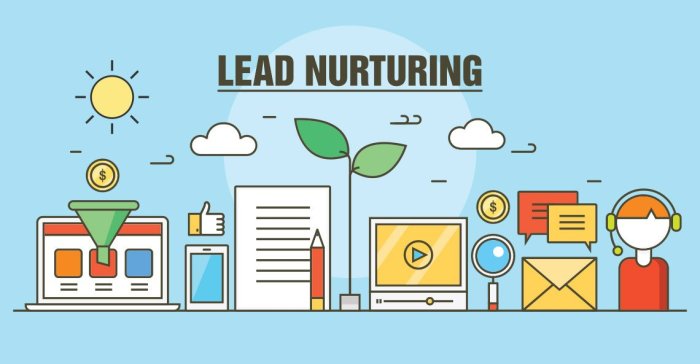

Generating sales leads with a nurturing campaign is crucial for business growth. This comprehensive guide delves into the entire process, from defining your ideal customer profile to optimizing for conversions. We’ll explore different channels, effective content strategies, and essential tools to help you build a successful nurturing campaign. Get ready to transform your lead generation efforts!
This Artikel breaks down the key components of a successful nurturing campaign. We’ll cover defining your ideal customer profile (ICP), crafting compelling content tailored to various lead segments, choosing the right channels, optimizing for conversions, and scaling your campaign for long-term success. It’s a multi-faceted approach that demands careful planning and execution.
Defining a Nurturing Campaign

A nurturing campaign is a strategic marketing approach designed to cultivate leads and move them progressively through the sales funnel. Instead of a one-time push, it’s a sustained engagement process that builds relationships and educates potential customers. This method focuses on providing valuable content and information, fostering trust, and ultimately guiding leads towards a purchase decision.This involves a multi-faceted approach, not just a single email blast.
It’s about understanding the lead’s journey and providing relevant information at each stage, from initial awareness to final conversion. This approach is a significant departure from traditional, interruption-based marketing methods.
Key Stages and Phases of a Lead Nurturing Process
A successful nurturing campaign unfolds in distinct stages. These stages are often broken down into phases, each designed to move leads closer to conversion. The initial phase often involves attracting attention and building awareness, progressing to fostering interest and demonstrating value, and finally culminating in conversion and long-term engagement.
- Awareness: This stage aims to capture initial interest by providing valuable content related to their needs or problems. This could involve blog posts, articles, or webinars that introduce the topic.
- Interest: The next phase focuses on nurturing leads by offering more detailed information. Case studies, testimonials, and product demos can be valuable assets at this point.
- Decision: Here, leads are ready to consider their options. Providing comparisons, pricing information, and addressing concerns through FAQs or live chat can help them make informed decisions.
- Action: This is the final stage, where leads are ready to convert. Offering exclusive deals, discounts, or streamlined purchasing processes can encourage them to complete the transaction.
Difference Between Nurturing Campaigns and Other Marketing Approaches
Nurturing campaigns differ significantly from other marketing strategies. While traditional methods like direct mail or banner ads might generate immediate attention, they often fail to build the long-term relationships needed to drive conversions.Nurturing, on the other hand, focuses on building trust and understanding over time. It’s about providing ongoing value to potential customers, which builds loyalty and encourages them to become repeat buyers.
Defining the Ideal Customer Profile (ICP) for a Nurturing Campaign
Defining a precise ICP is critical for tailoring a nurturing campaign’s content and messaging. The ideal customer profile (ICP) represents the characteristics of your ideal customer. This includes demographic information (age, location, profession), psychographic details (interests, values, motivations), and behavioral patterns (buying habits, online activity).
- Detailed Research: Conduct thorough research to understand the needs and motivations of your target audience. Analyze existing customer data and conduct market surveys to gain insights.
- Defining Key Attributes: Clearly define the key attributes that distinguish your ideal customer from others. This helps in segmenting the audience and creating targeted campaigns.
- Creating Buyer Personas: Develop detailed buyer personas to represent your ideal customer. These personas should include detailed descriptions of their motivations, challenges, and goals.
Goals and Objectives for a Lead Generation Nurturing Campaign
The objectives of a nurturing campaign should be clearly defined and measurable. This includes quantifiable targets that align with overall business goals.
- Lead Qualification: Identify and qualify leads based on their level of interest and potential for conversion. This involves categorizing leads into different stages of the sales funnel.
- Conversion Rate Improvement: Increase the percentage of leads that convert into paying customers. This is often achieved through personalized messaging and tailored content.
- Increased Sales Revenue: Drive sales revenue by converting more leads into paying customers and increasing the average order value.
Lead Nurturing Strategies Comparison
| Strategy | Mechanism | Pros | Cons |
|---|---|---|---|
| Automated email sequences, triggered by lead actions | Highly scalable, cost-effective, measurable results | Can be easily ignored or marked as spam, requires careful crafting to avoid being perceived as intrusive | |
| SMS | Short, concise messages for quick engagement | High open rates, immediate feedback, ideal for time-sensitive offers | Limited character count, not suitable for lengthy information, requires compliance with regulations |
| Social Media | Engaging content, targeted ads, community building | Reach a broad audience, increase brand awareness, build relationships | Requires consistent effort, engagement varies across platforms, difficulty in measuring direct impact on sales |
Crafting Effective Content for Nurturing
Lead nurturing is a crucial component of a successful sales strategy. It’s about building relationships with potential customers over time, educating them about your products or services, and guiding them towards a purchase decision. Effective content is the engine driving this process, fostering engagement and ultimately, converting leads into loyal customers.Creating engaging and informative content that resonates with your target audience is key to nurturing leads effectively.
Tailoring content to different lead segments and stages of the buyer’s journey ensures that each interaction feels relevant and valuable. A well-structured nurturing campaign uses various content formats to maintain consistent communication and address the evolving needs of prospective customers.
Content Formats for Lead Nurturing
Understanding the various content formats available for lead nurturing is essential for creating a comprehensive and effective strategy. Different formats resonate with different lead personas and learning styles. Each format has a unique role in the nurturing process.
- Blog Posts: Blog posts are excellent for establishing thought leadership and providing valuable insights to potential customers. They can cover industry trends, problem-solving techniques, and best practices, positioning your brand as a trusted resource. For example, a post about the challenges of scaling a SaaS business could attract leads interested in similar ventures.
- Ebooks: Ebooks are a more in-depth resource that provides comprehensive information on a specific topic. They often address complex issues and offer actionable strategies. An ebook on “Strategies for Efficient Project Management” would be valuable to potential clients looking for project management expertise.
- Webinars: Webinars provide an interactive platform for engaging leads and showcasing your expertise. They can cover specific product features, industry trends, or customer success stories. A webinar demonstrating a new product’s capabilities would be a powerful tool for attracting potential users.
- Case Studies: Case studies showcase real-world examples of how your products or services have benefited other clients. They provide social proof and demonstrate the tangible value proposition of your offerings. A case study demonstrating how a particular software increased sales for a client by 25% would be highly persuasive.
Personalization in Nurturing Campaigns
Personalization is critical for nurturing leads effectively. Generic content rarely resonates with potential customers, while personalized content creates a more meaningful connection. It demonstrates that you understand their individual needs and aspirations.
- Segmenting Leads: Categorizing leads based on shared characteristics allows for tailored content delivery. Common segmentation criteria include industry, job title, company size, and engagement history. For instance, leads in the manufacturing sector require different content than those in the retail sector.
- Tailoring Content to Segments: Once leads are segmented, content can be adjusted to address their specific needs and pain points. This might involve different language, examples, or call-to-actions. For example, a marketing lead would be interested in different content than a sales lead.
Storytelling in Lead Nurturing
Storytelling is a powerful tool for engaging potential customers and building emotional connections. It helps humanize your brand and demonstrate the real-world impact of your products or services. Using stories to demonstrate your company’s values and mission fosters trust and resonates with potential clients on a deeper level.
Content Types and Lead Nurturing Stages
The table below illustrates the alignment between different content types and the appropriate lead nurturing stages.
| Content Type | Lead Nurturing Stage | Description |
|---|---|---|
| Blog Posts | Awareness | Introduce your brand and expertise to potential customers. |
| Ebooks | Consideration | Provide in-depth information and address customer pain points. |
| Webinars | Decision | Demonstrate product value and answer specific questions. |
| Case Studies | Decision/Action | Showcase success stories and build trust. |
Choosing the Right Channels and Tools
Nurturing campaigns require a strategic approach to communication. Selecting the right channels and tools is crucial for effectively reaching potential customers and guiding them through the sales funnel. The right tools not only streamline the process but also provide valuable insights into campaign performance, enabling continuous optimization.Effective lead nurturing involves a multifaceted approach. It’s not just about sending emails; it’s about building relationships and providing value at every stage of the customer journey.
Careful consideration of the channels and tools utilized ensures that messages resonate with the target audience and ultimately drive conversions.
Evaluating Marketing Automation Tools
Choosing the right marketing automation tool is vital for successful lead nurturing. The selection process should involve a thorough evaluation of available options, considering factors like scalability, integration capabilities, and cost-effectiveness. Different tools offer various features, from automated email sequences to CRM integration.A crucial aspect of evaluation is understanding the specific needs of your business and target audience.
Nurturing campaigns are a fantastic way to generate sales leads, but ensuring your website is optimized for search engines is crucial. Understanding technical SEO, like what’s covered in technical seo the complete guide , will help you improve your website’s visibility. This, in turn, boosts the effectiveness of your lead nurturing strategy by bringing more qualified prospects to your sales funnel.
Ultimately, a solid understanding of technical SEO is a key component of any successful lead generation campaign.
Does the tool support personalized communication? Does it provide analytics to track campaign performance? Can it integrate with your existing CRM? These are key questions to consider during the evaluation process. A thorough comparison of features and pricing models is essential before making a decision.
Nurturing campaigns are key to generating sales leads, and understanding how to effectively target your audience is crucial. A strong foundation in lead generation often hinges on successful advertising strategies, like those outlined in the “google ads experiments six steps to success” guide. This guide provides actionable insights into refining your campaigns, ultimately boosting your lead generation efforts.
By combining targeted advertising with a well-structured nurturing process, you can effectively convert prospects into paying customers.
Selecting an Email Marketing Platform
Choosing the right email marketing platform is paramount for a successful nurturing campaign. Factors such as ease of use, robust segmentation capabilities, and comprehensive analytics are critical. An effective platform should allow for the creation of automated email sequences, personalized content, and detailed reporting.Consider features like A/B testing, campaign tracking, and integration with other marketing tools. The platform should align with your business needs and scale alongside your growth.
An intuitive interface and strong customer support are also essential factors to consider. Platforms like Mailchimp, Constant Contact, and Sendinblue are popular choices, each with unique strengths.
Comparing Social Media Platforms for Lead Nurturing
Different social media platforms cater to various audiences and serve different purposes. LinkedIn, for example, is ideal for business-to-business (B2B) lead nurturing, allowing for targeted connections and professional networking. Facebook, on the other hand, offers broader reach and the ability to engage with a wider audience. Understanding the nuances of each platform is crucial for effective lead nurturing.Each platform’s features and capabilities should be carefully assessed.
Consider the demographics of your target audience and the specific type of engagement you wish to foster. A successful social media lead nurturing strategy will leverage the strengths of the chosen platforms to build brand awareness, nurture relationships, and generate qualified leads. Instagram is suitable for visual-driven engagement and showcasing products or services.
Essential Tools and Platforms for a Successful Nurturing Campaign
A successful nurturing campaign hinges on a combination of tools and platforms. A robust CRM system is essential for managing customer data and interactions. Marketing automation software automates communication flows, ensuring consistent messaging and engagement. Effective analytics platforms provide insights into campaign performance, enabling continuous optimization.A well-rounded approach utilizes a variety of tools, not just email marketing platforms.
This holistic strategy includes tools for social media management, website analytics, and potentially even live chat. These tools, when used in tandem, create a seamless and effective customer journey.
Channel Effectiveness in Lead Nurturing
The effectiveness of various channels in lead nurturing varies depending on the target audience and the specific campaign goals. The following table provides a general overview of channel effectiveness:
| Channel | Effectiveness | Strengths | Weaknesses |
|---|---|---|---|
| Email Marketing | High | Personalized communication, automated sequences, detailed analytics | Potential for low open rates, high spam filters |
| Social Media | Medium to High | Broader reach, engagement opportunities, brand building | Requires consistent posting, platform-specific strategies |
| Content Marketing | High | Builds authority, positions as a thought leader, attracts organic traffic | Time-consuming, requires ongoing creation |
| Paid Advertising | High | Targeted reach, quick results, measurable ROI | High cost, requires expertise, potential for wasted spend |
This table offers a starting point for understanding channel effectiveness. Specific results will vary based on campaign specifics and audience characteristics. A balanced approach, incorporating various channels, is often the most effective strategy.
Optimizing for Conversions and Measuring Results
Nurturing campaigns are only as effective as your ability to track and analyze their performance. Without proper tracking and analysis, you’re essentially flying blind, hoping your efforts are paying off. Understanding key metrics, optimizing for conversions, and consistently reviewing results are critical to maximizing the ROI of your nurturing program. This crucial step allows you to fine-tune your strategy and ensure your nurturing emails are effectively moving leads through the sales funnel.The success of a nurturing campaign hinges on the meticulous collection and analysis of data.
This data-driven approach empowers you to identify areas needing improvement and refine your strategies for greater impact. This section details the process of setting up tracking mechanisms, essential metrics, conversion rate enhancement strategies, and data analysis techniques. It also presents a framework for reporting campaign performance, allowing you to present actionable insights to stakeholders.
Setting Up Tracking Mechanisms
Effective tracking is fundamental to measuring the success of your nurturing campaign. This involves integrating tools to monitor key interactions, such as email opens, clicks, and conversions. A crucial element is setting up unique tracking links within your nurture emails. These links should be meticulously monitored to gauge the effectiveness of individual email content. This also allows for detailed analysis of which content resonates most with your target audience.
Using UTM parameters is essential for identifying the source of website traffic generated by the campaign. This granular level of tracking enables you to pinpoint which elements of the nurturing sequence are driving conversions.
Key Metrics for Measuring Success, Generating sales leads with a nurturing campaign
Several key metrics provide valuable insights into the performance of your nurturing campaign. These metrics help determine the effectiveness of your messaging, content, and overall strategy.
- Open Rates: The percentage of recipients who open your nurturing emails. High open rates indicate your subject lines are engaging and your email content is relevant. For example, a campaign targeting software professionals might see higher open rates for emails with subject lines related to productivity tools or industry trends. Low open rates might suggest a need to revise your subject lines or email content.
- Click-Through Rates (CTR): The percentage of recipients who click on a link within your email. High CTRs demonstrate that your email content is enticing and prompts recipients to take action. A low CTR could point to poor calls-to-action or a lack of relevance in the email content.
- Conversion Rates: The percentage of recipients who complete a desired action, such as filling out a form or making a purchase. This metric directly reflects the effectiveness of your nurturing campaign in driving desired outcomes. Conversion rates will vary based on the campaign’s goals, but tracking the progress over time provides invaluable insights.
- Bounce Rates: The percentage of emails that are not delivered to the recipient’s inbox. High bounce rates indicate issues with email addresses or email server problems. This is a crucial metric to address as it indicates a loss of potential engagement.
Strategies for Improving Conversion Rates
Conversion rates can be improved by analyzing which stages of the nurturing sequence are causing friction. This could be as simple as refining the call-to-action language within your emails or segmenting your audience to send more targeted content. Personalization and dynamic content based on recipient behavior are powerful strategies to optimize the conversion rate. Testing different email subject lines and calls-to-action can also yield significant improvements.
Analyzing Data for Improvement
Data analysis is key to identifying areas for improvement in your nurturing campaign. Tools like Google Analytics can help visualize the flow of recipients through the nurturing sequence, showing where bottlenecks exist. Analyzing clickstream data from recipients who engaged with your emails reveals the content and calls-to-action that are most effective. Visualizations like heatmaps of clicked links can pinpoint exactly which areas of an email are generating the most interest.
Generating sales leads with a nurturing campaign is all about building relationships, not just pushing products. It’s about understanding your audience and offering valuable content, like a well-timed email series. Think about the history of symbols like bicycles – a powerful representation of women’s rights and freedom. We shouldn’t forget the significance of these symbols, bicycles womens rights symbols shouldnt forget , as we build relationships.
Ultimately, this thoughtful approach to nurturing potential customers is key to successful sales lead generation.
By analyzing this data, you can pinpoint elements of the nurture sequence that are not driving the desired actions and address them accordingly.
Reporting on Campaign Performance
A structured report should summarize key metrics, identify trends, and provide actionable insights. The report should include charts and graphs to illustrate the data, making it easily digestible. The report should also clearly highlight areas for improvement, along with proposed solutions.
| Metric | Target |
|---|---|
| Open Rate | 25% |
| Click-Through Rate | 10% |
| Conversion Rate | 5% |
| Bounce Rate | <2% |
Scaling and Maintaining the Campaign: Generating Sales Leads With A Nurturing Campaign
Nurturing campaigns are powerful tools for generating sales leads, but their effectiveness hinges on ongoing adaptation and scaling. This phase requires a strategic approach that considers expanding reach, maintaining engagement, and adapting to evolving market dynamics. Successful nurturing campaigns are not static; they are living documents that require continuous refinement and optimization.A successful nurturing campaign, once established, needs a clear path for expansion and maintenance to maximize its ROI.
This involves anticipating future needs, implementing systems for scalability, and integrating feedback mechanisms to ensure continuous improvement. This proactive approach allows the campaign to remain effective and efficient as the business grows and the market changes.
Methods for Scaling a Wider Audience
Expanding the reach of a nurturing campaign necessitates a multi-faceted approach. This involves evaluating current resources, identifying potential growth areas, and implementing strategies for efficient expansion.
- Segmenting the Target Audience: Dividing the target audience into smaller, more manageable segments based on shared characteristics, behaviors, or interests allows for more personalized communication and improved engagement. This can involve demographic segmentation (age, location), psychographic segmentation (values, lifestyle), or behavioral segmentation (purchase history, website activity).
- Leveraging Multiple Channels: Broadening the reach involves incorporating various channels beyond email, such as social media platforms, SMS marketing, and targeted online advertising. This diversification ensures broader exposure and maximizes the potential for lead generation across different customer touchpoints.
- Optimizing Automation Tools: Automating tasks such as email sequences, social media posting, and lead scoring enhances efficiency and allows for broader campaign management. This includes utilizing tools for bulk email sending, scheduling social media posts, and automated lead qualification based on predefined criteria.
Maintaining High Engagement
Sustaining high levels of engagement in a nurturing campaign requires consistent effort and attention to detail. This includes maintaining a high quality of content, ensuring timely responses, and tailoring the experience to individual customer needs.
- Personalization Strategies: Tailoring content to individual customer needs through dynamic content and personalized messaging improves engagement and relevance. This can involve using customer data to personalize email subject lines, content within emails, and even the offers presented.
- Consistent Content Updates: Providing fresh and engaging content keeps recipients interested and ensures the nurturing campaign remains relevant and valuable. This includes updating product information, highlighting new features, or sharing relevant industry insights.
- Proactive Customer Interaction: Encouraging two-way communication through surveys, polls, and feedback mechanisms fosters engagement and allows for real-time adjustments to the nurturing campaign. Responding to queries and feedback in a timely manner further enhances customer satisfaction.
Adapting to Changing Market Conditions
Market conditions are constantly evolving, requiring a dynamic approach to nurturing campaigns. The ability to adapt to these changes is crucial for maintaining campaign effectiveness.
- Monitoring Market Trends: Keeping abreast of current market trends and competitor activities allows for proactive adjustments to the nurturing campaign. This involves regularly analyzing industry news, competitor strategies, and customer feedback to identify evolving needs.
- Iterative Testing and Refinement: Continuously testing different aspects of the campaign, such as content, messaging, and channels, enables identification of what works and what doesn’t. This iterative process allows for adjustments to optimize campaign performance in response to evolving trends.
- Refining Content Based on Performance: Analyzing campaign performance data provides insights into what content resonates most with the target audience. This data can be used to create more effective content and improve engagement. This includes reviewing open rates, click-through rates, and conversion rates to identify areas for improvement.
Incorporating Customer Feedback
Actively seeking and incorporating customer feedback is crucial for tailoring the nurturing campaign to customer preferences.
- Feedback Mechanisms: Implementing various feedback mechanisms such as surveys, feedback forms, and social media monitoring tools allows for direct input from customers. This can involve sending post-interaction surveys or using feedback forms on landing pages.
- Analyzing Feedback for Trends: Identifying recurring themes or patterns in customer feedback provides valuable insights for improving the campaign. This involves analyzing the data to identify common concerns or suggestions.
- Implementing Changes Based on Feedback: Implementing adjustments to the campaign based on analyzed feedback is vital for improvement. This may involve revising content, adjusting email sequences, or modifying the overall strategy.
Automation in Scaling and Maintenance
Automation plays a crucial role in scaling and maintaining a nurturing campaign. Automation tools streamline processes and reduce manual effort.
- Automating Communication Sequences: Automation tools can be used to create automated email sequences, drip campaigns, and personalized messages based on customer behavior. This streamlines communication and ensures consistency.
- Automating Lead Qualification: Using automation to automatically qualify leads based on criteria like engagement level or specific actions further improves efficiency. This involves filtering out leads that are unlikely to convert and prioritizing those with higher potential.
- Automating Reporting and Analysis: Automated reporting and analysis tools provide insights into campaign performance and identify areas for improvement. This enables efficient tracking and analysis of key metrics like open rates, click-through rates, and conversions.
Adapting Campaign Flowchart
[Insert a flowchart illustrating the process of adapting a nurturing campaign. The flowchart should include steps for monitoring market trends, analyzing campaign performance, identifying areas for improvement, and implementing adjustments. The flowchart should also include decision points for determining whether adjustments are necessary and how to proceed based on the analysis.]
Ultimate Conclusion

In conclusion, building a robust lead nurturing campaign is a strategic investment in your business’s future. By understanding the stages of the process, crafting engaging content, and optimizing for conversions, you can significantly improve lead quality and drive sales. Remember, consistent monitoring, adaptation, and automation are key to achieving sustainable results. This guide provides a solid foundation to get you started on your lead generation journey.