
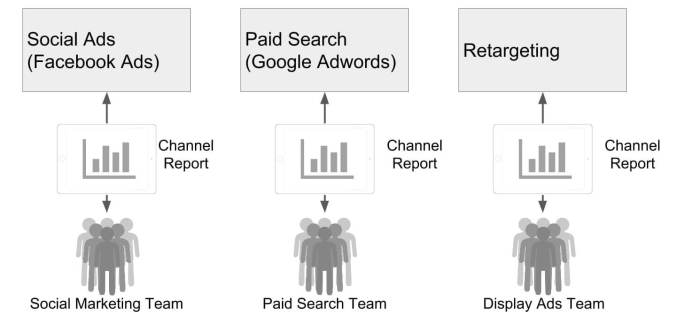

Adobe analytics for cross channel marketing attribution – Adobe Analytics for cross-channel marketing attribution is crucial for modern marketers. This comprehensive guide dives deep into understanding how to leverage Adobe Analytics to accurately track and analyze your marketing efforts across all channels. From social media to email and search, we’ll explore the nuances of attribution models and practical implementation strategies. Discover how to optimize your campaigns and maximize ROI using data-driven insights.
This exploration will cover everything from the fundamental concepts of Adobe Analytics and cross-channel attribution to practical steps for implementation and analysis. We’ll examine various attribution models, like first-touch, last-touch, and linear, highlighting their strengths and weaknesses. Learn how to segment your data for better analysis, identify high-performing channels, and optimize your marketing strategies for maximum impact.
Introduction to Adobe Analytics for Cross-Channel Attribution
Adobe Analytics is a powerful tool for marketers, providing deep insights into website and app behavior. It’s more than just a website traffic counter; it’s a comprehensive platform that tracks user journeys, identifies trends, and helps optimize marketing campaigns. Understanding how users interact with your digital properties is crucial for success, and Adobe Analytics provides the data to do just that.Cross-channel marketing attribution is the process of understanding how different marketing channels contribute to conversions.
It goes beyond simply looking at which channel drove the initial click; it delves into the entire customer journey, recognizing that a customer might interact with multiple channels before making a purchase. This holistic view is essential for accurate assessment of campaign effectiveness.
Importance of Accurate Attribution in Modern Marketing Strategies
Accurate attribution is vital for modern marketing. Without it, you risk misallocating budget and effort, potentially pouring resources into channels that aren’t driving significant results. Understanding which channels are truly influential in the customer journey allows for more informed decisions about campaign strategies, budget allocation, and optimization. This ultimately leads to higher return on investment (ROI).
How Adobe Analytics Facilitates Cross-Channel Tracking
Adobe Analytics uses sophisticated tracking mechanisms to collect data across various marketing channels, including social media, email, search engines, and more. This comprehensive data collection allows for a holistic view of the customer journey. By tracking interactions across these channels, Adobe Analytics can provide a detailed understanding of how each channel influences conversions, enabling marketers to make informed decisions about campaign performance and optimization.
Different Marketing Channels and Their Roles in Cross-Channel Attribution
Understanding the unique contribution of each marketing channel is key to successful cross-channel attribution. The following table illustrates how different channels often contribute to the customer journey, from initial awareness to final conversion.
| Marketing Channel | Typical Role in the Customer Journey |
|---|---|
| Social Media | Generating brand awareness, driving initial interest, and fostering engagement. Often plays a role in nurturing leads and driving traffic to other channels. |
| Email Marketing | Nurturing leads, providing value, and driving conversions. Can remind customers of products or services, highlight promotions, and re-engage past customers. |
| Search Engine Marketing (SEM) | Driving highly targeted traffic to the website, often with high intent to purchase. Crucial for attracting customers actively searching for specific products or services. |
| Paid Advertising (PPC) | Directing targeted traffic to specific landing pages, promoting specific products or offers, and driving immediate conversions. |
| Content Marketing | Building brand authority, educating potential customers, and establishing thought leadership. This often plays a role in early stages of the customer journey and acts as a driver to other channels. |
Understanding Attribution Models
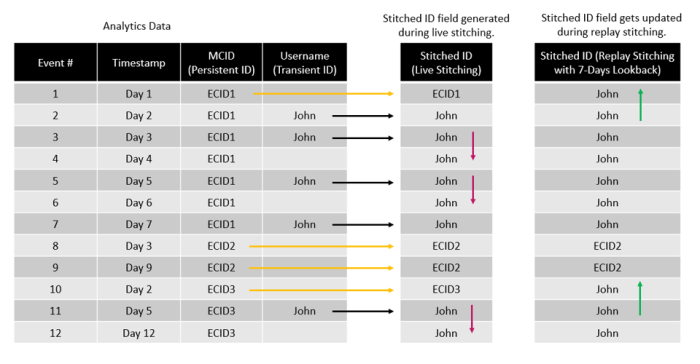
Picking the right attribution model in Adobe Analytics is crucial for accurately understanding how different touchpoints contribute to conversions. It’s not a one-size-fits-all solution; the best model depends heavily on your specific marketing strategy and goals. Choosing the wrong model can lead to misleading insights and ineffective campaign optimization. Let’s dive into the various attribution models available and their implications.
Different Attribution Models in Adobe Analytics
Adobe Analytics offers several attribution models, each with its own approach to assigning credit for conversions. Understanding these models is vital for interpreting the data and making data-driven decisions.
First-Touch Attribution
This model gives all the credit to the first touchpoint a customer interacts with, whether it’s an initial ad click, a social media post, or an email. This model is straightforward but may undervalue later touchpoints that ultimately influenced the conversion. For example, if a user sees an ad on Monday, and then visits the site again on Wednesday and finally makes a purchase on Friday, the Monday ad gets full credit.
This is suitable for campaigns where the initial awareness is paramount.
Last-Touch Attribution
Conversely, last-touch attribution assigns all the credit to the last touchpoint before the conversion. This model emphasizes the immediate impact of the final interaction. Returning to the previous example, if the user finally makes a purchase on Friday after multiple site visits and emails, the Friday interaction gets all the credit. It might be useful for tracking the effectiveness of a final push or promotion, but it could underestimate the value of prior interactions.
Linear Attribution
Linear attribution spreads the credit evenly across all touchpoints contributing to a conversion. Each touchpoint receives an equal share of the credit. Continuing the example, if the purchase happens on Friday, each of the Monday ad, Wednesday site visit, and Friday email gets an equal share of the credit. This model is beneficial for campaigns where a multi-touch journey is the norm and no single interaction dominates.
Time Decay Attribution
This model assigns more credit to touchpoints closer to the conversion. Touchpoints that happen further away in time get less credit. This approach attempts to reflect the diminishing impact of interactions over time. The Monday ad might receive a significant portion of the credit, but the Friday email receives a smaller portion. This is ideal for tracking the impact of long-term campaigns.
Position-Based Attribution
This model prioritizes touchpoints based on their position in the customer journey. Touchpoints earlier in the sequence receive more credit, with diminishing returns for later interactions. This model balances the importance of initial awareness and the influence of subsequent touchpoints.
Table of Attribution Models
| Attribution Model | Description | Strengths | Weaknesses | Impact on Campaign Analysis |
|---|---|---|---|---|
| First-Touch | Credit to the first touchpoint. | Simple to understand. | May undervalue later touchpoints. | Useful for awareness campaigns. |
| Last-Touch | Credit to the last touchpoint. | Highlights immediate impact. | May undervalue early touchpoints. | Useful for campaigns with a strong final push. |
| Linear | Equal credit to all touchpoints. | Balances multiple touchpoints. | Might not reflect the varying impact of touchpoints. | Suitable for campaigns with consistent engagement. |
| Time Decay | More credit to recent touchpoints. | Reflects diminishing impact over time. | Requires careful consideration of timeframes. | Useful for long-term campaigns. |
| Position-Based | Prioritizes earlier touchpoints. | Balances initial awareness and subsequent influences. | May not fully capture all touchpoints’ influence. | Suitable for campaigns with a clear progression. |
Implementing Cross-Channel Tracking in Adobe Analytics
Getting granular insights into customer journeys across various marketing channels is crucial for effective cross-channel attribution. This involves meticulously tracking user interactions with your brand across different touchpoints, from social media ads to email campaigns and paid search. Properly implementing cross-channel tracking in Adobe Analytics allows you to understand the effectiveness of each channel and optimize your marketing strategies for better ROI.Accurate measurement is the cornerstone of successful cross-channel attribution.
By understanding how customers interact with your brand across various touchpoints, you can gain invaluable insights into their behavior and preferences. This knowledge empowers you to tailor your marketing messages, optimize your campaigns, and ultimately boost conversions.
Setting Up Multiple Marketing Channel Tracking
To effectively track users across channels, you must ensure that all interactions are tagged correctly. This meticulous process involves implementing unique tracking codes for each channel, enabling Adobe Analytics to distinguish between different marketing touchpoints. Each channel should be uniquely identified to analyze their impact on the customer journey.
Importance of Data Tagging and Implementation
Proper data tagging is paramount for accurate attribution. Without accurate tagging, Adobe Analytics won’t be able to identify the source of a conversion. This critical step ensures that data points are correctly associated with specific marketing campaigns, enabling detailed analysis of each channel’s contribution. Implementing robust data tagging ensures the quality of the data that feeds into the attribution models, ultimately driving more informed decisions.
Step-by-Step Guide to Setting Up Cross-Channel Tracking
Implementing cross-channel tracking in Adobe Analytics involves several key steps. First, ensure you have the correct tracking code implemented on all relevant pages. Then, meticulously categorize your marketing campaigns into distinct groups, each with unique identifiers. After establishing these categories, meticulously tag each campaign with its corresponding unique identifier. Finally, regularly review and refine your tagging strategy based on the insights you gather.
- Establish Unique Tracking Codes for Each Channel: Assign unique identifiers to each marketing channel to distinguish between different touchpoints in Adobe Analytics. This allows for a detailed breakdown of channel performance.
- Implement Tracking Codes on All Relevant Pages: Ensuring all relevant pages have the correct tracking code integrated is crucial for accurate data collection. This involves adding the code to all website pages where user interactions should be tracked.
- Categorize and Identify Marketing Campaigns: Organize marketing campaigns into distinct categories, each with a unique identifier. This categorization facilitates accurate attribution and performance analysis for each campaign.
- Tag Each Campaign with Unique Identifiers: Assign specific identifiers to each marketing campaign, enabling the identification of the channel responsible for a conversion. This enables the attribution of conversions to the specific campaigns they originate from.
- Regularly Review and Refine Tagging Strategy: Regularly evaluate the implemented tagging strategy and adapt it based on the data insights gained. This ongoing review and refinement ensures accuracy and relevance of the tracking strategy.
Defining and Organizing Marketing Campaigns in Adobe Analytics
Defining and organizing campaigns in Adobe Analytics involves creating specific campaign names and assigning unique identifiers to each. This structured approach allows for a comprehensive overview of campaign performance and efficient analysis. By establishing clear naming conventions and unique identifiers, it’s possible to precisely identify the source of traffic and conversions, enabling accurate attribution.
Required Data Points for Accurate Attribution
The following table Artikels the crucial data points essential for accurate cross-channel attribution in Adobe Analytics.
| Data Point | Description |
|---|---|
| Campaign Name | Descriptive name for each marketing campaign. |
| Campaign ID | Unique identifier for each campaign. |
| Channel | Specific marketing channel (e.g., social media, email). |
| Source | Origin of traffic (e.g., search engine, referral). |
| Medium | Marketing channel type (e.g., cpc, organic). |
| Conversion Data | Metrics reflecting successful conversions (e.g., purchases, sign-ups). |
| Date | Date of user interaction and conversion. |
Analyzing Attribution Data in Adobe Analytics
Unlocking the secrets of your marketing campaigns requires more than just tracking clicks and conversions. Deep dive analysis of your attribution data in Adobe Analytics is crucial for understanding which channels and strategies are driving the most value. This crucial step allows you to optimize your marketing spend and maximize return on investment (ROI).Effective cross-channel attribution analysis goes beyond basic reporting.
Adobe Analytics for cross-channel marketing attribution is crucial for understanding where your customers are coming from and how they’re interacting with your brand. Ultimately, this data allows you to craft a compelling narrative about your brand, like creating an authentic brand story, to resonate with your audience. By tracking user journeys across various platforms, Adobe Analytics helps you identify which marketing channels are driving conversions, enabling a more targeted approach to boost your ROI.
This data-driven strategy, combined with a clear brand story, is key to a successful cross-channel marketing campaign. create authentic brand story Ultimately, you can fine-tune your strategy for even better results with Adobe Analytics.
It requires understanding the nuances of different attribution models and the metrics that reveal the true impact of your marketing efforts. This allows you to refine your strategies and channel investments to align with your business goals.
Key Metrics for Cross-Channel Attribution Analysis
Understanding the key metrics used in cross-channel attribution is fundamental to interpreting the results accurately. These metrics provide insights into the performance of various channels and campaigns. Crucially, they enable informed decisions about resource allocation and strategy adjustments.
- Conversion Rate: This metric measures the percentage of users who complete a desired action, such as making a purchase or filling out a form, after interacting with your marketing channels. High conversion rates indicate effective campaigns and channels.
- Customer Lifetime Value (CLTV): CLTV estimates the total revenue a customer is expected to generate throughout their relationship with your business. This metric is critical for understanding the long-term value of different marketing channels and campaigns, rather than just short-term conversions.
- Cost per Acquisition (CPA): CPA represents the cost incurred to acquire a new customer. This metric helps evaluate the efficiency of your marketing spend across different channels. Lower CPA values signify better ROI from a channel.
- Attribution Model Performance: This metric evaluates the accuracy of each attribution model in accurately reflecting the influence of different channels on conversions. Models that demonstrate higher accuracy are more valuable for strategic decision-making.
- Channel-Specific Conversions: These metrics provide a detailed breakdown of conversions attributed to each marketing channel. Analyzing these metrics allows you to identify high-performing and low-performing channels, which is essential for strategic improvements.
Interpreting Cross-Channel Attribution Results
Interpreting the results of cross-channel attribution requires a meticulous approach. The output of your attribution model provides data points that need to be interpreted to drive action. The insights gained will guide your marketing strategies.Understanding how different channels contribute to conversions is vital. A thorough analysis will reveal the combined influence of various channels and the role each plays in the overall customer journey.
This knowledge helps prioritize marketing efforts and improve efficiency.
Segmenting Data for Better Analysis
Segmentation is crucial for gaining a more nuanced understanding of your attribution data. By segmenting your data, you can analyze performance across different customer groups, such as demographics, purchase history, or engagement levels.
- Demographic Segmentation: Analyzing conversions based on age, location, or interests provides insights into which channels resonate most with specific customer segments.
- Behavioral Segmentation: Identifying users based on their website interaction patterns (e.g., page views, time spent on site) allows for a tailored approach to channel optimization for specific user behaviors.
- Purchase History Segmentation: Grouping customers based on their past purchases enables the identification of channels most effective in driving repeat purchases or upselling.
Identifying Effective Marketing Channels
Identifying the most effective marketing channels requires a structured approach. The steps involved should be meticulously followed to achieve optimal results.
- Analyze Attribution Model Performance: Assess the accuracy of different attribution models in assigning credit to various channels.
- Evaluate Key Metrics: Focus on conversion rates, CLTV, and CPA to understand the effectiveness of each channel.
- Segment Data for Targeted Insights: Divide your data into meaningful segments to gain a deeper understanding of channel performance across different customer groups.
- Identify High-Performing Channels: Highlight channels consistently contributing to conversions and high CLTV.
- Identify Areas for Improvement: Pinpoint channels with low performance to identify areas needing adjustments to optimize results.
Campaign Performance Comparison
This table compares the performance of different marketing campaigns based on the chosen attribution model.
| Campaign | Channel | Conversions | CPA | CLTV |
|---|---|---|---|---|
| Campaign A | Social Media | 150 | $25 | $150 |
| Campaign A | Email Marketing | 100 | $10 | $120 |
| Campaign B | Paid Search | 120 | $30 | $180 |
| Campaign B | Content Marketing | 80 | $40 | $100 |
Optimizing Marketing Strategies Based on Attribution Data
Attribution data isn’t just a collection of clicks and conversions; it’s a roadmap for refining your marketing strategy. Understanding which channels are most effective at driving desired outcomes allows for smarter allocation of resources and a significant boost in return on investment (ROI). By analyzing the data, marketers can identify the most impactful touchpoints in the customer journey, enabling them to optimize campaigns for maximum effectiveness.This analysis enables businesses to shift budgets strategically, focusing on channels that demonstrate the highest return and reallocating funds from underperforming ones.
Adobe Analytics for cross-channel marketing attribution is crucial for understanding where your customers are coming from and how they’re interacting with your brand. However, if your website isn’t converting visitors into customers, then even the best attribution data is useless. Digging into the 5 possible reasons for your website’s low conversion rate here can help you identify bottlenecks and optimize your strategies.
Ultimately, combining this knowledge with Adobe Analytics will provide a powerful, data-driven approach to improve your marketing campaigns.
This iterative process allows for continuous improvement and ensures marketing efforts are aligned with achieving business objectives.
Reallocating Budget Based on Attribution Insights
Understanding which marketing channels contribute most significantly to conversions is crucial for optimizing budget allocation. By identifying high-performing channels, businesses can allocate more budget to those channels, maximizing their return on investment. Conversely, channels that demonstrate low conversion rates warrant a reallocation of funds to more effective strategies. This dynamic approach ensures that marketing spend is directed towards the most impactful activities.
Strategies for Enhancing Marketing ROI Based on Attribution Data
Effective use of attribution data requires a strategic approach to campaign enhancement. Optimizing campaign messaging, targeting, and creative elements based on channel performance data allows marketers to maximize the impact of their efforts.
- Refining Targeting: Attribution data reveals which demographics and interests resonate most strongly with converting customers. By refining targeting parameters, marketers can ensure that campaigns are reaching the right audience, leading to improved engagement and conversions.
- Optimizing Messaging: Analyzing which messages resonate most effectively with each stage of the customer journey, allows marketers to tailor messaging to specific needs and interests. This personalized approach can improve engagement and conversion rates.
- Improving Creative Elements: Attribution data can highlight which creative assets (images, videos, etc.) generate the highest engagement and conversion rates. Leveraging this data to optimize the creative aspects of campaigns leads to a more impactful experience for the audience, driving better results.
Adjusting Campaign Strategies Based on Attribution Insights
Adapting campaigns based on attribution data is a continuous process. It’s not about one-time adjustments, but a cyclical process of analysis, refinement, and optimization. Using attribution data, marketers can identify patterns and trends that help them predict future performance and adapt their strategies proactively.
- Example 1: A campaign focusing on social media advertising showed a low conversion rate compared to email marketing. The attribution data revealed that email recipients were more likely to complete purchases. Subsequently, the marketing team adjusted the budget, reallocating a larger portion to email marketing campaigns, while reducing spending on social media advertising.
- Example 2: An analysis of attribution data indicated that a specific banner ad on a particular website was underperforming. The team discovered that the ad was not effectively targeting the desired demographic. They adjusted the targeting parameters to reach a more relevant audience and the banner ad’s conversion rate improved significantly.
Examples of Campaign Adjustments and Improvements
The following table illustrates how adjustments to marketing campaigns, based on attribution data insights, can lead to significant improvements in ROI.
| Campaign Adjustment | Attribution Insight | Resulting Improvement |
|---|---|---|
| Increased budget allocation to email marketing | Email marketing demonstrated a higher conversion rate than social media | 15% increase in overall conversion rate |
| Refined targeting parameters for a banner ad campaign | Banner ad was not effectively targeting the desired demographic | 20% increase in click-through rate |
| Optimized landing page design based on user behavior data | Users were abandoning the landing page at a high rate | 10% reduction in bounce rate, 8% increase in conversion rate |
Case Studies and Real-World Examples: Adobe Analytics For Cross Channel Marketing Attribution
Diving deep into the practical application of cross-channel attribution is crucial for understanding its true impact. Real-world case studies illuminate how businesses successfully leverage Adobe Analytics to optimize their marketing strategies and track the effectiveness of various channels. These examples offer invaluable insights into the nuances of attribution modeling and provide a tangible understanding of how different approaches translate into measurable results.
Diving into Adobe Analytics for cross-channel marketing attribution is super helpful, but sometimes data isn’t displaying correctly. For example, if you’re having trouble with custom fields not showing up in your WordPress site, you might need to troubleshoot the WordPress plugin or theme configuration. Check out this helpful guide on how to fix custom fields not showing in WordPress to get your data flowing smoothly.
Ultimately, accurate data is key to effective cross-channel attribution strategies in Adobe Analytics.
A Successful E-commerce Campaign
A major online retailer, “ApparelCo,” used Adobe Analytics to analyze the effectiveness of its cross-channel marketing campaigns. They deployed a multi-faceted strategy encompassing social media advertising, email marketing, search engine optimization (), and paid search. By implementing a data-driven approach, ApparelCo meticulously tracked customer journeys across all channels. This allowed them to understand how customers interacted with different touchpoints before making a purchase.ApparelCo utilized a time-decay attribution model, giving more weight to touchpoints closer to the conversion.
This strategy proved highly effective in identifying the critical touchpoints in the customer journey. They discovered that while social media generated significant brand awareness, paid search was the most effective driver of direct sales. Email marketing proved valuable in nurturing leads and driving repeat purchases. Analyzing the data revealed that customers who engaged with multiple channels (e.g., social media followed by email) had a significantly higher conversion rate.The results were striking.
ApparelCo witnessed a 25% increase in conversion rates and a 15% boost in average order value within six months of implementing the cross-channel attribution strategy. This success highlighted the importance of a comprehensive understanding of customer behavior across various touchpoints.
Applying Cross-Channel Attribution Across Industries
The principles of cross-channel attribution are not confined to a single industry. The core concept of understanding customer journeys and optimizing marketing strategies is applicable to a wide range of sectors. For example, a financial services company could utilize cross-channel attribution to track customer engagement with their online banking platform, mobile app, and branch locations. This approach can help identify the most effective channels for attracting new customers and retaining existing ones.
A travel agency, similarly, can track website visits, social media interactions, and email campaigns to determine the most effective paths to booking a vacation. In essence, by understanding the role of each channel in the customer journey, companies across various industries can optimize their marketing efforts for greater success.
Case Study Summary Table
| Company | Industry | Attribution Model | Key Strategies | Results (Conversion Rate Increase/Revenue Increase) | Key Learnings |
|---|---|---|---|---|---|
| ApparelCo | E-commerce | Time Decay | Social media, email, , paid search | 25% conversion rate increase, 15% average order value increase | Multi-channel engagement significantly improves conversion rates |
| TechSolution | Software | Linear | Content marketing, webinars, online demos | 10% increase in lead generation, 5% increase in customer acquisition cost reduction | Targeted content marketing and demonstration are critical for lead generation |
| HealthCarePlus | Healthcare | U-shaped | Search engine marketing, display advertising, content marketing | 12% increase in appointment bookings | Early and late touchpoints are crucial for healthcare appointment bookings |
Future Trends and Considerations
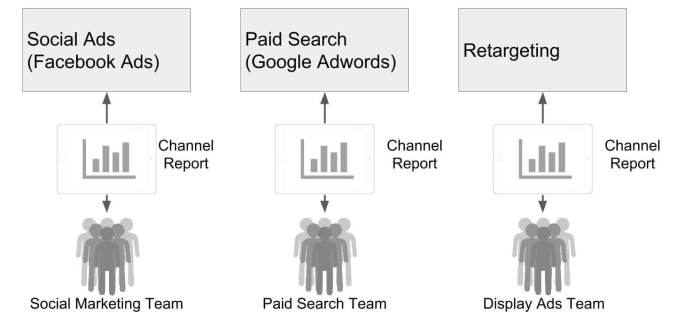
The landscape of cross-channel attribution is constantly evolving. Staying ahead of the curve requires understanding emerging trends, potential challenges, and the evolving role of technology in this critical marketing function. This section explores the future of cross-channel attribution, focusing on key considerations for marketers.
Emerging Trends in Cross-Channel Attribution
The future of cross-channel attribution is increasingly data-driven and sophisticated. We’re seeing a move beyond simple last-click models toward more complex, holistic approaches that capture the entire customer journey. This includes advanced machine learning algorithms, incorporating data from various sources, and a growing focus on the impact of contextual factors.
Potential Challenges and Opportunities
The shift towards more sophisticated attribution models presents both opportunities and challenges. One major challenge is the sheer volume and variety of data points that need to be considered. Extracting meaningful insights from this data requires robust data management and processing capabilities. However, this also presents an opportunity to gain a more complete understanding of customer behavior and personalize marketing efforts at scale.
Another opportunity lies in the integration of attribution data with other business functions, such as sales and customer relationship management (CRM) systems, enabling more holistic views of customer interactions.
The Evolving Role of AI and Machine Learning in Attribution, Adobe analytics for cross channel marketing attribution
AI and machine learning are revolutionizing cross-channel attribution. AI algorithms can identify patterns and relationships in complex datasets, allowing for more accurate and nuanced attribution models. This can help marketers understand the impact of different marketing channels and campaigns more precisely. Machine learning models can adapt and improve over time, learning from new data and refining their predictions.
This adaptability is crucial for keeping up with the changing behavior of customers and the dynamic nature of marketing campaigns.
Importance of Staying Updated on Industry Best Practices
The marketing landscape is constantly shifting, and staying informed about best practices is essential for maximizing the effectiveness of cross-channel attribution. This includes understanding new technologies, adapting to changing regulations, and learning from successful case studies. Regularly reviewing industry reports, attending conferences, and engaging with thought leaders in the field can keep marketers informed about emerging best practices and strategies.
Potential Future Scenario for Cross-Channel Attribution
The future of cross-channel attribution is poised to become more holistic, adaptive, and data-driven. This transformation will require a shift in mindset and strategy, embracing data-driven decision-making.
| Year | Trend | Impact | Example |
|---|---|---|---|
| 2025 | AI-powered predictive attribution | Accurate forecasts of campaign ROI across multiple channels, allowing for more informed decisions on resource allocation. | A retailer uses AI to predict which channels will generate the highest return on investment for a new product launch, enabling targeted marketing spending. |
| 2027 | Integration of attribution data with CRM systems | Enhanced customer understanding, leading to more personalized marketing campaigns and improved customer lifetime value. | A bank uses attribution data to understand how customers interact with various digital channels, enabling them to tailor their financial product offerings to each customer segment. |
| 2030 | Contextual attribution modeling | Attribution models that consider not just the channel but also the context in which a customer interacts with a brand, such as time of day or location. | An online travel agency uses contextual data to understand how travel bookings are influenced by specific events or holidays. |
Last Recap
In conclusion, mastering Adobe Analytics for cross-channel marketing attribution empowers marketers to understand the full impact of their campaigns across different touchpoints. By meticulously analyzing data, adjusting strategies, and staying updated on industry trends, you can achieve a holistic view of customer journeys and maximize your marketing ROI. This comprehensive guide provides a practical roadmap for navigating the complexities of cross-channel attribution, enabling you to make informed decisions and drive remarkable results.