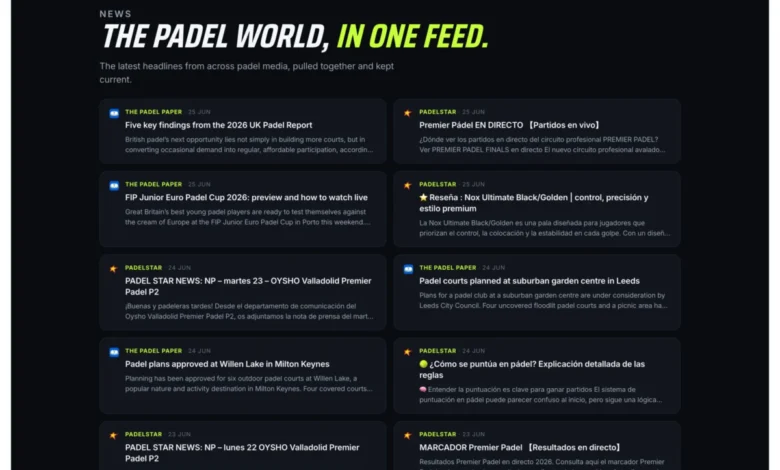
News aggregation sites place extreme performance demands on the infrastructure that powers them. By design, these platforms must ingest hundreds or thousands of external data points, process frequent content updates, and maintain high-speed delivery to satisfy user expectations for immediacy and site responsiveness. In the contemporary digital publishing landscape, speed is not merely a preference; it is a primary metric that influences both user retention and search engine optimization (SEO) rankings.
Traditionally, WordPress has served as the backbone for these operations due to its sophisticated capabilities in feed management. It excels at fetching RSS and Atom feeds, organizing data, performing deduplication, and scheduling imports. However, traditional WordPress themes often struggle to maintain these high standards of performance when tasked with rendering long, frequently updated streams of content. The overhead of a full WordPress theme often results in slower page load times, creating a friction point between the efficiency of the backend and the performance of the front end.
The industry has recently shifted toward a "headless" architecture to solve this dichotomy. By decoupling the WordPress backend from the front-end presentation layer, developers can leverage the administrative strengths of WordPress while deploying a modern, high-speed front end built with frameworks like Astro. This separation allows for a significant reduction in page weight, optimized rendering times, and a superior user experience.
The Evolution of Headless Architectures in News Aggregation
The transition to headless systems has been spurred by the rise of static site generators (SSGs) and edge computing. Historically, news aggregators relied on monolithic Content Management Systems (CMS) that performed server-side rendering for every request. As global traffic patterns increased, this approach became inefficient, particularly for content that does not require dynamic, user-specific data generation on every page load.

A news aggregator is, by definition, a read-only platform. Visitors typically do not require authenticated sessions, comment sections, or form submissions to consume the aggregated feed. This characteristic makes it an ideal candidate for static rendering. Because the content remains consistent for all users, serving it via static HTML files or cached edge assets reduces server load to nearly zero, while simultaneously providing near-instantaneous load times.
Astro, a modern web framework, has emerged as the preferred tool for this transition. Unlike traditional JavaScript-heavy frameworks that require significant browser-side processing, Astro ships zero JavaScript by default. It renders pages to pure, static HTML, which aligns perfectly with the requirements of a high-volume news stream.
Establishing the Backend Workflow
The success of a headless aggregator depends on the robustness of its data ingestion layer. Within the WordPress ecosystem, plugins such as WP RSS Aggregator have become the industry standard for this task. The "Feed to Post" functionality allows developers to import external feed items as native WordPress posts or custom post types.
By treating these items as native posts, developers gain access to the full suite of WordPress data handling, including featured image management, taxonomy categorization, and author attribution. These objects are automatically exposed through the WordPress REST API or WPGraphQL, making them accessible to the Astro front end without requiring custom endpoint development.
Data integrity is a critical consideration during this phase. To maintain a performant site, experts recommend sideloading remote images into the WordPress media library during the import process. This strategy ensures that the aggregator does not rely on hotlinking external servers, which can introduce latency or broken imagery if the source site changes its structure.

Technical Integration and Data Fetching
Connecting Astro to a WordPress instance is achieved through standard HTTP requests. Developers typically utilize the built-in WordPress REST API to query the content. For complex implementations—such as those requiring deep relationships between categories, tags, and custom metadata—WPGraphQL offers a more efficient alternative, allowing for precise data retrieval that prevents over-fetching.
A typical implementation in Astro involves a server-side fetch request during the build phase:
---
const res = await fetch("https://api.yoursite.com/wp-json/wp/v2/posts?per_page=20&_embed");
const posts = await res.json();
---
<ul>
  posts.map((post) => (
    <li>
      <a href=`/article/$post.slug`>post.title.rendered</a>
    </li>
  ))
</ul>
This code snippet illustrates the simplicity of the integration. However, the timing of this execution is central to the challenge of maintaining site "freshness." Because static sites generate HTML at the time of build, there is an inherent risk that content may become stale between build cycles.
Strategies for Content Freshness
The primary challenge for developers is balancing static performance with the need for real-time news updates. Three primary strategies have emerged to address this, each with distinct advantages and use cases:
- Scheduled Rebuilds: This is the most common approach for sites where updates occur on an hourly basis. By utilizing webhooks—triggered by the WordPress import schedule—developers can initiate a build process on platforms like Netlify or Vercel. Once the build completes, the updated static HTML is deployed to a Content Delivery Network (CDN). This method provides the best possible performance and SEO, as search engines crawl a fully rendered, static page.
- On-Demand Rendering: For sites requiring more frequent updates, developers can utilize Astro’s server-side rendering (SSR) capabilities. By setting a route to
prerender = false, the page is generated on the server at the moment of the request. To maintain speed, this is often paired with an "edge cache," which stores the rendered HTML for a few minutes, ensuring that the database is not queried for every single visitor. - Client-Side Islands: This approach involves loading a skeleton of the page statically and using a small piece of client-side JavaScript to fetch the most recent news items after the initial load. While this provides real-time updates without triggering a full site rebuild, it does present a minor trade-off in SEO, as the dynamically injected content may not be indexed as effectively by search engines.
Operational Gotchas and Best Practices
A recurring failure point in headless WordPress installations is the management of the WordPress cron system. Because headless sites often lack front-end traffic to the WordPress installation, the default "pseudo-cron" (which triggers only on page visits) often fails to execute. Developers must configure a server-level system cron to hit the wp-cron.php file directly. Failure to do so results in stale content, as the aggregator ceases to fetch new items.

Furthermore, legal and ethical considerations regarding content syndication must be addressed. When aggregating content, developers should ensure that their site complies with standard syndication protocols. Because aggregated content is technically duplicate content, the decision to use client-side rendering for feed items can be a strategic one. By opting not to have the feed items indexed by search engines, the site owner avoids potential "duplicate content" penalties from Google, while still providing a valuable, live-updating user interface.
The Broader Impact on Digital Publishing
The move toward headless aggregation reflects a broader shift in the digital publishing industry toward modular architecture. By separating content management from content delivery, organizations can iterate on their front-end experience without risking the integrity of their data management processes.
This modularity provides several long-term advantages:
- Scalability: A headless front end can be moved between hosting providers or frameworks without modifying the underlying WordPress database.
- Security: By exposing only the API endpoints and shielding the WordPress installation behind a firewall or private network, the attack surface of the site is significantly reduced.
- Developer Experience: Developers are no longer constrained by the limitations of PHP-based theme development, allowing them to use modern tooling like TypeScript, Tailwind CSS, and React or Svelte within the Astro ecosystem.
As the demand for fast, personalized, and high-volume information increases, the marriage of WordPress’s administrative maturity and Astro’s rendering performance offers a robust, future-proof solution for news aggregators. While the initial setup requires a deeper understanding of build processes and API management, the resulting performance gains and operational stability make it a superior choice for publishers who prioritize speed and reliability in an increasingly competitive digital landscape.