
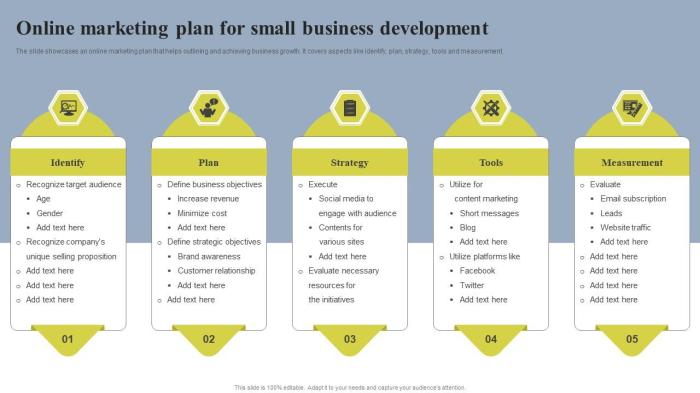

5 must have elements of every small business online marketing plan are crucial for success in today’s digital landscape. This isn’t just about posting pretty pictures on social media; it’s about a strategic, data-driven approach to reaching your ideal customer and achieving your business goals. From defining your target audience to tracking performance and adapting your plan, these five elements are the bedrock of any effective online marketing strategy.
This Artikel dives deep into the critical components of a successful small business online marketing plan. We’ll explore defining your ideal customer, setting achievable goals, choosing the right channels, creating engaging content, and tracking performance. Understanding these elements is key to making your online presence truly work for your business.
Defining the Target Audience
Knowing your ideal customer is crucial for crafting effective online marketing strategies. A well-defined target audience allows you to tailor your messaging, choose the right channels, and ultimately, boost conversions. Without a clear understanding of who you’re trying to reach, your marketing efforts are likely to be scattered and less impactful. This section delves into the specifics of identifying and segmenting your target audience.Understanding your ideal customer goes beyond basic demographics.
It’s about uncovering their motivations, pain points, and online habits. This knowledge enables you to create content and campaigns that resonate deeply, fostering stronger connections and ultimately driving sales.
Understanding the Ideal Customer Profile
Defining your target audience involves a multifaceted approach. It’s not enough to simply say you’re targeting “women aged 25-45”. A richer understanding includes their interests, values, lifestyle choices, and online behavior. Consider the following components when building a comprehensive profile:
- Demographics: This encompasses basic characteristics like age, gender, location, income, education level, and family status. These provide a foundational understanding of your customer base. For example, a company selling organic baby food might target parents between 25 and 45, living in urban areas with higher incomes.
- Psychographics: This dives deeper into the psychological aspects of your customer. It includes their values, interests, lifestyle, personality traits, and opinions. For example, a customer interested in organic baby food might also value sustainability, healthy living, and natural products. They may actively seek out information about organic farming practices and child development.
- Online Behavior: This focuses on how your target audience interacts with the internet. This includes their preferred social media platforms, search habits, online communities they frequent, and the types of content they consume. For example, a company selling organic baby food might discover that their target audience frequently engages with parenting blogs, Pinterest boards featuring baby-related crafts, and groups focused on sustainable living.
Researching and Understanding Your Target Audience
Effective research is key to a strong understanding of your target audience. Several methods can help you uncover valuable insights:
- Surveys: Surveys can collect valuable data directly from your potential customers. Questions should be designed to elicit detailed information about their needs, preferences, and motivations. A well-designed survey can reveal surprising insights into your customer’s values and behaviors.
- Social Media Analytics: Analyze social media data to understand your target audience’s online presence, interests, and engagement patterns. Look for common themes and trends in their interactions. This data can be used to refine your social media strategy.
- Website Analytics: Website analytics tools provide valuable data about the visitors to your website. Analyze the sources of traffic, pages viewed, and user behavior. Use this information to identify areas for improvement on your website and understand the interests of your audience.
Broad vs. Niche Market Targeting
This table illustrates the key distinctions between broad and niche market targeting strategies:
| Characteristic | Broad Market Targeting | Niche Market Targeting |
|---|---|---|
| Market Size | Large | Small |
| Competition | High | Low |
| Marketing Cost | High | Potentially lower (focused resources) |
| Product Differentiation | Less emphasis | High emphasis on unique value proposition |
| Customer Relationship | Less personal | Stronger, more personalized |
Identifying and Segmenting Your Target Audience Online
Identifying your target audience online involves using various methods to filter and segment potential customers.
- Social Media Targeting: Social media platforms offer sophisticated targeting options based on demographics, interests, behaviors, and connections. This allows for highly specific campaigns that reach the right audience. For example, a small business selling handmade jewelry might target users interested in crafting, art, and fashion on Instagram.
- Search Engine Optimization (): Understanding how your target audience searches online helps you optimize your website and content for relevant s. By understanding their search patterns, you can improve your website’s visibility in search results.
- Paid Advertising Targeting: Platforms like Google Ads and social media ads allow you to target specific demographics, interests, and behaviors. This allows you to reach the right people with your message. A company selling organic baby food might target users searching for “organic baby food” or “natural baby products.”
Setting Clear Marketing Goals
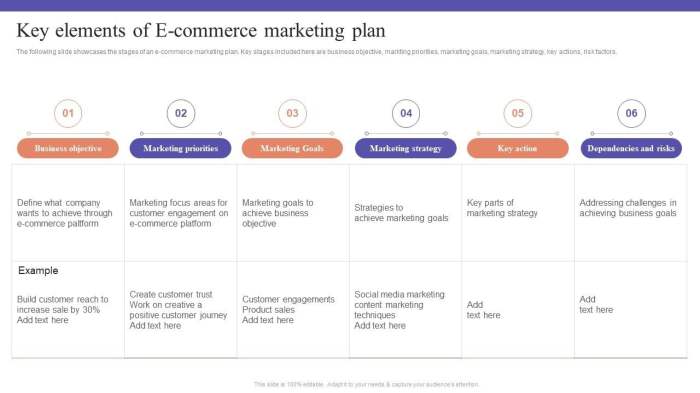
Defining a clear path for your small business’s online presence hinges on establishing specific, measurable, achievable, relevant, and time-bound (SMART) goals. Without these, your marketing efforts risk becoming aimless and unproductive, potentially leading to wasted resources and missed opportunities. A well-defined strategy provides a roadmap, ensuring your efforts align with your overall business objectives.Setting SMART goals ensures your marketing initiatives are focused and effective.
They provide a framework for measuring progress and adjusting your strategy as needed, ultimately maximizing the return on investment for your marketing budget. This is crucial for small businesses, where every dollar counts.
Crafting a killer online marketing plan for your small business involves more than just posting pretty pictures. Five key elements are crucial: a clear target audience, a compelling value proposition, consistent branding, engaging content, and a strong call to action. To ensure your efforts are paying off, understanding how to measure marketing effectiveness is absolutely vital, which you can explore in more detail at measuring marketing effectiveness recap.
Ultimately, these elements, combined with effective measurement strategies, will help you refine your approach and maximize your return on investment.
Importance of SMART Goals
SMART goals are essential for guiding your online marketing strategy. They provide clarity and direction, ensuring your efforts are focused and aligned with your business objectives. Without SMART goals, it’s easy to get sidetracked by various marketing trends or tactics, potentially losing sight of the overall vision for your business. This framework ensures that your marketing initiatives are well-structured and effective.
Realistic Marketing Goals for a Small Business
To establish effective marketing goals, consider these realistic and achievable targets for a small business:
- Increase website traffic by 15% within the next quarter. This quantifiable goal allows for tracking progress and adjustment of strategy as needed.
- Generate 20 qualified leads per month through targeted social media campaigns. This focuses on the quality of leads rather than sheer quantity.
- Improve search engine rankings for 3 key product pages by 5 positions within the next 6 months. This goal ties marketing efforts to tangible results.
- Achieve a 10% conversion rate on your online store within the next quarter. This is a direct measure of website effectiveness in driving sales.
- Build a social media following of 500 engaged followers within the next year. This focuses on community building rather than just raw numbers.
Quantifying Marketing Success, 5 must have elements of every small business online marketing plan
Quantifying marketing success is vital for understanding the effectiveness of your strategies. Key metrics to track include website traffic, conversion rates, lead generation, customer acquisition cost, and return on ad spend (ROAS). Tracking these metrics allows you to analyze what’s working and what’s not, enabling data-driven adjustments to your campaigns. This analysis allows you to fine-tune your strategies to maximize impact.
Short-Term vs. Long-Term Marketing Goals
| Feature | Short-Term Goals | Long-Term Goals ||—|—|—|| Timeframe | Typically less than 6 months | Typically more than 1 year || Focus | Immediate results, testing strategies, building momentum | Sustained growth, brand building, market positioning || Examples | Increase social media followers, improve website traffic, run a limited-time promotion, A/B test ad copy | Develop a comprehensive brand identity, establish thought leadership, build a loyal customer base || Metrics | Website traffic, social media engagement, sales conversion | Brand awareness, market share, customer lifetime value || Impact | Provides immediate feedback and allows for quick adjustments | Creates long-term value and positions the business for future success |
Crafting a killer online marketing plan for your small business needs a solid foundation. Five key elements are crucial: a defined target audience, a compelling value proposition, a strategic content calendar, tracking and analyzing results, and a budget that aligns with your goals. Crucially, you also need to keep your Microsoft Ads account optimized. Ignoring it could be a costly oversight, as neglecting your campaigns can lead to missed opportunities.
For a deeper dive on why Microsoft Ads deserves attention, check out this insightful article on the importance of not neglecting your Microsoft Ads account. Ultimately, these elements, combined with a strong strategy, are the keys to a successful small business online marketing plan.
Choosing the Right Marketing Channels: 5 Must Have Elements Of Every Small Business Online Marketing Plan
Small businesses often face the daunting task of selecting the most effective online marketing channels. Understanding the strengths and weaknesses of different platforms, coupled with a deep dive into your target audience, is crucial for maximizing your marketing budget and achieving your goals. A well-strategized approach will not only connect you with your ideal customers but also generate measurable results.
The right blend of channels will amplify your message and drive significant business growth.A successful online marketing strategy for a small business hinges on carefully chosen channels that resonate with the target audience and align with overall business objectives. This involves more than simply picking a popular platform; it demands an in-depth analysis of each channel’s strengths, weaknesses, and how they can best support your business goals.
This section dives into the world of various online marketing channels, comparing their strengths and weaknesses to help you choose the optimal mix for your small business.
Social Media Marketing
Social media platforms are powerful tools for engaging with potential customers and building brand awareness. They offer a direct line of communication with your audience, allowing for two-way interactions, instant feedback, and real-time engagement. Platforms like Facebook, Instagram, Twitter, and TikTok provide diverse avenues for showcasing your products or services, and fostering community. However, maintaining a consistent presence and producing engaging content demands time and effort.
The success of social media marketing relies heavily on understanding your target audience’s preferences on each platform.
Crafting a killer online marketing plan for your small business involves more than just posting pretty pictures. You need a solid foundation, like a strong call-to-action and compelling visuals. Understanding how to add sitenote elements to your website, for example, can significantly boost your SEO efforts. how to add sitenote is a crucial step, and when you master these technical details, your marketing efforts will gain a powerful boost, further strengthening your overall strategy.
Ultimately, every effective online marketing plan for small businesses must incorporate a cohesive strategy that includes a defined target audience, consistent branding, and targeted advertising.
Email Marketing
Email marketing remains a highly effective channel for direct communication with your customer base. Building an email list allows for targeted campaigns, providing personalized messages that address specific customer needs. Email marketing provides a trackable return on investment, allowing you to monitor engagement and measure the effectiveness of your campaigns. However, it’s essential to prioritize permission-based marketing, ensuring that recipients opt-in to receive your emails.
Avoid overwhelming your subscribers with irrelevant or frequent communications.
Content Marketing
Content marketing involves creating and sharing valuable, relevant, and consistent content to attract and retain a clearly defined audience—and, ultimately, to drive profitable customer action. High-quality content, such as blog posts, articles, videos, and infographics, positions your business as a thought leader in your industry, attracting potential customers through valuable information. However, creating engaging content that resonates with your target audience requires strategic planning and consistent effort.
Search Engine Optimization ()
Search Engine Optimization () is a crucial element for enhancing online visibility. By optimizing your website and content for relevant s, you improve your chances of appearing in search engine results pages (SERPs). This increased visibility drives organic traffic to your website, potentially leading to more conversions and sales. However, requires ongoing optimization and adaptation to stay ahead of evolving search engine algorithms.
Paid Advertising (PPC)
Paid advertising channels, such as Google Ads and social media ads, offer a fast track to reaching a wider audience. By targeting specific demographics and interests, you can precisely reach potential customers interested in your products or services. These platforms offer detailed analytics to track campaign performance and adjust strategies for optimal results. However, paid advertising comes with a cost, and effective campaigns require careful budget management and continuous optimization.
Integrating Marketing Channels
A cohesive online marketing strategy involves integrating various channels for maximum impact. For instance, social media posts can drive traffic to your website, while email marketing can nurture leads generated through social media. Content marketing provides valuable resources for both social media and email campaigns. By strategically combining these channels, you can create a comprehensive online presence that effectively engages your target audience, drives traffic, and ultimately, achieves your business goals.
Developing Engaging Content
High-quality content is the lifeblood of any successful online marketing strategy. It’s not just about filling space; it’s about creating value for your audience, establishing trust, and driving action. Compelling content attracts potential customers, keeps existing ones engaged, and ultimately, converts them into loyal advocates for your brand. This crucial element differentiates your small business from the competition and fosters a strong online presence.Engaging content goes beyond simple product descriptions or generic advertisements.
It resonates with your target audience on an emotional level, addressing their needs, interests, and pain points. It encourages interaction, fosters community, and builds a lasting relationship with your customers. This interactive nature of engaging content is what truly sets it apart.
Types of Engaging Content
Different platforms and target audiences respond to different content formats. Understanding these nuances is crucial for maximizing your reach and impact. Diverse content formats cater to various preferences and consumption habits, leading to a more comprehensive approach to online marketing.
Content Formats for Various Platforms
The following table demonstrates the versatility of content formats and their suitability for different online platforms. Choosing the right format for each platform ensures maximum visibility and engagement.
| Platform | Content Formats |
|---|---|
| Blog | Blog posts, articles, listicles, how-to guides, case studies, interviews |
| Social Media (Facebook, Instagram, Twitter) | Short-form videos, images with captions, infographics, polls, stories, live streams, behind-the-scenes content, user-generated content |
| Email Marketing | Newsletters, promotional emails, educational content, product updates, customer testimonials, event invitations |
| YouTube | Video tutorials, product demonstrations, interviews, vlogs, behind-the-scenes content |
| Podcast | Interviews, discussions, storytelling, expert advice |
Compelling Content Examples
Here are a few examples of compelling content formats:
- Blog Posts: A detailed blog post about the benefits of sustainable packaging for a clothing retailer, complete with customer testimonials and case studies from other eco-conscious businesses. This content demonstrates expertise and aligns with a growing consumer interest.
- Infographics: A visually appealing infographic illustrating the different ways a software company’s product can streamline workflows in a specific industry. This format makes complex information easily digestible and shareable across various channels.
- Videos: A product demonstration video for a home appliance, featuring a relatable scenario where the product solves a common household problem. The video includes clear instructions and showcases the product’s ease of use.
Tracking and Analyzing Performance
Knowing where your online marketing efforts stand is crucial for small businesses. Without tracking key performance indicators (KPIs), you’re essentially flying blind, making adjustments based on gut feeling rather than data-driven insights. Understanding what’s working and what’s not is essential for optimizing your strategy and maximizing ROI.Effective tracking allows you to fine-tune your approach, ensuring your budget is spent wisely and your marketing channels are generating the best possible results.
It also helps you demonstrate the value of your marketing efforts to stakeholders, justifying continued investment and showcasing tangible progress.
Methods for Tracking KPIs
Tracking KPIs involves a multifaceted approach that goes beyond simply logging numbers. It requires understanding the context behind those numbers and how they relate to your overall business goals. This means identifying the specific metrics that are most relevant to your objectives, such as website traffic, conversion rates, or social media engagement. By focusing on these key indicators, you gain a clearer picture of the success of your online marketing strategies.
Tools and Techniques for Monitoring Website Traffic, Conversions, and Engagement
Monitoring website traffic, conversions, and engagement requires leveraging a combination of tools and techniques. Website analytics platforms, like Google Analytics, provide comprehensive data on website traffic, user behavior, and conversion rates. These platforms track key metrics such as bounce rate, time on site, and pages per visit. Social media analytics tools offer similar insights into engagement metrics like likes, shares, comments, and follower growth on various platforms.
Combining data from these sources provides a holistic view of your online presence.
Interpreting Data to Identify Areas for Improvement
Interpreting data isn’t just about looking at numbers; it’s about understanding the stories they tell. Analyze the trends and patterns in your data to pinpoint areas where your marketing strategy could be improved. For example, a high bounce rate might indicate that your website’s landing pages are not engaging or relevant to the target audience. By digging deeper into the data, you can identify specific issues and make targeted adjustments.
Crucially, avoid simply reacting to isolated data points. Seek correlations and patterns that provide actionable insights for continuous improvement.
Essential KPIs for Assessing Online Marketing Success
A well-defined set of KPIs is essential for measuring the success of your online marketing efforts. The following table Artikels key metrics and their importance in evaluating your strategy.
| KPI | Description | Importance |
|---|---|---|
| Website Traffic | Number of visitors to your website | Indicates the reach of your marketing efforts. |
| Conversion Rate | Percentage of visitors who complete a desired action (e.g., making a purchase, signing up for a newsletter) | Measures the effectiveness of your website and marketing campaigns in driving desired outcomes. |
| Bounce Rate | Percentage of visitors who leave your website after viewing only one page | Indicates potential issues with website content, navigation, or relevance to visitors. |
| Time on Site | Average time visitors spend on your website | Shows visitor engagement and interest in your content. |
| Pages per Visit | Average number of pages viewed per visitor | Indicates the depth of engagement and the relevance of your content. |
| Social Media Engagement | Likes, shares, comments, and other interactions on social media platforms | Measures the effectiveness of your social media strategy in creating interest and brand awareness. |
| Customer Acquisition Cost (CAC) | Cost of acquiring a new customer through your online marketing efforts | Evaluates the efficiency of your marketing spend and profitability of your campaigns. |
| Return on Investment (ROI) | Net profit generated from your online marketing activities | Provides a comprehensive evaluation of your marketing strategy’s overall profitability. |
Adapting and Optimizing the Plan
A successful online marketing plan isn’t a static document; it’s a dynamic roadmap that needs constant refinement. Regular review and adaptation are crucial for staying ahead of the curve and maximizing your return on investment (ROI). This involves understanding your performance data, incorporating customer feedback, and remaining informed about industry shifts. Adapting your plan ensures it continues to resonate with your target audience and effectively achieves your marketing goals.The process of adapting your online marketing plan is iterative and cyclical.
It involves monitoring key performance indicators (KPIs), evaluating their impact, and making adjustments to your strategy. This iterative approach allows you to identify what works and what doesn’t, ultimately optimizing your campaign for better results.
Regular Performance Review and Data Analysis
Regularly reviewing your performance data is essential for identifying trends and areas needing improvement. This data-driven approach helps you understand what’s working and what isn’t in your marketing efforts. Key metrics to track include website traffic, conversion rates, customer acquisition costs, and return on ad spend (ROAS). Analyzing this data helps you identify strengths, weaknesses, and opportunities to improve your online marketing campaigns.
A deep dive into your analytics provides insights that inform strategic decisions.
Incorporating Customer Feedback
Customer feedback is a valuable source of information that can significantly improve your online marketing plan. Gathering feedback through surveys, reviews, social media monitoring, and direct communication with customers provides insights into their experiences and preferences. This feedback is essential for tailoring your marketing messages and improving the customer journey. Listening to your customers allows you to adapt to their needs and preferences.
Staying Updated with Industry Trends and Best Practices
The digital marketing landscape is constantly evolving. Staying updated on emerging trends and best practices is vital for maintaining a competitive edge. New technologies, algorithms, and strategies are constantly being introduced. By staying abreast of these developments, you can refine your plan to leverage new opportunities and maintain relevance. Examples include changes in social media algorithms, emerging marketing technologies, or shifts in consumer behavior.
Optimizing the Plan for Future Growth
Optimizing your plan for future growth involves proactively anticipating future needs and trends. Identifying potential growth opportunities and adapting your strategies to capitalize on them is vital for long-term success. This proactive approach includes forecasting future demand, exploring new marketing channels, and adjusting your budget accordingly. A forward-thinking approach allows you to be prepared for the future, leveraging emerging opportunities and avoiding stagnation.
By staying ahead of the curve, you can adapt to changes in the market and ensure sustained growth.
Wrap-Up
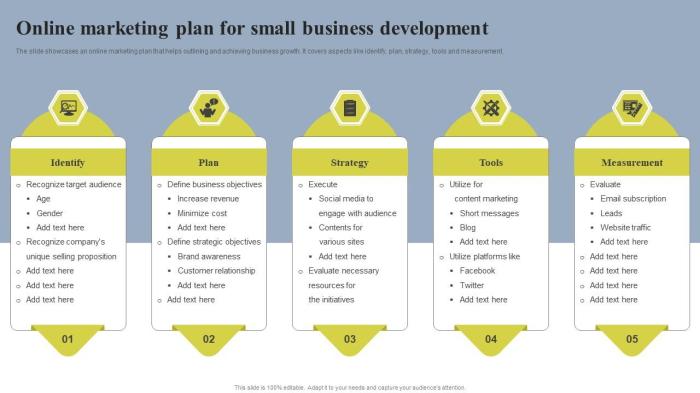
In conclusion, building a strong online presence for your small business requires a multifaceted approach. By focusing on defining your target audience, setting SMART goals, choosing the right channels, crafting engaging content, and rigorously tracking performance, you can create a dynamic and effective online marketing plan. Adapting and optimizing this plan based on data and feedback will ensure ongoing growth and success in the competitive digital market.